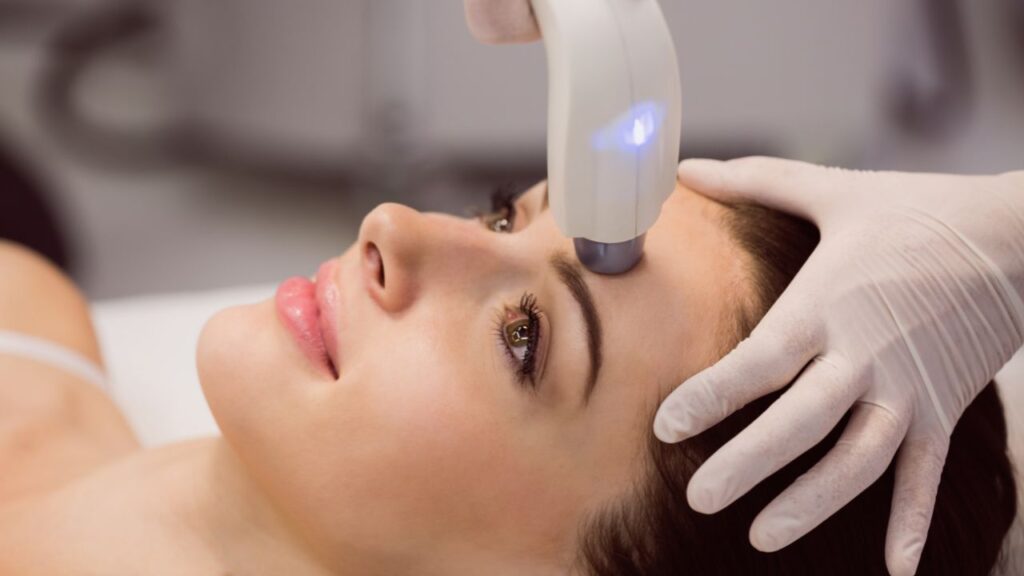

Your skin goes through a lot over the years. Sun damage builds up quietly. Fine lines settle in around the eyes and mouth. Acne scars from years ago still show up every morning in the mirror. And no matter how good your skincare routine is, some concerns simply sit too deep for a serum to reach.
That is exactly where laser skin resurfacing comes in.
It is one of the most consistently effective treatments available in dermatology today. And in 2026, the technology behind it will have never been more precise, more accessible, or more suitable for a broader range of skin types and concerns.
What Laser Skin Resurfacing Actually Does
Laser skin resurfacing uses focused beams of light energy to treat the skin at a level that topical products simply cannot reach.
There are two main approaches.
Ablative laser skin resurfacing involves removing the entire outer layer of skin, resulting in the body responding with new skin cells, and, as a result, a much higher amount of new collagen is formed. Improvements will be seen in the appearance of wrinkles, scars, and sun damage with this procedure. The lasers commonly used for ablative laser resurfacing are CO2 and Erbium lasers. Generally, the amount of time required for recovery/future skin use will take from five days to fourteen days, depending on the depths of treatment used.
The non-ablative laser skin resurfacing works by creating heat in the deeper layers of skin without removing the outer layers of skin leading to stimulation of collagen production. While the improvement develops more slowly than with ablative techniques, the recovery from these procedures is much quicker, and patients can generally resume activity about one to two days after the treatment has been completed.
Both procedures have been cleared for use by the Food and Drug Administration, and all ablative and non-ablative laser resurfacing treatments performed at clinics throughout the United States are provided by board-certified dermatologists or licensed medical professionals.
What It Treats
Laser skin resurfacing can address many skin issues, including lines, scars from acne and surgery, age spots and sun damage, uneven skin tone, and enlarged pores. It can also improve the overall condition and appearance of the skin by enhancing the texture and removing dullness.
Because this type of procedure isn’t typically used alone as a one-time-only solution, it can require multiple treatments to fix deeper problems. Some patients experience enough change in their overall appearance with just one treatment to warrant purchasing additional procedures.
Who It Is Best Suited For
Laser resurfacing works well for adults experiencing visible signs of aging, sun damage, or scarring who want results that go beyond what skincare alone can deliver.
It is not suitable for everyone. People with very dark skin tones need to discuss specific laser wavelengths with their provider to minimise the risk of post-inflammatory hyperpigmentation. Those with active acne, certain skin conditions, or recent sun exposure may need to wait before treatment.
A thorough consultation with a board-certified dermatologist is the essential first step. Your provider will assess your skin type, your specific concerns, and your lifestyle, along with options like Botox treatment, to determine whether ablative or non-ablative resurfacing is the right approach and what realistic results look like for you.
What to Expect Before and After
Before treatment, most providers recommend avoiding direct sun exposure and discontinuing retinoids and certain active skincare ingredients for a period beforehand. A topical anaesthetic is applied before the session to manage any discomfort.
After ablative resurfacing, the skin will appear red and feel tender as it heals. Following your provider’s aftercare instructions carefully during this period is critical. After non-ablative treatment, mild redness typically resolves within twenty-four to forty-eight hours.
In both cases, broad-spectrum SPF applied every morning without exception is non-negotiable. Freshly treated skin is significantly more vulnerable to UV damage. Protecting it consistently is what preserves the result long-term.
Summary
Laser skin resurfacing is not a quick fix, and it is not right for every person or every concern. But for the right candidate, treated by a qualified provider, it delivers results that are genuinely difficult to achieve through any other means.
If you are considering it, start with a proper consultation. Ask questions. Understand what recovery looks like for your specific treatment type. And give your skin the time it needs to show you what it is capable of.
The results are worth the patience.