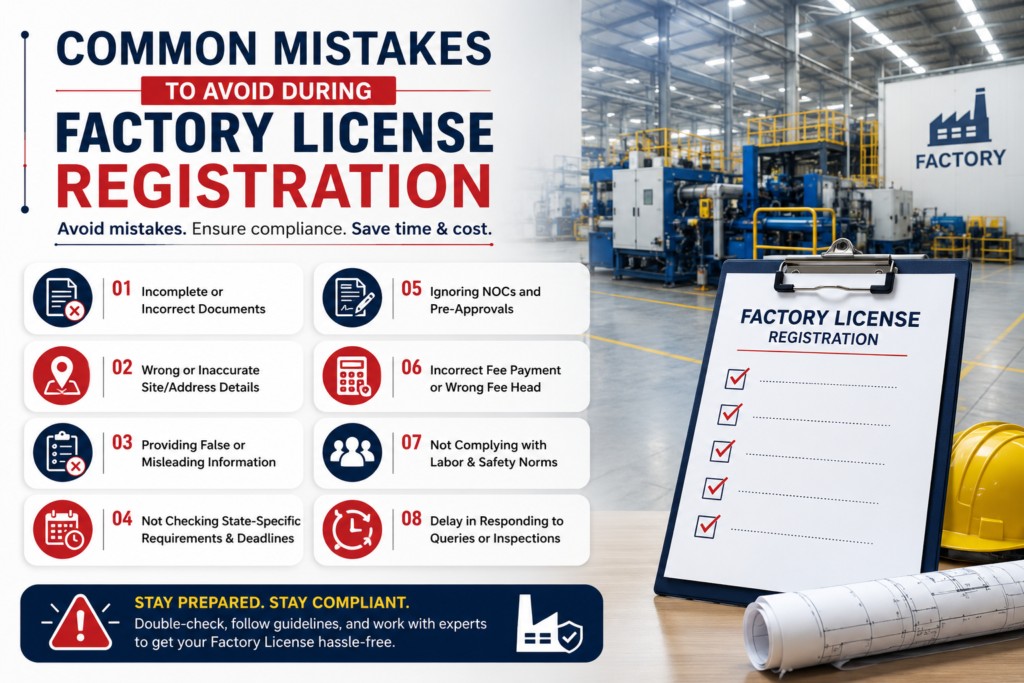

Factory registration plays a major role in establishing lawful industrial operations in West Bengal. Authorities examine safety standards, worker welfare measures, infrastructure readiness, and environmental compliance before approving. However, many businesses face delays or rejection because of avoidable administrative mistakes and incomplete documentation. Incorrect submissions may interrupt production planning and increase compliance risks significantly. Therefore, manufacturers should identify common registration errors before beginning the licensing process. A structured approach toward factory license in West Bengal helps businesses secure approvals efficiently while maintaining operational stability and regulatory compliance.
Why Factory Licensing Matters for Industrial Businesses?
Factory licensing creates a legal framework for manufacturing units operating within prescribed industrial regulations. Moreover, authorities use licensing procedures to monitor worker safety, infrastructure standards, environmental impact, and operational compliance effectively.
Licensed factories gain operational legitimacy and stronger credibility with suppliers, financial institutions, and regulatory departments. Consequently, businesses can expand operations smoothly and participate in industrial contracts without unnecessary restrictions.
Factories operating without valid approvals may face penalties, production interruptions, or legal proceedings. In contrast, licensed manufacturing units maintain organized compliance systems and safer work environments.
Authorities also verify labor welfare facilities, machinery arrangements, and emergency systems before approving. Therefore, factory license in West Bengal supports responsible industrial growth while protecting workforce safety and environmental standards.
Submitting Incomplete Documentation
Incomplete documentation remains one of the most common reasons for registration delays and rejection. Consequently, businesses should prepare all required records carefully before filing applications.
Missing Ownership and Identity Records
Authorities require accurate ownership and identity documentation for factory registration. However, applicants often submit expired or inconsistent records during filing.
Commonly required documents include:
- PAN card
- Aadhaar card
- Property ownership proof
- Partnership deed
- Certificate of incorporation
- Utility bills
Consequently, applicants should verify consistency across every submitted document before online submission.
Uploading Unclear or Invalid Files
Many applicants upload blurred scans or incorrect file formats during digital filing. Moreover, unreadable records create verification difficulties for authorities.
Businesses should therefore:
- Upload clear scanned copies
- Use prescribed file formats
- Verify document visibility
- Check file size limitations
Proper document preparation significantly improves approval efficiency during factory registration procedures.
Ignoring Factory Layout and Building Approval Requirements
Authorities carefully examine factory infrastructure and operational layouts before approving. However, several applicants ignore structural compliance requirements during registration.
Incorrect Factory Layout Plans
Factory layout plans should clearly indicate:
- Machinery placement
- Emergency exits
- Ventilation systems
- Production sections
- Storage areas
Consequently, incomplete or inaccurate layouts may trigger inspection objections and approval delays.
Moreover, authorities often compare submitted layouts with actual infrastructure conditions during inspections. Therefore, businesses should maintain consistency between plans and operational arrangements.
Failure to Obtain Building Approvals
Industrial establishments generally require approved building plans and occupancy permissions before licensing. However, some businesses begin operations without securing proper approvals.
Authorities may reject applications if factories fail to comply with local construction and industrial zoning regulations. Consequently, businesses should complete infrastructure approvals before applying for a factory license in West Bengal.
Providing Incorrect Business Information
Incorrect business details create serious administrative complications during registration procedures. Consequently, applicants should verify all information carefully before final submission.
Errors in Ownership Details
Applicants frequently make mistakes while entering:
- Director names
- Partner information
- Company registration numbers
- Factory address details
Moreover, inconsistent ownership records may trigger legal verification issues and additional scrutiny from authorities.
Businesses should therefore maintain uniform information across every submitted application and supporting document.
Incorrect Industrial Activity Classification
Factories must select the correct industrial category during registration. However, incorrect classification often creates compliance conflicts during inspections and future renewals.
Consequently, applicants should identify manufacturing activities accurately before submitting operational details. Proper classification improves regulatory coordination and reduces licensing complications.
Neglecting Fire Safety Compliance
Fire safety compliance remains essential for manufacturing units because factories commonly operate heavy machinery, electrical systems, and combustible materials.
Lack of Proper Fire Safety Arrangements
Authorities inspect:
- Fire extinguishers
- Emergency exits
- Alarm systems
- Electrical installations
- Evacuation pathways
Consequently, inadequate fire safety arrangements may result in application rejection or suspension notices.
Factories should install functional emergency systems before applying for operational approvals. Moreover, regular equipment maintenance strengthens compliance readiness during inspections.
Failure to Secure Fire Safety Certification
Many businesses delay fire safety certification until after factory setup completion. However, authorities generally require valid safety clearance during licensing procedures.
Consequently, manufacturers should coordinate with fire safety departments early in the registration process to avoid administrative delays.
Ignoring Worker Safety and Welfare Measures
Worker protection remains a major focus during factory inspections and licensing reviews. Therefore, businesses should maintain proper welfare facilities before applying for approval.
Inadequate Safety Equipment
Factories should provide:
- Protective clothing
- Safety helmets
- Gloves
- Emergency medical kits
- Ventilation systems
Consequently, poor worker protection arrangements may negatively affect inspection outcomes and operational approvals.
Lack of Employee Welfare Facilities
Authorities also examine:
- Washroom facilities
- Drinking water systems
- Rest areas
- First-aid arrangements
Moreover, poor welfare conditions may lead to compliance notices or legal complications after operational approval.
Businesses should therefore establish organized employee safety systems during the initial planning stage.
Delaying Pollution Control Approvals
Environmental compliance forms an important part of factory licensing procedures. However, many businesses delay pollution control applications until late stages of registration.
Failure to Assess Environmental Impact
Factories generating smoke, chemical waste, wastewater, or industrial emissions generally require environmental authorization. Consequently, businesses should evaluate environmental obligations carefully before operational planning.
Authorities commonly review:
- Waste disposal systems
- Emission control arrangements
- Water treatment systems
- Hazardous material handling
Moreover, inadequate pollution management may result in licensing rejection or operational restrictions.
Improper Waste Management Systems
Several manufacturing units fail to establish structured waste disposal mechanisms before inspections. Consequently, authorities may issue objections regarding sanitation and environmental safety.
Factories should therefore maintain proper waste segregation and disposal systems before beginning operations.
Ignoring Electrical and Machinery Compliance
Machinery and electrical systems directly affect industrial safety and operational efficiency. However, some businesses overlook technical compliance during registration procedures.
Unsafe Machinery Placement
Authorities evaluate machinery arrangements carefully to ensure worker safety and production efficiency.
Inspection teams generally examine:
- Machine spacing
- Safety guards
- Ventilation systems
- Electrical connectivity
Consequently, improper machinery placement may create accident risks and inspection objections.
Lack of Equipment Maintenance Records
Factories should maintain machinery inspection and servicing records regularly. Moreover, poorly maintained equipment may affect approval procedures and future compliance inspections.
Businesses should therefore implement preventive maintenance systems before factory operations begin.
Missing Renewal Deadlines
Factory licensing responsibilities continue even after obtaining approval. However, many businesses neglect renewal schedules and ongoing compliance obligations.
Consequences of Delayed Renewals
Failure to renew factory licenses on time may result in:
- Penalties
- Suspension notices
- Operational interruptions
- Additional inspections
Consequently, businesses should monitor renewal validity periods carefully.
Poor Compliance Record Management
Several factories fail to maintain organized records related to inspections, safety certifications, and employee details. Consequently, authorities may raise objections during renewal procedures.
Proper documentation management improves operational continuity and simplifies regulatory communication significantly.
Submitting Applications Without Internal Verification
Many applicants submit registration forms without conducting internal reviews. Consequently, avoidable errors remain undetected until authorities begin verification procedures.
Importance of Pre-Submission Checks
Businesses should verify:
- Ownership details
- Infrastructure records
- Safety certifications
- Employee information
- Factory layout plans
Moreover, internal verification reduces correction requests and administrative delays significantly.
Reviewing Digital Uploads Carefully
Applicants often ignore the uploaded file quality after submission. Consequently, authorities may reject applications because of incomplete or unreadable records.
Factories should therefore conduct final reviews before digital submission to ensure procedural accuracy.
Common Inspection-Related Mistakes
Factory inspections play an important role during approval procedures. However, businesses frequently make operational mistakes during inspection stages.
Common inspection issues include:
- Unclean production areas
- Improper waste storage
- Missing safety signage
- Incomplete employee records
- Poor ventilation systems
- Inadequate emergency exits
Consequently, factories should prepare infrastructure and documentation thoroughly before inspection visits.
Moreover, authorities may conduct surprise inspections after approval. Therefore, businesses should maintain continuous compliance rather than focusing only on initial registration.
Benefits of Avoiding Registration Mistakes
Factories that maintain organized compliance systems generally complete approval procedures more efficiently. Moreover, proper preparation reduces financial losses caused by delays and correction procedures.
Key advantages include:
- Faster approval processing
- Reduced rejection risks
- Better inspection outcomes
- Improved worker safety
- Stronger legal compliance
- Better operational continuity
- Reduced administrative complications
- Improved industrial credibility
Consequently, businesses should prioritize structured planning during factory registration procedures.
Importance of Proper Communication With Authorities
Effective communication with licensing departments supports smoother registration procedures and faster issue resolution. However, many businesses fail to respond promptly to notices or clarification requests.
Authorities may request additional information regarding:
- Factory layout modifications
- Ownership verification
- Safety compliance
- Environmental arrangements
- Employee welfare facilities
Consequently, delayed responses may prolong approval timelines significantly.
Businesses should therefore assign responsible personnel for monitoring application status, inspection notices, and departmental communication regularly. Moreover, organized communication reduces misunderstandings and improves administrative coordination during factory registration procedures.
Applicants should also preserve acknowledgment receipts, inspection reports, and submission references carefully for future use. Consequently, systematic documentation management strengthens compliance efficiency during both registration and renewal stages.
Role of Workforce Training in Factory Compliance
Workforce training plays an important role in maintaining industrial compliance standards after licensing approval. Consequently, authorities often evaluate employee awareness regarding workplace safety and operational procedures during inspections.
Factories should train workers regarding:
- Emergency evacuation procedures
- Machinery handling practices
- Fire safety measures
- Protective equipment usage
- Hazardous material handling
Moreover, proper training reduces workplace accidents and strengthens operational discipline significantly.
Businesses that ignore employee safety awareness often face compliance challenges during inspections. Consequently, authorities may raise objections regarding worker protection standards and operational readiness.
Factories should therefore conduct periodic training sessions and maintain attendance records for safety programs. Furthermore, supervisors should monitor workplace practices regularly to ensure compliance with prescribed industrial standards.
Training programs also improve productivity because employees operate machinery more safely and efficiently after receiving proper instructions. Consequently, workforce education supports both regulatory compliance and operational stability for factory licenses in West Bengal.
Practical Tips for Smooth Factory License Approval
Businesses can improve approval chances significantly by following structured preparation methods before registration.
Important recommendations include:
- Organize all required documents before filing
- Verify ownership records carefully
- Maintain proper fire safety systems
- Install worker protection equipment
- Prepare accurate factory layouts
- Establish pollution control mechanisms
- Conduct internal compliance reviews
- Maintain organized inspection records
Moreover, businesses should inspect infrastructure thoroughly before official verification visits. Consequently, proactive planning reduces operational disruptions and administrative objections during factory registration procedures.
Factories should also maintain transparent operational records and coordinate regularly with regulatory departments throughout the approval cycle. Furthermore, assigning dedicated compliance personnel improves monitoring efficiency and strengthens communication with licensing authorities effectively. Organized compliance systems reduce long-term legal risks and support uninterrupted industrial operations.
Conclusion
Factory registration requires careful planning, accurate documentation, and continuous compliance management. Many businesses face delays or rejection because of avoidable mistakes involving safety systems, infrastructure approvals, environmental compliance, and administrative records. Moreover, authorities examine operational readiness closely before granting factory approvals. Consequently, manufacturers should prepare every procedural stage carefully and maintain transparent communication with regulatory departments. A disciplined approach toward factory license in West Bengal strengthens legal compliance, worker safety, operational continuity, and long-term industrial stability for manufacturing businesses.
FAQs
1. Why do factories require licensing before operations begin?
Factory licensing helps authorities monitor worker safety, industrial infrastructure, environmental compliance, and operational standards. Moreover, licensing creates legal authorization for manufacturing activities within prescribed regulations. Consequently, factories operating without proper approval may face penalties, operational restrictions, or legal action from industrial and labor authorities in West Bengal.
2. What documents commonly create registration delays?
Incomplete ownership records, invalid identity proof, missing factory layout plans, and unreadable digital uploads frequently create delays. Moreover, expired safety certificates and inconsistent business information also affect approval timelines. Consequently, businesses should verify every submitted document carefully before filing applications for factory registration approval.
3. Why is fire safety compliance important during factory registration?
Factories commonly operate machinery, electrical systems, and combustible materials that increase fire risks significantly. Therefore, authorities examine fire extinguishers, emergency exits, alarm systems, and evacuation arrangements carefully before approval. Proper fire safety systems protect workers and infrastructure while supporting smoother inspections and operational compliance for manufacturing units.
4. Can authorities reject applications because of poor factory layouts?
Authorities may reject applications if factory layouts fail to meet industrial safety and operational standards. Moreover, improper machinery placement, blocked exits, and poor ventilation systems create compliance concerns. Consequently, businesses should prepare accurate and functional layout plans before submitting factory license applications to the authorities.
5. Why does pollution control approval matter for factories?
Factories generating emissions, wastewater, smoke, or hazardous waste generally require environmental authorization before operations begin. Authorities monitor pollution management systems to protect environmental and public safety standards. Consequently, businesses should establish organized waste disposal and emission control systems before applying for factory licensing approval.
6. What happens if factories miss renewal deadlines?
Delayed renewals may trigger penalties, additional inspections, suspension notices, or operational interruptions. Moreover, authorities may examine compliance history more strictly after repeated delays. Consequently, factories should monitor renewal schedules carefully and maintain updated records to ensure uninterrupted industrial operations and legal compliance.
7. Why do authorities inspect worker welfare facilities?
Authorities evaluate worker welfare systems to ensure safe and healthy working conditions within factories. Inspection teams commonly examine washrooms, drinking water arrangements, first-aid facilities, and protective equipment availability. Consequently, businesses should maintain proper employee welfare systems to improve compliance outcomes and workplace safety standards.
8. How do incorrect business details affect factory registration?
Incorrect ownership details, inaccurate addresses, and improper industrial classifications create verification issues during registration procedures. Moreover, inconsistent records may trigger additional scrutiny from authorities. Consequently, businesses should maintain uniform information across every application form and supporting document before final submission.
9. Why should factories maintain machinery servicing records?
Machinery maintenance records demonstrate operational safety and equipment reliability during inspections. Authorities may review servicing schedules, repair history, and safety inspection reports while assessing industrial compliance. Consequently, factories should maintain organized equipment maintenance documentation to reduce accident risks and support regulatory approval procedures.
10. How does proper compliance improve industrial operations?
Structured compliance systems improve worker safety, operational continuity, legal security, and administrative efficiency significantly. Moreover, compliant factories generally complete inspections and renewals more smoothly than poorly managed establishments. Consequently, organized compliance management strengthens industrial credibility and supports sustainable manufacturing growth across different operational sectors.