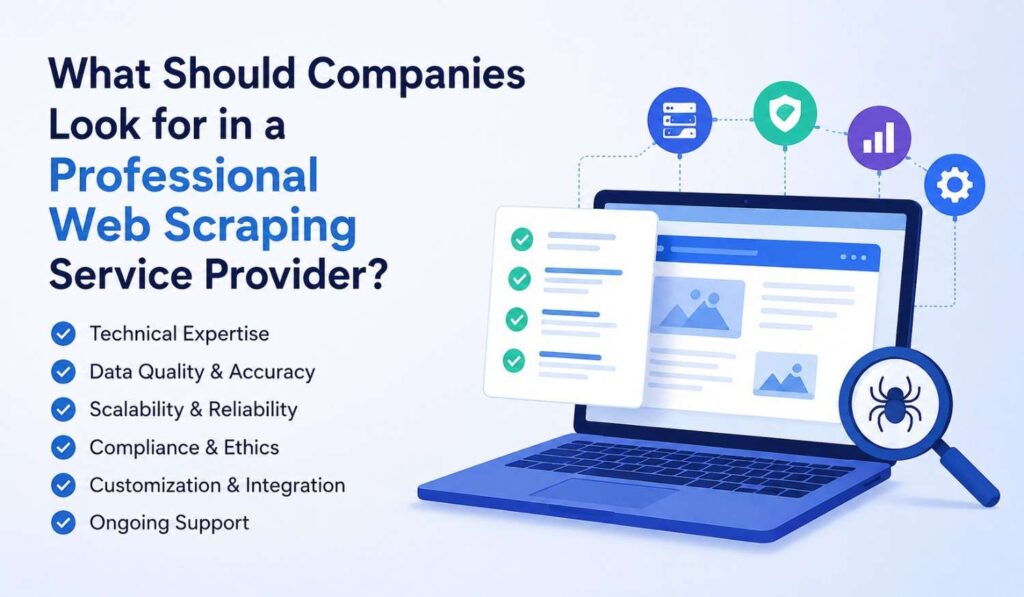

Businesses today run on data — pricing data, customer insights, competitor analysis, market trends, and operational intelligence. Naturally, companies searching for reliable extraction solutions often discover that not every provider delivers the same level of quality. Some promise “unlimited data in 24 hours which usually sounds impressive until servers start collapsing like a poorly assembled office chair. A professional scraping partner should offer far more than scripts and spreadsheets. The right team understands automation, scalability, compliance, and long-term support. Choosing carefully helps businesses avoid costly disruptions, inaccurate datasets, and operational headaches later down the road.
Understanding the Real Purpose of Web Scraping for Businesses
Data extraction is no longer just a technical experiment reserved for developers working late nights with too much coffee and too many browser tabs open. Businesses now depend on structured information to improve decisions, monitor competitors, optimize pricing, and discover emerging opportunities. Professional providers focus on collecting meaningful data aligned with business goals instead of dumping random datasets into CSV files and calling it innovation. The best teams begin by understanding workflows, reporting needs, and operational priorities. That strategic approach transforms raw information into usable business intelligence capable of supporting long-term growth and smarter decision-making across departments.
Technical Expertise Should Be the First Evaluation Factor
A professional provider must demonstrate strong technical expertise before discussing timelines or pricing. Modern websites use JavaScript frameworks, APIs, anti-bot systems, dynamic content, and security protections that make extraction increasingly complex. Experienced developers know how to handle rotating proxies, browser automation, CAPTCHAs, and distributed infrastructure without creating unstable systems. Unfortunately, many businesses discover too late that simple scraping scripts work perfectly — right until websites decide to fight back. Reliable providers build scalable architectures designed for stability, adaptability, and performance. Strong coding practices and cloud-ready infrastructure often separate professional teams from temporary freelancers offering quick fixes.
Data Accuracy and Quality Control Matter More Than Volume
Large datasets may look impressive during presentations, but inaccurate information creates expensive business problems. Professional extraction providers prioritize validation, normalization, formatting consistency, and duplicate removal before delivery. Businesses integrating scraped information into ERP systems, CRMs, or analytics platforms require dependable outputs that support operational workflows without additional cleanup. Many organizations underestimate how much time poor-quality data wastes internally until employees spend entire afternoons correcting broken records manually. Reliable providers implement automated monitoring systems and quality assurance processes to maintain consistency over time. Accurate information ultimately delivers more value than massive quantities of unreliable or incomplete data ever could.
Scalability Is Essential for Long-Term Projects
Many businesses begin with small extraction requirements, only to realize months later that their “temporary” project has become critical infrastructure supporting daily operations. Professional providers prepare for that growth from the beginning. Scalable architecture allows extraction systems to process thousands or even millions of records efficiently without slowing operations or triggering website restrictions. Cloud deployment, distributed processing, and automation pipelines become increasingly important as demand expands. Experienced teams design systems capable of adapting to future requirements instead of rebuilding entire workflows repeatedly. Scalability protects businesses from costly migrations, unstable performance, and operational bottlenecks as data requirements continue growing.
Compliance, Ethics, and Data Responsibility Cannot Be Ignored
Responsible data extraction requires more than technical knowledge. Businesses should evaluate whether providers follow ethical practices, respect platform policies, and maintain strong security standards. Shortcuts may produce fast results initially, but risky methods often create legal exposure, reputational damage, and long-term operational concerns. Professional teams prioritize transparency, compliance awareness, and secure handling of collected information throughout the project lifecycle. Data privacy expectations continue increasing globally, making responsible processes even more important. Companies should also verify confidentiality agreements, access controls, and storage practices before sharing business requirements. Reliable providers protect both information systems and professional reputations carefully.
Customization Capabilities Separate Professionals From Freelancers
Every business handles data differently, which means generic extraction solutions rarely support long-term operational goals effectively. Professional providers build customized workflows based on reporting structures, software integrations, industry requirements, and automation needs. One company may require API delivery into a CRM, while another needs dashboards integrated into internal ERP systems. Flexibility matters because operational needs evolve constantly. Businesses often begin with spreadsheet exports before realizing they need real-time pipelines, automated alerts, and advanced filtering capabilities. Experienced teams adapt quickly without disrupting existing workflows. That ability to customize solutions efficiently often becomes one of the biggest long-term advantages.
Maintenance and Ongoing Support Are Often Overlooked
Websites change constantly — layouts shift, APIs disappear, anti-bot protections strengthen, and entire page structures suddenly redesign themselves overnight for reasons known only to developers and corporate marketing teams. Professional extraction providers offer ongoing support and proactive maintenance to keep systems operational despite those changes. One-time delivery models may appear affordable initially, but unsupported systems often fail unexpectedly. Reliable partners monitor extraction performance, resolve issues quickly, and maintain uptime consistently. Businesses relying on automated data pipelines cannot afford interruptions caused by outdated scripts or broken workflows. Continuous support ensures operational stability while reducing internal troubleshooting burdens significantly over time.
Transparency in Communication and Project Management
Strong communication often determines whether a technical project succeeds smoothly or collapses into endless confusion and missed deadlines. Professional providers maintain transparent workflows, realistic timelines, and structured reporting throughout the engagement process. Businesses should understand exactly what data will be collected, how frequently updates occur, and how issues are resolved. Clear documentation also helps non-technical stakeholders stay informed without drowning in complicated developer terminology. Experienced providers simplify communication while maintaining technical accuracy. Regular updates, milestone tracking, and collaborative planning create trust between teams. Transparency ultimately reduces misunderstandings and helps projects move forward more efficiently from start to finish.
Infrastructure Security Should Never Be an Afterthought
Businesses sharing operational requirements and proprietary workflows should evaluate infrastructure security carefully before selecting a provider. Professional teams implement encrypted transfers, secure servers, access restrictions, and backup systems designed to protect sensitive information. Weak security practices create risks extending far beyond temporary downtime. Reliable providers also establish disaster recovery strategies to maintain continuity during unexpected technical failures. As organizations increasingly integrate automated extraction into internal systems, enterprise-grade security becomes even more important. Businesses should verify whether providers follow internal compliance expectations and maintain proper access controls. Strong infrastructure security protects operational reliability, customer trust, and long-term business continuity simultaneously.
Industry Experience Helps Avoid Expensive Mistakes
Providers with industry-specific experience often identify challenges much faster than general technical teams. Extraction requirements vary significantly between healthcare, finance, eCommerce, logistics, and real estate industries, particularly regarding compliance expectations and data structures. Experienced professionals understand where websites hide inconsistent information, duplicate listings, incomplete fields, and unusual formatting issues. That knowledge reduces delays and prevents expensive operational mistakes later. Reviewing case studies, portfolios, and client success stories helps businesses evaluate expertise effectively. Professional providers should also offer strategic guidance instead of acting solely as coding vendors. Industry knowledge frequently improves efficiency, stability, and long-term project outcomes considerably.
Cost Should Be Evaluated Carefully — Not Just Cheaply
Budget matters, of course, but focusing only on the lowest price often leads businesses toward unstable systems, poor support, and disappointing results. Many companies eventually spend more repairing failed implementations than they would have spent hiring experienced professionals initially. Reliable providers balance pricing with quality assurance, infrastructure reliability, maintenance, and long-term scalability. Businesses should understand whether pricing includes support, updates, cloud resources, and monitoring services before comparing vendors directly. Value-driven decision-making produces better long-term returns than choosing the cheapest option available online. Sustainable solutions save time, reduce operational risks, and improve overall efficiency substantially over time.
Signs That a Company Has Found the Right Data Extraction Partner
Web scraping services providers consistently demonstrate reliability through communication, technical execution, adaptability, and long-term support. Businesses should notice organized workflows, realistic expectations, responsive troubleshooting, and stable data delivery processes throughout collaboration. Reliable teams proactively address challenges instead of disappearing whenever websites update unexpectedly. Scalability planning, documentation quality, and integration support also indicate professional maturity. The right partner functions less like a temporary contractor and more like an operational extension of the business itself. That relationship becomes increasingly valuable as automation expands across departments. Consistency, transparency, and strategic thinking usually reveal whether a provider genuinely understands business-driven extraction projects.
Future Trends in Web Data Extraction Services
Automation technologies continue evolving rapidly, reshaping how businesses collect, process, and analyze information online. Artificial intelligence, machine learning, and real-time monitoring systems are becoming increasingly common within modern extraction workflows. Cloud-native infrastructure also enables faster scaling, improved performance, and more resilient automation pipelines. Businesses now expect instant access to structured information instead of waiting days for static reports. Ethical automation and compliance awareness will likely become even more important as regulations evolve globally. Professional providers prepared for these changes can help businesses remain competitive while adapting smoothly to future operational demands and increasingly sophisticated digital environments.
Conclusion
Choosing the right extraction partner requires careful evaluation of technical expertise, scalability, compliance practices, communication quality, and long-term support capabilities. Businesses relying on automated information pipelines need reliable systems capable of adapting as operational demands evolve. Cheap shortcuts may appear tempting initially, but unstable infrastructure and inaccurate datasets usually create larger problems later. Reliable automation reduces operational friction, improves strategic decision-making, and supports sustainable growth across industries. Data has become one of the most valuable business resources available today — and like any valuable resource, it deserves experienced professionals handling it carefully, responsibly, and with a little less chaos.
FAQs
What qualities define a professional data scraping company?
Professional providers typically offer technical expertise, scalable infrastructure, quality assurance processes, ongoing support, and strong compliance awareness. They also communicate clearly and adapt solutions based on business requirements rather than using generic tools for every project.
How important is data accuracy in scraping projects?
Data accuracy directly affects reporting, analytics, automation workflows, and business decisions. Inaccurate information creates operational inefficiencies, wasted time, and unreliable insights that may negatively impact long-term business strategies.
Can scraping solutions integrate with ERP or CRM systems?
Yes, experienced providers often build custom APIs, dashboards, and automated integrations that connect extracted information with ERP, CRM, analytics, and internal reporting platforms efficiently.
Is web scraping legal for businesses?
Legality depends on the source website, usage policies, compliance standards, and how collected data is handled. Responsible providers follow ethical practices and maintain transparency throughout extraction operations.
Why do scraping projects require ongoing maintenance?
Websites frequently update layouts, APIs, and anti-bot protections. Ongoing maintenance ensures extraction systems continue operating properly without interruptions or data inconsistencies.
How can businesses evaluate a provider’s technical expertise?
Businesses should review case studies, portfolios, infrastructure capabilities, programming expertise, scalability practices, and support models before selecting a provider for long-term projects.
What industries benefit most from automated data extraction?
Industries including eCommerce, healthcare, logistics, finance, travel, market research, and real estate commonly use automated extraction solutions for analytics, monitoring, and operational intelligence.
Should businesses prioritize price when hiring a provider?
Cost matters, but reliability, scalability, support quality, and infrastructure security usually deliver better long-term value than choosing the cheapest provider available.