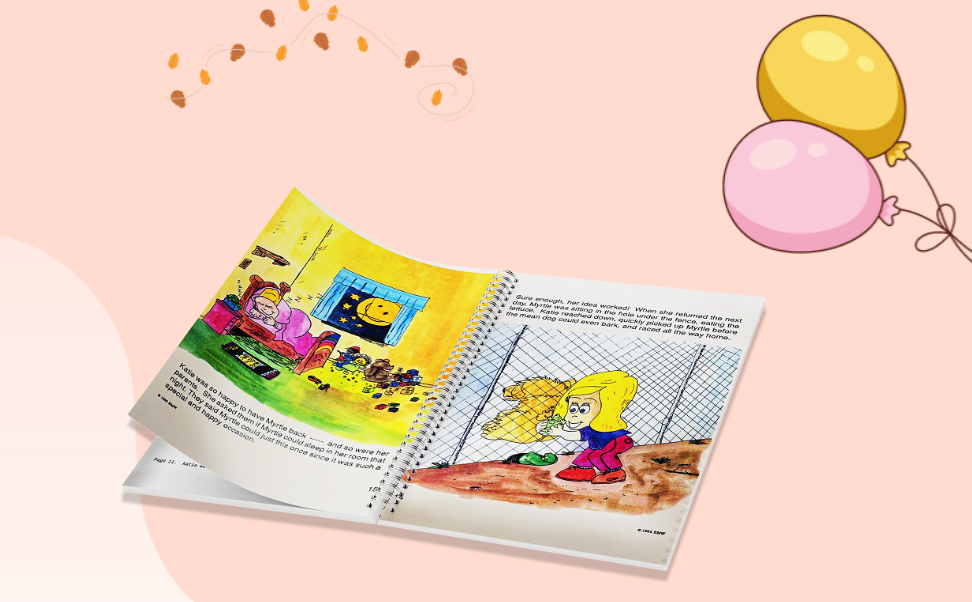

Little books and little readers go together well. There is something about a small, manageable book that makes a toddler or preschooler feel like they own the thing, which in a meaningful sense they do. The best little children’s books meet kids exactly where they are, with stories and ideas they can actually follow, illustrations they can point to and name, and language that feels like a conversation rather than a lecture.
Here is a look at some of the best options out there right now and what makes them worth picking up.
What Works Best for the Youngest Readers
Children between the ages of one and five are at a remarkable stage of development. Language, social awareness, and emotional knowledge are all expanding fast. Books that are built for this stage do not just fill time. They actively contribute to development in ways that last.
The key is finding books that are simple without being empty. A good toddler or preschool book has something real in it, an emotion, a situation, a relationship, that a child can latch onto and revisit.
Board Books for the Youngest (Ages 0 to 2)
What to Look For
Board books need to be durable above everything else. After that, you want clear, high-contrast images for babies and more detailed illustrations with recognizable objects for older toddlers. Content that involves repetition and rhythm gives young children something to hold onto and anticipate.
The best board books for this age group also invite participation. Pointing, naming, making sounds along with the text, these small interactions are actually language-building activities happening through a fun shared moment.
Recommendations Worth Having
Sandra Boynton’s board books, Moo Baa La La La, The Going to Bed Book, Barnyard Dance, are consistently excellent. They have rhythm, humor, and enough repetition that toddlers can start to anticipate what comes next, which they find enormously satisfying. Eric Carle’s The Very Hungry Caterpillar remains one of the most effective board books ever made. The die-cut pages, the counting, and the transformation at the end hit multiple developmental targets at once.
For babies, black-and-white high-contrast books designed specifically for infant vision are worth having in the early months before color perception fully develops.
Picture Books for Preschoolers (Ages 3 to 5)
The Emotional Themes That Matter at This Stage
Preschoolers are social beings in training. They are working out how friendships work, how to handle not getting what they want, how to deal with bigger kids or siblings, and how to ask for help without feeling embarrassed. Books that speak to those experiences directly are the ones that get pulled off the shelf repeatedly.
This is where Myrtle the Turtle by Bruce M. Wermuth fits well. It is a picture book about a girl named Katie who gets a pet turtle named Myrtle and has to figure out how to handle the challenges that come with caring for something that moves at a slower pace. Along the way, she deals with unkindness from another child and learns to respond with kindness rather than retaliation. The story is built by a child psychiatrist with decades of clinical experience, and that background shows in how thoughtfully the emotional content is handled. It is available at myrtletheturtle.co and on Amazon, and has earned real praise from educators and counselors who use it in classroom and therapeutic settings.
Books That Build Language
At this age, vocabulary is expanding quickly. Books that use slightly more developed language than what a child uses in everyday conversation, while still being understandable in context, help build that vocabulary passively through repeated reading. Children do not need every word explained. They pick up meaning from context, illustration, and tone, which is actually how language acquisition works most naturally.
Look for books where the writing is genuinely good, not simplified to the point of blandness, but also not so dense that it loses a preschooler’s attention.
Key Themes in Little Children’s Books Worth Prioritizing
Friendship & Conflict
Books about making friends, losing friends temporarily, and navigating disagreements give preschoolers a safe space to think through social experiences they are having in real life. When a child sees a character work through a conflict and come out on the other side, it gives them a mental model for handling something similar.
Asking for Help
This is a theme that does not get enough attention in children’s books. Many kids struggle with asking for help because they perceive it as a sign of weakness or because they are afraid of the response. Stories where a character asks for help and it goes well, where the help is given warmly and leads to a better outcome, normalises that behavior in a way that sticks.
Courage & Trying New Things
Preschool and kindergarten are full of new things. New classrooms, new routines, new people. Books about characters who feel nervous about something and do it anyway give children a narrative framework for processing their own feelings about transitions and challenges.
Making Books a Daily Habit at This Age
The research on reading aloud to young children is consistent and strong. Daily reading, even for ten to fifteen minutes, builds vocabulary, comprehension, and a relationship with stories that supports literacy for years. The key is making it a routine that children look forward to rather than a task.
Picking a consistent time, before nap, after dinner, at bedtime, and letting the child have some say in what gets read builds the habit more effectively than sporadic longer sessions.
Letting the Child Lead
At this age, children often want to read the same book every night for a week. That is not a problem. Repetition is how young children learn. By the fifth reading, a child often has the text partially memorized, which is an early literacy milestone worth celebrating rather than rushing past.
Let them point to the pictures, name things, make predictions, and ask the same question they asked last night. That engagement is the whole point. The book is just the vehicle.