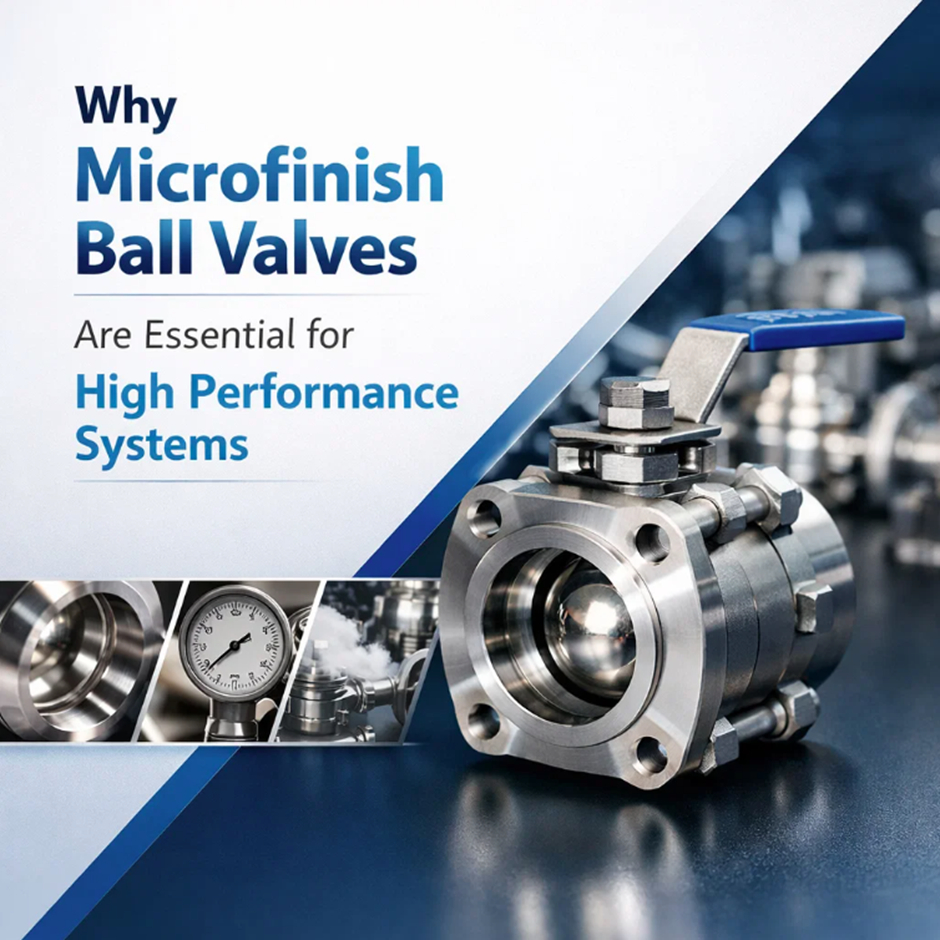

If you work with industrial flow systems, you probably know how important tiny details can be. That is why microfinish valves are more than just parts. They are built to deliver smooth performance, long life, and trusted safety when you need it most. These valves are designed to work in the hardest environments while keeping leak levels low (minimal) and service life high.
What Makes Microfinish Valves Stand Out
At the heart of great fluid Isolation is quality and testing that you can count on. Some of the core strengths of these valves include:
- Standard 3-year warranty on many products.
- They are made in facilities that hold API 6D Monogram and ISO 9001 certification, which shows they meet strict global standards.
- Many products are also SIL-3 rated and meet ISO 15848 emission standards, meaning they control leaks very well.
- X-Ray or Ultrasonic Tests are used on every valve rated at 600# and above.
- Raw materials have full traceability from start to finish.
These quality checks help ensure that the valves do their job without surprises.
Strong Performance Across Industries
These valves are often used in places where pressure and safety are top concerns, like (Such as) pipelines, refineries, measurement systems, and terminals.
Microfinish valves offer superior performance across industries, featuring high-pressure, temperature resistance, and a 90-degree turn for quick on/off control. Ideal for oil and gas, chemical processing, and water treatment, they provide a “bubble-tight” seal, long service life, and low maintenance needs.
Here is what you can expect from this category:
- Floating and Trunnion Ball Valves:
Floating RB/FB: ½” to 10” ANSI 150-2500
Trunnion: RB/FB: 2” to 36” ANSI 150-2500
- Cryogenic ball valves that can work at very low temperatures.
- Swing check valves to stop backward flow.
These models give engineers choices for many designs and demands.
How These Valves Are Tested?
Nothing is left to chance. API 6D, API 598, ISO 5208. For valves in higher pressure classes (like 600# and above), every valve is examined with either X-ray or ultrasonic methods to find tiny flaws. For lower pressure valves, sample testing is done to make sure production stays on track. All raw materials are tracked every step of the way so teams always know what went into a product.
Other Valve Technologies in Big Projects
Beyond these microfinish options, engineers may look at different types of valves based on what they need to control.
Omni DIB/DBB Expanding Plug Valves
Modern systems may require valves that block flow both before and after the valve and then drain the space in between. These Omni DIB/DBB expanding plug valves help meet that need. They are strong and provide safe isolation for dangerous environments.
They can be great for systems with very strict safety needs. When space is tight or isolating fluids is key, these plug valves give operators confidence with double blocking and controlled bleed points.
API 6D 4-Way Diverter Valve
Some plants need fluid directed in more than one direction at once. An API 6D 4-way diverter valve allows a single control point to shift flow to different branches. This makes design simpler in complex piping layouts and helps reduce costs on large systems.
Why Testing and Safety Matter
In high-pressure systems, safety is not just a nice feature — it is a must. Products like these valves go through special testing and certifications:
- API 6D standards for pipeline valves.
- ISO 9001 quality management checks.
- Emission standards to keep leaks to a minimum.
These checks help systems stay safe for workers, communities, and the environment.
Big Inventory and Global Use
One thing engineers and plant managers care about is getting parts quickly when they are needed. These valves have a huge inventory in Houston and are already installed around the world, with more than 1.8 million valves in use globally. This makes repairs, upgrades, and new builds easier and faster.
Choosing the Right Valve
Think about what your system needs the most:
- If you need smooth control and low friction flow, choose microfinish ball valves with careful sealing.
- If isolating pressure and safety is key, consider Omni DIB/DBB expanding plug valves with double isolation.
- For systems that need flow in many directions, an API 6D 4-way diverter valve may fit better.
Each valve type has its place, and picking the right one depends on how your system is setup and what your goals are.
Wrap-Up Thoughts
Quality valves keep systems running smoothly, safely, and with fewer surprises. From high-quality microfinish valves with strict testing and long warranties to advanced DBB- DIB Plug and diverter valves, modern valve technology helps systems stay reliable. Choosing the right parts, like microfinish ball valves, builds confidence in every project and keeps work moving forward with fewer headaches.