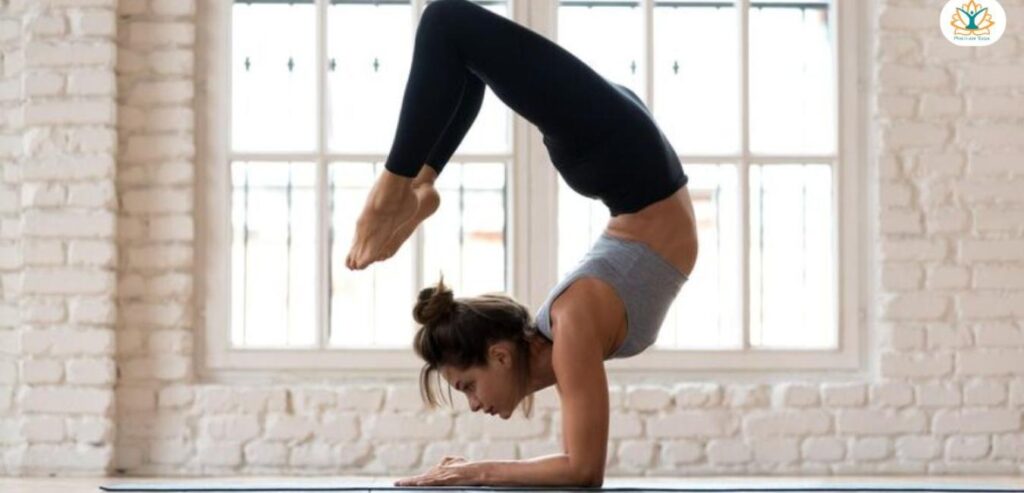

Scorpion Posture Yoga, traditionally known as Vrschikasana, is one of the most advanced and visually captivating poses in yoga. This powerful inversion combines strength, flexibility, balance, and mental focus into a single dynamic posture. Practicing scorpion posture yoga is not just about achieving an impressive shape—it’s about developing discipline, awareness, and a deep connection between body and mind.
In this comprehensive guide, you will learn everything about scorpion posture yoga, including its benefits, step-by-step instructions, preparation techniques, common mistakes, and safety tips. Whether you are an intermediate practitioner or an advanced yogi, this article will help you progress safely and effectively.
What Is Scorpion Posture Yoga?
Scorpion posture yoga is an advanced backbend performed while balancing upside down on the forearms or hands. In this pose, the legs bend backward toward the head, resembling the curved tail of a scorpion. The posture requires a strong upper body, a flexible spine, and excellent balance.
This pose is typically practiced as a progression from forearm stand (Pincha Mayurasana) or handstand (Adho Mukha Vrksasana). It is considered an advanced asana because it challenges both physical strength and mental stability.
Benefits of Scorpion Posture Yoga
Practicing scorpion posture yoga offers a wide range of physical and mental benefits:
1. Builds Upper Body Strength
The pose strengthens the shoulders, arms, and wrists. Supporting your body weight upside down engages deep stabilizing muscles.
2. Improves Spinal Flexibility
Scorpion posture yoga deeply stretches the spine, chest, and hip flexors, promoting better posture and mobility.
3. Enhances Balance and Coordination
Balancing in an inverted position improves body awareness and coordination.
4. Boosts Confidence and Focus
Mastering such a challenging pose increases self-confidence and mental clarity.
5. Stimulates the Nervous System
As an inversion, it improves blood circulation to the brain, which can enhance concentration and energy levels.
6. Opens the Heart Center
This deep backbend is associated with emotional release and increased openness in yogic philosophy.
Prerequisites for Scorpion Posture Yoga
Before attempting scorpion posture yoga, it’s important to build a strong foundation. You should be comfortable with:
- Forearm Stand (Pincha Mayurasana)
- Handstand (Adho Mukha Vrksasana)
- Wheel Pose (Chakrasana)
- Backbends like Cobra (Bhujangasana) and Camel (Ustrasana)
- Core strengthening exercises
Without these prerequisites, attempting the pose can increase the risk of injury.
Warm-Up Poses for Scorpion Posture Yoga
A proper warm-up is essential for safely practicing scorpion posture yoga. Focus on opening the shoulders, spine, and hips:
- Downward Dog (Adho Mukha Svanasana)
- Dolphin Pose
- Puppy Pose (Uttana Shishosana)
- Cobra Pose (Bhujangasana)
- Bridge Pose (Setu Bandhasana)
These preparatory poses help activate the muscles and improve flexibility.
How to Do Scorpion Posture Yoga: Step-by-Step Guide
Follow these steps carefully to practice scorpion posture yoga:
Step 1: Start in Forearm Position
Begin on your mat with your forearms placed shoulder-width apart. Press your palms firmly into the ground and engage your shoulders.
Step 2: Lift Into Forearm Stand
Raise your hips and walk your feet closer to your elbows. Kick one leg up, followed by the other, entering a forearm stand.
Step 3: Stabilize Your Balance
Engage your core and keep your gaze slightly forward. Find stability before moving deeper into the pose.
Step 4: Bend Your Knees
Slowly bend your knees and begin lowering your feet toward your head.
Step 5: Arch Your Back
Open your chest and allow your spine to curve naturally. This creates the signature scorpion shape.
Step 6: Hold the Pose
Maintain steady breathing and hold the posture for a few breaths.
Step 7: Exit Safely
Slowly straighten your legs and lower one foot at a time. Rest in Child’s Pose afterward.
Tips for Beginners
If you are new to scorpion posture yoga, keep these tips in mind:
- Practice near a wall for support
- Use a spotter or teacher for guidance
- Focus on shoulder strength and flexibility
- Progress gradually without forcing the pose
- Maintain steady breathing
Patience and consistency are key to mastering this posture.
Common Mistakes to Avoid
1. Overarching the Lower Back
Forcing the backbend can strain the spine. Move gradually and mindfully.
2. Weak Shoulder Engagement
Lack of shoulder strength can lead to instability and injury.
3. Holding the Breath
Breathing should remain steady and controlled throughout the pose.
4. Skipping Warm-Up
Without proper preparation, the risk of injury increases significantly.
Variations of Scorpion Posture Yoga
1. Wall-Supported Scorpion
Practice with your feet against a wall to build confidence and control.
2. Handstand Scorpion
Balance on your hands instead of forearms for a more advanced variation.
3. One-Leg Scorpion
Extend one leg upward while bending the other to reduce intensity.
Safety Precautions
When practicing scorpion posture yoga, always prioritize safety:
- Avoid if you have neck, shoulder, or back injuries
- Practice under professional supervision if possible
- Use a soft yoga mat or cushioned surface
- Never force your body into the pose
- Stop immediately if you feel pain
Breathing Technique
Breathing plays a crucial role in maintaining balance and relaxation:
- Inhale deeply while lifting into the pose
- Exhale slowly as you bend your knees
- Maintain steady, rhythmic breathing
Proper breathing helps keep your body relaxed and stable.
Mental Focus and Awareness
Scorpion posture yoga requires strong mental focus. It helps you:
- Stay present and mindful
- Overcome fear of falling
- Improve concentration
- Build inner confidence
Visualization techniques can also help you move smoothly into the posture.
How Long Does It Take to Master Scorpion Posture Yoga?
The time required to master scorpion posture yoga varies from person to person. Factors include:
- Strength and flexibility levels
- Frequency of practice
- Quality of guidance and technique
Some practitioners may achieve it in months, while others may take years. Consistency is more important than speed.
Counter Poses After Practice
After practicing scorpion posture yoga, it’s important to relax the body with counter poses:
- Child’s Pose (Balasana)
- Forward Fold (Uttanasana)
- Supine Twist
These poses help release tension and restore balance to the spine.
Incorporating Scorpion Posture Yoga Into Your Routine
You don’t need to practice this pose daily. Instead:
- Include it in advanced yoga sessions
- Practice after a proper warm-up
- Focus on alignment rather than depth
Balanced practice ensures steady progress without injury.
Final Thoughts
Scorpion posture yoga is a powerful and transformative asana that challenges both the body and the mind. While it may appear intimidating at first, breaking it down into manageable steps makes it achievable with consistent effort.
Remember that yoga is a journey of self-discovery. Progress may take time, but every attempt brings you closer to mastering the pose. Stay patient, listen to your body, and enjoy the process.
With dedication, mindfulness, and regular practice, you can successfully master scorpion posture yoga and experience its incredible benefits.