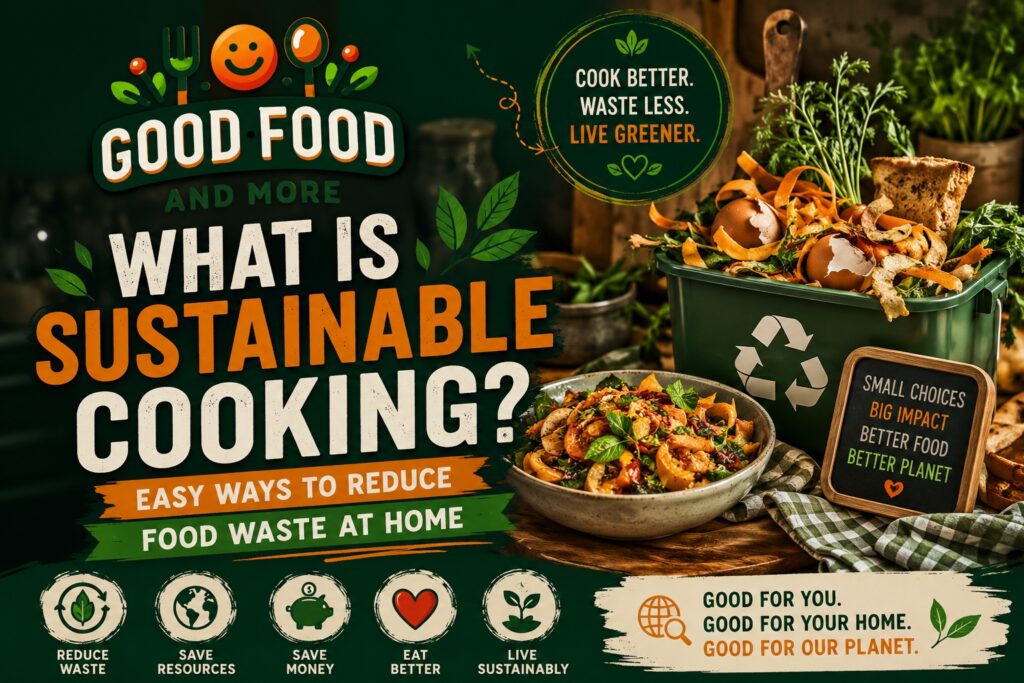

More people are educated about how their everyday actions impact the environment in today’s society. Sustainable cooking is one of the key actions to help our planet and its inhabitants become healthier. Sustainable cooking is cooking food in a way that helps minimize food waste and energy consumption, and uses natural resources more efficiently. It can benefit the environment and help families save money and eat healthier.
We at Good Food and More think that over the long term, these small, positive, kitchen actions can have a significant impact. With some smart food choices and less waste, any individual can make their home a more eco-friendly place to live.
What Is Sustainable Cooking?
Sustainable cooking is about using food responsibly and in a way that reduces food waste. This involves careful meal planning, food storage, making use of leftovers, and picking local or seasonal foods when possible.
Waste of food is a serious problem worldwide! Edible food is wasted annually by discarding millions of tons; this wastes water, energy, labour, and transportation. Sustainable cooking is a way of encouraging more sustainable cooking and eating behaviors, thereby helping to alleviate this issue.
Why Reducing Food Waste Matters
Everyone benefits by reducing food waste, including households and the environment. If food is wasted, so is the water, land, natural resources, and labor that were used to grow, package, and transport the food. Methane gas is produced in landfills from food waste, and that is also a contributor to climate change.
Here are some important benefits of reducing food waste:
- Saves money on grocery bills
- Reduces environmental pollution
- Helps conserve water and energy
- Encourages healthier meal planning
- Supports a sustainable lifestyle
Even small changes in the kitchen can make a meaningful difference over time. Check out: https://goodfoodandmore.com/categories/healthy-indulgence/
Easy Ways to Reduce Food Waste at Home
1. Plan Meals Before Shopping
One of the easiest ways to reduce waste is by planning meals. Before going grocery shopping, check what ingredients you already have at home and create a shopping list based on your weekly meals.
This helps avoid buying unnecessary items that may spoil before use.
2. Store Food Properly
Improper storage often causes fruits, vegetables, and leftovers to spoil quickly. Learn the best ways to store different foods to increase freshness and shelf life.
For example:
- Keep herbs in water like fresh flowers
- Store onions and potatoes separately
- Use airtight containers for leftovers
Proper storage reduces spoilage and keeps food safe for longer periods.
3. Use Leftovers Creatively
Leftovers do not have to be boring. Extra vegetables can be added to soups, rice dishes, or omelets. Stale bread can become croutons or breadcrumbs.
Creative cooking reduces waste while saving cooking time and money.
4. Buy Only What You Need
Bulk shopping may seem convenient, but overbuying often leads to wasted food. Purchase realistic quantities based on your family’s eating habits.
If possible, buy fresh produce in smaller amounts more frequently.
5. Understand Expiration Labels
Many people throw away perfectly good food because they misunderstand labels like “Best Before” and “Use By.”
- “Best Before” usually refers to quality, not safety
- “Use By” indicates when food should be consumed safely
Learning the difference can help reduce unnecessary waste.
6. Compost Food Scraps
Fruit peels, coffee grounds, and vegetable scraps can be composted instead of thrown away. Composting turns food waste into nutrient-rich material for gardens and plants.
This is an eco-friendly way to reduce household waste naturally.
7. Cook with Seasonal Ingredients
Seasonal foods are often fresher, more affordable, and environmentally friendly because they require less transportation and storage.
Supporting local farmers and seasonal produce also strengthens local food systems.
Sustainable Cooking Tips for Beginners
If you are new to sustainable cooking, start with simple habits:
- Freeze extra food before it spoils
- Organize your refrigerator regularly
- Use reusable kitchen products
- Prepare smaller meal portions
- Turn vegetable scraps into homemade broth
Sustainable cooking does not require perfection. Small improvements over time can create long-lasting positive results.
Final Thoughts
Sustainable cooking is making conscious decisions while cooking that will not negatively impact the environment or your family. This can help households save money and contribute to a greener Earth by minimizing food waste, making strategic use of ingredients, and planning meals carefully.
We hope that everyone at Good Food and More continues to develop sensible and green ways to cook. Changes in everyday behaviour can create a more sustainable future for generations to come.
FAQs
What is sustainable cooking?
Sustainable cooking means preparing food in ways that reduce waste, save resources, and support environmentally friendly habits.
How can I reduce food waste at home?
You can reduce food waste by meal planning, storing food properly, using leftovers, and buying only what you need.
Why is food waste harmful to the environment?
Food waste increases landfill waste and produces methane gas, which contributes to climate change.
Is sustainable cooking expensive?
No, sustainable cooking often saves money because it helps reduce unnecessary grocery spending and food waste.
What are examples of sustainable cooking habits?
Examples include composting food scraps, cooking with seasonal ingredients, freezing leftovers, and reusing extra ingredients creatively.