
Introduction
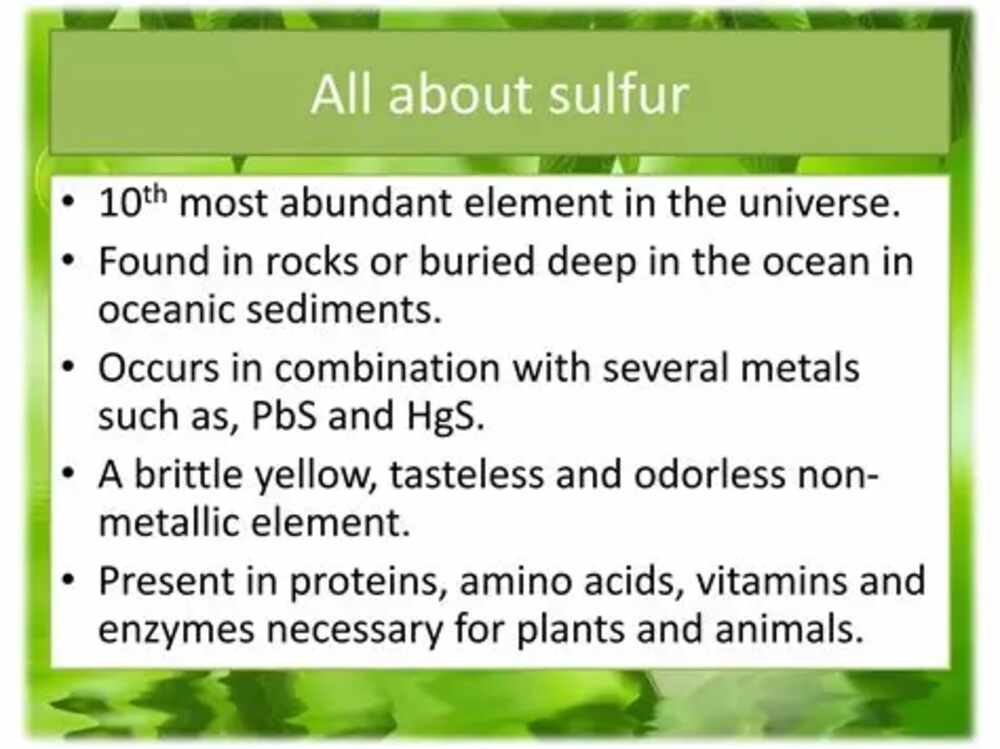
Sulfur is one of the most fascinating chemical elements found in nature. Recognized by its bright yellow appearance and distinct smell when combined in certain compounds, sulfur has been essential to both natural processes and human civilization for centuries. From volcanic landscapes to industrial production, this element plays a significant role in chemistry, agriculture, medicine, and manufacturing. Understanding sulfur’s properties and characteristics helps explain why it remains such an important material across multiple industries.
What Is Sulfur?
Sulfur is a non-metallic chemical element with the symbol S and atomic number 16. It belongs to Group 16 of the periodic table, also known as the chalcogen family, alongside oxygen, selenium, and tellurium. Sulfur occurs naturally in pure form as a yellow crystalline solid, but it is also commonly found in minerals and compounds such as sulfides and sulfates.
Historically, sulfur has been known since ancient times. Early civilizations used it in medicinal preparations, religious rituals, and even primitive forms of chemical experimentation. Its natural abundance and reactive properties made it one of the earliest elements studied by alchemists and later by modern scientists.
Physical Properties of Sulfur
Sulfur has several unique physical characteristics that distinguish it from other elements.
1. Color and Appearance
Pure sulfur is typically bright yellow. Its vibrant color makes it easy to identify in natural deposits, especially near volcanic regions and hot springs. When refined, sulfur often appears as fine yellow powder or crystalline chunks.
2. State and Structure
At room temperature, sulfur exists as a brittle solid. It has a crystalline structure, meaning its atoms are arranged in a repeating pattern. The most common molecular form is S8, a ring-shaped molecule made of eight sulfur atoms bonded together.
This molecular structure contributes to sulfur’s stability under normal conditions while allowing it to participate in various chemical reactions.
3. Density and Hardness
Sulfur is relatively lightweight compared to many industrial minerals, with a density of about 2.07 g/cm³. It is also soft and brittle, which means it can be crushed easily into powder.
4. Melting and Boiling Points
Sulfur melts at approximately 115°C (239°F) and boils at around 445°C (833°F). Interestingly, molten sulfur changes color as temperature rises, shifting from yellow to reddish-brown due to changes in molecular structure.
This unusual behavior makes sulfur an interesting subject in thermodynamics and materials science.
5. Insolubility in Water
Sulfur does not dissolve in water, making it resistant to moisture under many conditions. However, it can dissolve in certain organic solvents such as carbon disulfide.
Chemical Properties of Sulfur
Sulfur is highly valued because of its versatile chemical behavior.
1. Reactivity with Metals
Sulfur reacts readily with metals to form sulfides. For example, when sulfur combines with iron, it produces iron sulfide. These compounds are commonly found in ores and industrial materials.
Metal sulfides are essential in mining and metallurgy, where sulfur chemistry helps process valuable minerals.
2. Combustion Properties
When sulfur burns, it produces a blue flame and releases sulfur dioxide (SO₂), a gas with a pungent odor. The reaction is:
S + O₂ → SO₂
Sulfur dioxide is widely used in industrial applications, including chemical production and food preservation.
3. Oxidation States
Sulfur can exist in multiple oxidation states, ranging from -2 to +6. This flexibility allows sulfur to form a wide variety of compounds, including:
- Hydrogen sulfide (H₂S)
- Sulfuric acid (H₂SO₄)
- Sulfates
- Sulfites
Its ability to adopt different oxidation states makes sulfur highly important in redox reactions.
4. Formation of Acids
One of sulfur’s most commercially significant properties is its ability to form sulfuric acid. Sulfuric acid is considered one of the most important industrial chemicals worldwide, used in fertilizers, batteries, detergents, and petroleum refining.
Natural Occurrence of Sulfur
Sulfur is widely distributed throughout Earth’s crust. It occurs in several forms:
1. Elemental Sulfur
Native sulfur is found near volcanic regions, geothermal vents, and hot springs. These deposits form when sulfur-containing gases react with oxygen and condense.
2. Sulfide Minerals
Many metal ores contain sulfur in sulfide form, including:
- Pyrite (FeS₂)
- Galena (PbS)
- Sphalerite (ZnS)
These minerals are important sources of metals and sulfur compounds.
3. Sulfate Minerals
Sulfur is also present in sulfate minerals such as gypsum and barite. Sulfates are widely used in construction, agriculture, and industrial chemistry.
4. Biological Sources
Sulfur is an essential element in living organisms. It is present in amino acids such as cysteine and methionine, which are building blocks of proteins.
Plants absorb sulfur from soil, while animals obtain it through food consumption.
Industrial Applications of Sulfur
Sulfur’s physical and chemical properties make it highly valuable in numerous industries.
Agriculture
Sulfur is widely used in fertilizers to improve soil quality and support plant growth. It helps plants synthesize proteins and enzymes.
Sulfur-based pesticides and fungicides are also common in crop protection.
Rubber Industry
Sulfur is essential in vulcanization, a process that strengthens rubber by creating cross-links between polymer chains. This improves durability, elasticity, and heat resistance.
Chemical Manufacturing
Sulfur is a key raw material for producing sulfuric acid, one of the most important industrial chemicals globally.
Pharmaceuticals
Sulfur compounds are used in medicines, skincare products, and antiseptics. Sulfur-based ointments are commonly applied to treat skin conditions.
Food Preservation
Sulfur dioxide is used as a preservative in dried fruits, beverages, and food processing.
Environmental Importance of Sulfur
Sulfur is part of the natural sulfur cycle, which moves sulfur through air, water, soil, and living organisms.
Volcanic eruptions release sulfur gases into the atmosphere, while decomposition and microbial activity recycle sulfur back into ecosystems.
However, excessive sulfur emissions from industry can contribute to acid rain, highlighting the need for environmental management and emission control technologies.
Conclusion
Toko Sulfur is far more than a simple yellow mineral. Its unique combination of physical stability, chemical versatility, and natural abundance makes it indispensable in science and industry. From fertilizers and pharmaceuticals to rubber manufacturing and chemical production, sulfur continues to support modern life in countless ways.
By understanding the science behind sulfur—its properties, characteristics, and applications—we gain a deeper appreciation for this remarkable element and its role in both natural systems and industrial development.