
Peripheral Artery Disease (PAD) is a common circulatory condition that occurs when narrowed arteries reduce blood flow to the legs, feet, and other parts of the body. The condition is mainly caused by plaque buildup in the arteries, also known as atherosclerosis. Over time, restricted blood flow can lead to pain, discomfort, and serious health complications if left untreated.
PAD not only affects circulation in the legs but also increases the risk of heart attack and stroke. Early diagnosis and proper treatment are important for improving blood flow and protecting overall cardiovascular health.
What Is Peripheral Artery Disease?
Peripheral Artery Disease develops when fatty deposits accumulate inside the arteries, making it difficult for oxygen-rich blood to reach the muscles and tissues. The condition most commonly affects the legs and feet because these areas are farthest from the heart.
Many people may not notice symptoms during the early stages, while others experience discomfort during physical activity.
Common Symptoms of Peripheral Artery Disease
Leg Pain While Walking
One of the most common symptoms of PAD is leg pain or cramping during walking or exercise. This condition is called claudication and usually improves with rest.
Numbness and Weakness
Reduced blood flow can cause numbness, weakness, or heaviness in the legs.
Cold Feet or Legs
One leg or foot may feel colder than the other because of poor circulation.
Slow-Healing Wounds
Cuts or sores on the feet and legs may heal slowly due to reduced blood supply.
Skin Changes
PAD can cause shiny skin, hair loss on the legs, or discoloration of the skin.
Pain During Rest
In severe cases, pain may occur even while resting or sleeping.Peripheral Artery Disease
Causes of Peripheral Artery Disease
Several factors contribute to the development of PAD, including:
- Atherosclerosis (plaque buildup in arteries)
- Smoking
- Diabetes
- High cholesterol
- High blood pressure
- Obesity
- Lack of physical activity
- Aging and family history
Smoking and diabetes are among the strongest risk factors for Peripheral Artery Disease.
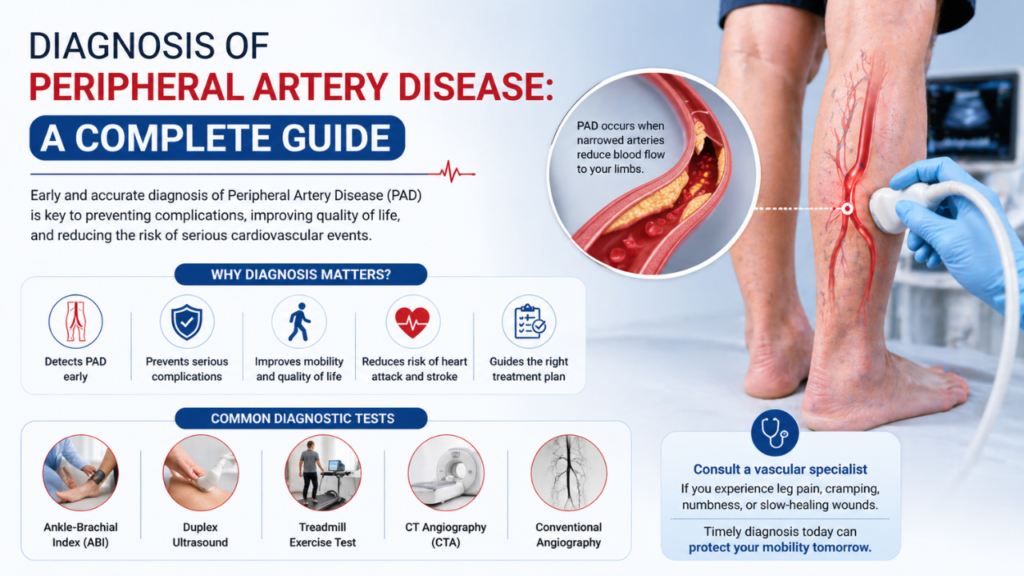
How Is PAD Diagnosed?
Doctors use several tests to diagnose Peripheral Artery Disease:
Physical Examination
The doctor checks for weak pulses, skin changes, and poor circulation in the legs.
Ankle-Brachial Index (ABI) Test
This test compares blood pressure in the ankle and arm to detect reduced blood flow.
Doppler Ultrasound
Ultrasound imaging helps identify narrowed or blocked arteries.
Angiography
Advanced imaging tests may be used to evaluate severe blockages.
Treatment Options for Peripheral Artery Disease
Lifestyle Changes
Healthy habits are essential for managing PAD:
- Quit smoking
- Exercise regularly
- Maintain a healthy weight
- Follow a heart-healthy diet
- Control diabetes and blood pressure
Medications
Doctors may prescribe medications to:
- Improve blood circulation
- Lower cholesterol
- Prevent blood clots
- Reduce blood pressure
Minimally Invasive Procedures
Angioplasty and stent placement can help open blocked arteries and restore blood flow.
Surgery
Severe cases may require bypass surgery to improve circulation around blocked arteries.
Tips to Improve Blood Flow Naturally
- Walk daily to improve circulation
- Avoid sitting for long periods
- Wear comfortable footwear
- Stay hydrated
- Follow medical advice and regular checkups
Why Early Treatment Matters
Ignoring PAD symptoms can lead to severe complications such as infections, ulcers, tissue damage, and increased risk of heart attack or stroke. Early diagnosis and treatment can improve circulation, reduce pain, and help maintain an active lifestyle.
Final Thoughts
Peripheral Artery Disease is a serious but manageable condition that affects blood circulation in the legs and lower body. Recognizing symptoms early and seeking proper medical care can help prevent complications and improve overall vascular health.
If you experience leg pain, numbness, poor circulation, or slow-healing wounds, consult a healthcare professional for proper diagnosis and treatment. With the right care and lifestyle changes, many people with PAD can improve blood flow, reduce symptoms, and live healthier lives.