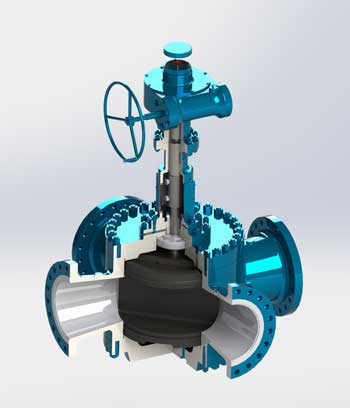

When it comes to controlling the flow of liquids and gases in industrial systems, valves play a crucial role. Among the many types of valves, the trunnion ball valve is highly regarded for its efficiency, reliability, and versatility. But what exactly is a trunnion ball valve, and why is it so important? Let’s explore this valve in more detail, along with its types and applications.
What is a Trunnion Ball Valve?
A trunnion mounted ball valve is a valve that uses a ball with two trunnions (pins) to provide support. Unlike a standard floating ball valve, where the ball is free to move, the ball in a trunnion valve is fixed at two points. This design makes it more stable, even under high pressures. Trunnion ball valves are known for their ability to handle larger flow rates and higher pressures, which makes them ideal for use in demanding industrial environments.
Key Features of Trunnion Ball Valves
- Durability and High Pressure Performance: Trunnion ball valves are built to handle high-pressure applications, such as in oil and gas pipelines, petrochemical plants, and water treatment facilities. Their sturdy construction allows them to perform well under extreme conditions.
- Leakage Prevention: One of the standout features of these valves is their ability to prevent leakage. Thanks to their design, which ensures the ball is securely held in place, trunnion ball valves are able to offer tight seals even in challenging environments.
- Longer Lifespan: Due to their durable construction and efficient design, trunnion ball valves tend to last longer than many other types of valves. This reduces the need for frequent maintenance and helps save on operational costs over time.
- Versatility in Applications: From oil and gas pipelines to chemical plants, trunnion ball valves are used in a wide variety of industries. They can regulate the flow of both liquids and gases with high accuracy.
Types of Trunnion Ball Valves
Trunnion ball valves come in various configurations to suit different operational needs. One such variant is the 2-piece trunnion ball valve. Let’s take a closer look at some of the key types:
- 2-Piece Trunnion Ball Valve
The 2-piece trunnion ball valve consists of two body pieces that are bolted together to form a single unit. This type of valve is known for its compact design and ease of installation. It’s commonly used in systems that require high-flow control with a reliable shut-off mechanism. Its design makes it easier to maintain and repair compared to more complex valves.
- Double Block & Bleed (DBB) Valves
A Double Block & Bleed (DBB) valve design is commonly integrated with trunnion ball valves to enhance safety. The DBB feature includes two shut-off valves with a bleed valve in the middle, allowing for safe isolation of the pipeline when needed. This is especially important in sectors like oil and gas, where safety is paramount.
- Double Isolation and Bleed (DIB-1 & DIB-2)
Similar to DBB valves, Double Isolation and Bleed (DIB-1 and DIB-2) valves are designed for systems that need two separate isolation barriers. The DIB feature ensures that there is no leakage between the valve and the pipeline, which is critical for preventing contamination and maintaining system integrity.
Key Standards and Certifications
Trunnion ball valves must meet several industry standards to ensure they perform optimally. Some of the key certifications include:
- API 6D: This standard covers the design and testing of valves used in pipeline systems.
- ISO 15848-1: A standard for valves that ensures low emissions, which is crucial in industries focused on environmental protection.
- API 641: Focuses on testing valves for low emissions, ensuring that they maintain a leak-free performance under different conditions.
- CSA Z245.15: Specifies the requirements for pipeline valves in Canada, including materials and testing procedures.
These certifications guarantee that trunnion ball valves meet rigorous performance and safety standards, ensuring their reliability and longevity in challenging environments.
Why Choose a Trunnion Ball Valve?
If you’re in an industry that deals with high-pressure systems or hazardous materials, choosing a trunnion mounted ball valve offers several advantages:
- Enhanced Control: Trunnion ball valves allow for precise control of flow, which is vital for critical processes in industries like oil and gas or water treatment.
- Reduced Maintenance: With their durable design, these valves require less maintenance, leading to reduced downtime and lower operational costs.
- Safety: The leak-proof design, especially when paired with features like DBB or DIB, ensures that these valves can help protect workers and the environment by preventing leaks.
Winding Up
In industries that demand reliable, high-performance valves, trunnion ball valves stand out as a top choice. Whether you’re dealing with high pressures, hazardous materials, or need precision control, these valves offer the durability and functionality that are essential for keeping operations running smoothly. With the added benefits of features like double block and bleed and low emissions certifications, trunnion ball valves continue to be a crucial component in many critical industries.