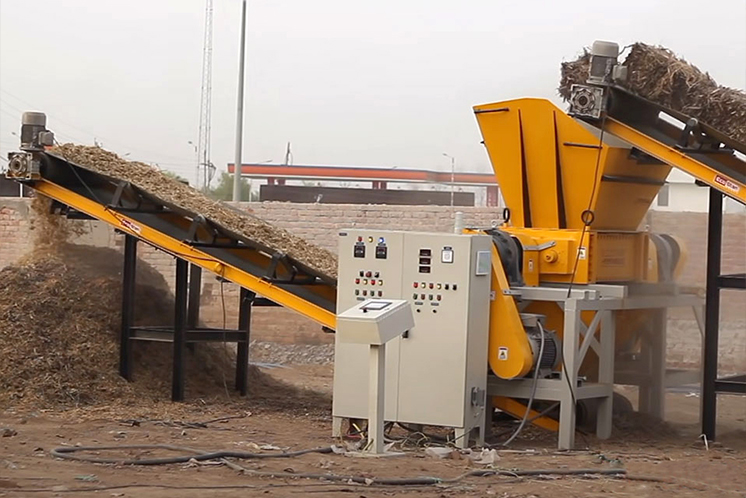

In today’s rapidly evolving world, the demand for sustainable and clean energy solutions is higher than ever. Agricultural waste management has become a crucial concern, especially in countries like India where crop residue burning contributes significantly to air pollution. Among various innovations, the Paddy Straw Briquetting Machine has emerged as a powerful solution that not only manages agricultural waste but also supports clean energy initiatives.
Understanding the Paddy Straw Problem
Paddy straw is one of the most abundant agricultural residues generated after harvesting rice. Traditionally, farmers burn this residue to clear fields quickly for the next crop cycle. While this method is cost-effective and time-saving, it releases harmful pollutants such as carbon monoxide, methane, and particulate matter into the atmosphere. This practice contributes to severe environmental issues, including smog formation, soil degradation, and health hazards.
The need for a sustainable alternative has led to the adoption of briquetting technology, where paddy straw is converted into eco-friendly fuel.
What is a Paddy Straw Briquetting Machine?
A Paddy Straw Briquetting Machine is an advanced piece of equipment designed to compress loose paddy straw into compact, solid briquettes. These briquettes serve as an alternative fuel source, replacing conventional fossil fuels like coal and firewood.
The machine uses high pressure and sometimes heat to bind the raw material without requiring any chemical additives. The result is dense, uniform briquettes that are easy to transport, store, and use in various industrial and domestic applications.
Role in Clean Energy Production
One of the most significant contributions of the Paddy Straw Briquetting Machine is its ability to transform agricultural waste into renewable energy. Briquettes produced from paddy straw have high calorific value and low moisture content, making them an efficient fuel option.
Unlike fossil fuels, these briquettes are carbon-neutral. The carbon dioxide released during combustion is roughly equal to the amount absorbed by the plants during their growth cycle. This balance helps in reducing the overall carbon footprint, making briquetting an environmentally responsible solution.
Reducing Air Pollution
Air pollution caused by stubble burning is a major environmental concern. By utilizing a Paddy Straw Briquetting Machine, farmers can avoid burning residues and instead convert them into valuable fuel.
This shift significantly reduces the emission of harmful gases and particulate matter. As a result, it contributes to cleaner air, improved public health, and better environmental conditions. Governments and environmental agencies are increasingly promoting briquetting technology as part of their clean energy policies.
Waste to Wealth Concept
The Paddy Straw Briquetting Machine plays a vital role in promoting the “waste to wealth” concept. Instead of treating paddy straw as a useless byproduct, it becomes a valuable resource.
Farmers can generate additional income by selling briquettes or supplying raw material to briquetting plants. This not only improves their economic condition but also encourages sustainable agricultural practices. Industries, on the other hand, benefit from a cost-effective and eco-friendly fuel alternative.
Energy Efficiency and Cost Savings
Briquettes produced by a Paddy Straw Briquetting Machine are highly efficient in terms of energy output. They burn longer and produce consistent heat, making them suitable for boilers, furnaces, and kilns.
Compared to coal and other traditional fuels, briquettes are more affordable and readily available. This leads to significant cost savings for industries while also reducing dependence on non-renewable energy sources.
Supporting Government Clean Energy Initiatives
Governments across the globe, especially in agricultural economies, are actively promoting renewable energy solutions. The Paddy Straw Briquetting Machine aligns perfectly with these initiatives.
Programs aimed at reducing stubble burning, promoting biomass energy, and lowering greenhouse gas emissions often include subsidies and incentives for briquetting projects. By adopting this technology, farmers and entrepreneurs can contribute directly to national clean energy goals.
Environmental Sustainability
Environmental sustainability is at the core of briquetting technology. The use of a Paddy Straw Briquetting Machine helps in conserving natural resources by reducing the need for wood-based fuels.
It also minimizes landfill waste and prevents soil degradation caused by burning residues. Additionally, the ash produced from briquettes can be used as a soil enhancer, further contributing to sustainable agriculture.
Easy Handling and Storage
Another advantage of briquettes produced by a Paddy Straw Briquetting Machine is their uniform size and shape. This makes them easy to handle, transport, and store.
Unlike loose straw, which occupies large volumes and poses fire hazards, briquettes are compact and safe. This logistical efficiency adds to their overall appeal as a practical fuel solution.
Industrial Applications
The demand for biomass briquettes is growing across various industries. Briquettes made using a Paddy Straw Briquetting Machine are widely used in:
- Power plants for electricity generation
- Cement industries for kiln operations
- Textile industries for steam production
- Food processing units for heating applications
These industries benefit from a cleaner, more sustainable fuel option that aligns with environmental regulations.
Contribution to Circular Economy
The Paddy Straw Briquetting Machine supports the concept of a circular economy by ensuring that agricultural waste is reused rather than discarded. This closed-loop system reduces waste generation and maximizes resource utilization.
By integrating briquetting technology into the agricultural and industrial sectors, a sustainable ecosystem is created where waste is continuously transformed into valuable energy.
Future of Briquetting Technology
As the world moves towards cleaner and greener energy solutions, the role of the Paddy Straw Briquetting Machine is expected to grow significantly. Technological advancements are making these machines more efficient, user-friendly, and cost-effective.
With increasing awareness and government support, briquetting is likely to become a mainstream solution for agricultural waste management and renewable energy production.
Conclusion
The Paddy Straw Briquetting Machine is more than just a piece of machinery—it is a gateway to sustainable development. By converting agricultural waste into clean, renewable energy, it addresses multiple challenges, including air pollution, waste management, and energy scarcity.
Adopting this technology not only benefits farmers and industries but also contributes to a healthier environment and a greener future.
About Ecostan Machines:
Ecostan Machines is a trusted name in the field of biomass processing equipment, known for delivering high-performance and durable solutions. The company specializes in manufacturing advanced briquetting machines, including the Paddy Straw Briquetting Machine, designed to convert agricultural and forestry waste into valuable solid fuel. With a strong focus on innovation, quality, and sustainability, Ecostan Machines helps industries and farmers embrace clean energy solutions efficiently.