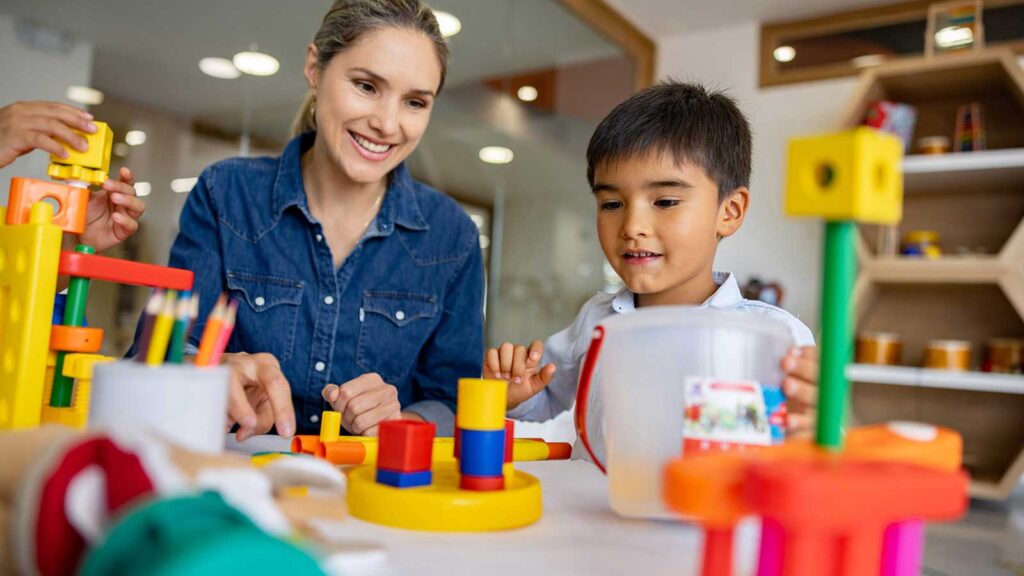

Occupational Therapy is a supportive approach that helps children learn the skills they need for daily life. Some children struggle with simple tasks like eating properly, getting dressed, writing, or following a routine. Occupational therapy guides them step by step so they can slowly become more independent and confident in their everyday activities.
Independence usually begins with small tasks. In therapy sessions, children are taught basic self-care activities such as brushing teeth, wearing clothes, tying shoelaces, or washing hands. These tasks are broken into small and easy steps so the child can understand and practice without pressure. Over time, with regular practice, children start doing these activities on their own.
Another important focus of occupational therapy is improving hand and finger skills. These skills are needed for writing, drawing, using scissors, buttoning clothes, and handling small objects. Therapists use simple and fun activities like clay modeling, puzzles, bead stringing, and coloring to improve coordination. As these skills develop, children find school work and daily tasks much easier to manage.
Many children also face sensory challenges. This means they may react strongly to sounds, lights, textures, or even movement. Some may feel uncomfortable in noisy places, while others may avoid certain clothing or food textures. Occupational therapy helps children gradually adjust to these sensations in a safe and controlled way. This makes them more comfortable in different environments such as school, home, or public places.
Following a routine is another key part of building independence. Children are taught how to follow a simple daily schedule like waking up on time, getting ready for school, eating meals, and going to bed. When children understand and follow routines, they become more organized and less dependent on constant reminders from parents or caregivers.
Occupational therapy also helps build confidence. When a child successfully completes a task on their own, it creates a sense of achievement. Therapists support children with encouragement and positive feedback, helping them believe in their own abilities. This confidence motivates them to try new tasks without fear or hesitation.
Social and emotional development is also supported during therapy. Children learn how to express their needs, follow instructions, and interact with others in a better way. These skills are important not just for home life, but also for school and social situations.
Parents play a very important role in this journey. Therapists often guide parents on how to continue simple activities at home. Allowing children to do small tasks by themselves, even if they take more time, helps them learn faster. Consistent practice both at home and in therapy sessions creates better long-term results.
It is important to understand that every child learns at their own speed. Occupational therapy does not rush the process. Instead, it focuses on steady progress and celebrates small improvements. Over time, these small steps add up and lead to major changes in a child’s independence and confidence.
As children grow, these skills help them prepare for school life and future responsibilities. They become more capable of managing personal care, completing school tasks, and handling everyday challenges without too much support.
If you are based in or around Jalandhar and want to support your child’s daily growth and searching for Occupational Therapy in Jalandhar for children, reaching out to a professional therapy center can be a helpful step. The Bright Horizons offers structured sessions and practical guidance that focus on building real-life skills, so children can become more confident and independent in their everyday routines.
Their team provides structured and child-friendly therapy sessions designed to build independence through practical life skills, encouraging children to grow with confidence and improve their daily functioning in a positive and supportive environment.