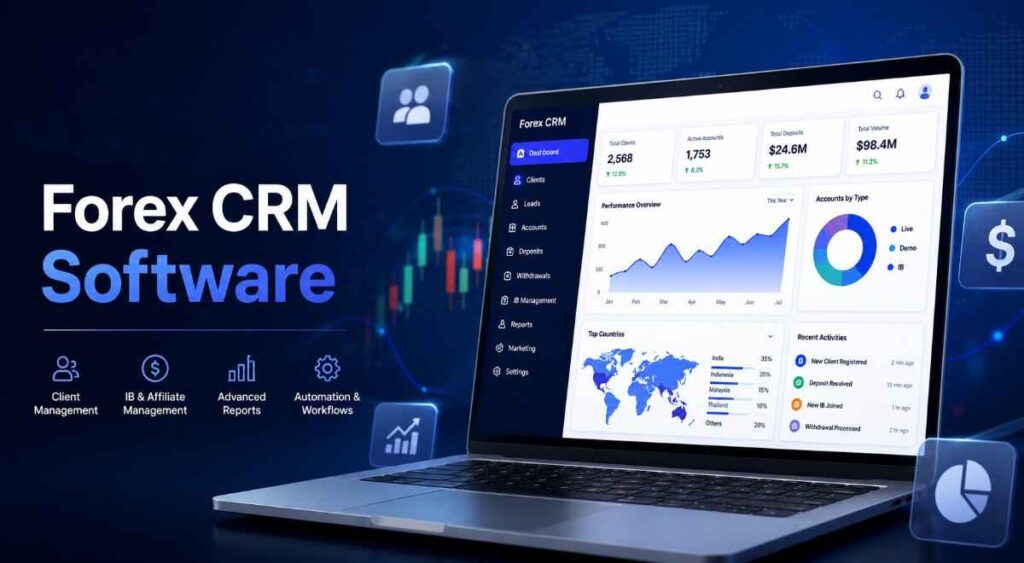

Are you running a forex brokerage platform and finding it difficult to manage growing trader activity?
This is where advanced Forex CRM software features help.
They allow brokerage platforms to manage clients better, respond faster, and handle daily operations without missing important interactions.
While a Forex CRM can significantly improve efficiency, choosing the right set of features plays a major role in long-term competitiveness.
In this blog, we’ll walk you through how advanced Forex CRM features help trading platforms stay competitive and why they matter in today’s brokerage space.
Why Do Modern Brokerage Platforms Need Advanced Forex CRM Features?
Forex brokerage platforms handle many daily operations like account creation, deposits, support requests, and compliance checks.
As trader volume grows, managing all of this manually becomes slow and inconsistent.
Advanced Forex CRM features are needed because they help brokers:
- Keep all client and account data in one place
- Reduce delays in handling trader requests and updates
- Avoid errors caused by scattered tools or manual tracking
- Improve visibility into trader activity and interactions
- Support faster coordination between internal teams
With everything connected in one system, brokerage operations become more controlled and easier to manage as the platform scales.
Which Forex CRM Integrations Help Brokerage Platforms Stand Out?
A Forex CRM software becomes more effective when it connects with the key systems that run a brokerage.
Modern platforms no longer rely on basic standalone tools or manual tracking.
Today, traders expect faster processes, better visibility, and account handling.
Here are the most important CRM integrations used by brokerage platforms:
- Trading platform integration (MT4/MT5) – Syncs trading activity, balances, and account data directly into the CRM
- KYC & onboarding integration – Helps verify traders faster and reduces delays during account creation
- Payment system integration – Makes deposits and withdrawals faster and easier to track
- IB & affiliate system integration – Tracks referrals, commissions, and partner performance in one place
- Back-office integration – Helps manage client data, support requests, and internal operations
- Reporting dashboard integration – Gives brokers a clear view of performance and client activity
These are no longer extra features. They are becoming the standard expectation for modern brokerage platforms.
When these systems are connected properly, brokers reduce manual work, improve execution speed, and deliver a better trader experience.
How Advanced Forex CRM Software Features Help Trading Platforms Stay Competitive
Competition between forex brokers is no longer just about spreads or leverage. Traders now choose platforms based on how fast they can start, how the experience feels, and how quickly issues are resolved.
Advanced Forex CRM features directly impact these expectations by improving speed, accuracy, and overall platform efficiency.
For example, faster onboarding and KYC processes help convert new signups into active traders in less time.
This reduces drop-offs and increases the chances of first deposits happening quickly.
Here’s how these capabilities translate into real business impact:
Faster conversion speed: Reduces time from signup to first deposit, improving revenue flow
Stronger compliance handling: Helps meet regulatory checks without delays
Better decision-making: Real-time activity insights help teams respond to trader needs quickly
Improved payout & partner trust: Faster handling of commissions, deposits, and withdrawals improves reliability
Operational efficiency: Reduces manual workload across teams
Clear performance visibility: Helps management track growth and trader activity in real time
When these systems work together, brokerage platforms operate with fewer delays and better control over daily processes.
This is what ultimately helps trading platforms stay competitive in a market where speed and reliability matter more than ever.
Can the Right Forex CRM Solution Future-Proof Brokerage Growth?
Choosing the right Forex CRM provider plays an important role in long-term brokerage success.
- The platform should support daily operations while also scaling as the brokerage grows.
- A strong Forex CRM should manage increasing trader activity without slowing down performance.
- It should integrate easily with trading platforms to keep workflows connected and consistent.
- Flexibility is important so the system can adapt to changing business needs without added complexity.
- Security is essential since brokerages handle sensitive client and financial data.
- Built-in analytics help track performance, identify gaps, and support better decision-making.
Companies like Hashcodex bring these capabilities together, helping brokerage platforms stay efficient, organized, and ready for long-term growth.
Conclusion
As forex brokerage platforms continue to grow, managing traders, partners, and operations becomes more complex.
Without a structured Forex CRM system, it becomes difficult to maintain speed, accuracy, and coordination across teams.
Choosing the right CRM solution helps brokerages stay organized, improve client experience, and maintain steady growth in a highly competitive trading environment.