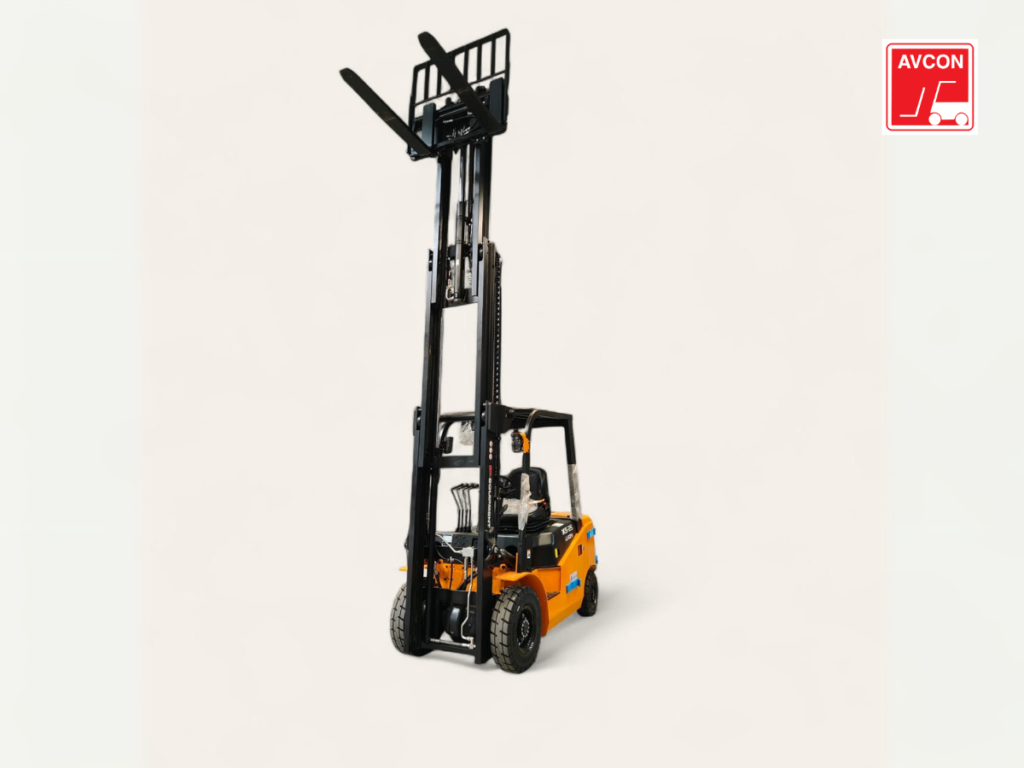

Fully Electric Stacker: The Equipment Quietly Running the Modern Warehouse
Walk through any mid-to-large warehouse operating on a tight schedule and you will find the same challenge repeating itself across every shift. Pallets need to move. Racks need to be loaded. Materials need to reach production lines without interruption. For years, the answer to this challenge was either a diesel forklift — expensive, emission-heavy, unsuitable for indoor use — or manual labour, which has its own ceiling in terms of what a team can physically sustain across eight to ten hours.
The fully electric stacker sits between those two extremes and handles the work that both struggle with. It lifts, moves, and positions palletised loads using a battery-powered drive and hydraulic system, with one operator, in the kind of space a forklift cannot practically enter. That combination of capability and compactness is what has made the fully electric stacker one of the most widely deployed pieces of material handling equipment across Indian warehousing, manufacturing, and logistics operations over the past decade.
What Separates a Fully Electric Stacker from Everything Else
The word “fully” in fully electric stacker carries more operational weight than it might appear to on a specification sheet. It distinguishes this equipment from two other categories that often get grouped together in procurement conversations.
A manual stacker requires the operator to pump the handle to raise the load hydraulically and push the unit by hand across the floor. It works for low-frequency, low-volume tasks — but the physical demand compounds over a shift in ways that directly affect how carefully the operator handles loads and how consistently they move through the work.
A semi-electric stacker motorises either the lift function or the drive function — but not both. Typically, the lift is electric and the travel is manual. This reduces the physical effort on one half of the task while leaving the other unchanged. For operations where loads move short distances but lift repeatedly, it is a reasonable fit. For operations where both distance and lift frequency are significant, it falls short.
A fully electric stacker motorises both functions entirely. The drive system moves the unit across the warehouse floor under battery power. The hydraulic lift raises and lowers loads at the press of a control. The operator guides and positions — the machine handles the physical work. Over an eight-hour shift involving hundreds of lift-and-move cycles, that distinction shows up clearly in both output volume and operator condition at the end of the day.
How the Equipment Actually Works
The operating principle of a fully electric stacker is straightforward, which is a large part of why operators transition to it quickly from other equipment.
The unit is powered by a rechargeable battery — lead-acid or lithium-ion depending on the specification — that drives both the traction motor and the hydraulic pump motor. The operator stands on a platform or walks behind the unit depending on the configuration. Controls are mounted on the handle: drive direction, lift, lower, and horn. On more advanced models, a digital display shows battery status, fault codes, and operational data.
The forks slide under the pallet at ground level. The operator activates the lift, the hydraulic system raises the load to the required height, and the drive system moves the unit to the destination. The load lowers, the forks clear, and the stacker moves to the next task. In a well-run warehouse, this cycle repeats dozens of times per shift without the kind of physical fatigue that manual or semi-electric alternatives accumulate over the same period.
Mast configurations vary depending on what the operation requires:
-
Single mast (simplex) — lifts to a single maximum height in one stage; suited to lower-rack applications
-
Double mast (duplex) — two-stage lift that allows the forks to travel higher than the collapsed mast height; useful in facilities with standard rack heights
-
Triple mast (triplex) — three-stage lift for maximum height from a compact collapsed profile; the right choice for high-bay racking where ceiling clearance during travel is a constraint
The Specifications That Actually Determine Fit
A fully electric stacker specification sheet covers a range of figures. Several of them matter significantly to how the equipment performs in daily operation. Several others are secondary. These are the ones that determine whether the equipment fits the application:
Load capacity — Standard fully electric stackers are available from 1,000 kg through to 2,000 kg for most industrial applications. Some heavy-duty variants handle up to 3,000 kg. The figure to select against is the heaviest single pallet the operation will regularly lift — not the average. Equipment sized to its ceiling performs differently from equipment with capacity headroom.
Lift height — This is the maximum height the forks will reach at full extension. Specify this against the top rack beam height in your facility, not the floor-to-ceiling clearance. If the top load needs to sit at 4,500 mm, the stacker’s rated lift height needs to clear that with margin.
Aisle width requirement — Fully electric stackers are designed for narrow aisle operation. The turning radius and overall width of the unit determine the minimum aisle width in which it can operate practically. In facilities where aisle widths are fixed by existing racking, confirm this figure against your layout before the order is placed.
Battery type and capacity — Lead-acid batteries at 24V or 48V are standard across most models. Lithium-ion batteries are available on higher-specification units and offer faster charging, longer cycle life, and the ability to opportunity-charge during breaks without damaging the battery. For single-shift operations, lead-acid is typically adequate. For multi-shift operations, lithium-ion avoids the battery swap or extended mid-shift downtime that lead-acid chemistry eventually requires.
Drive speed — Fully loaded travel speed typically ranges from 4 km/h to 6 km/h. At first glance this seems slow, but across a warehouse floor where an operator is making dozens of trips per shift, even a 1 km/h difference in travel speed compounds into meaningful time over a working day.
Mast collapsed height — In facilities with low doorways, mezzanine entrances, or overhead obstructions along travel routes, the collapsed mast height determines whether the stacker can move freely through the facility without the load needing to be lowered at every obstruction. Confirm this against your site before specifying a triple-mast configuration.
Where Fully Electric Stackers Are Deployed
The application range is wider than most procurement teams initially consider. The compact footprint and indoor-safe electric operation make the fully electric stacker usable in environments where a counterbalance forklift is either too large or unsuitable due to emissions.
Warehousing and distribution — This is the primary application. Palletised goods move from receiving to storage, storage to dispatch, and between locations within the facility. The stacker handles all three movements without requiring the aisle widths or operating clearances a forklift demands. In multi-level racking systems, the fully electric stacker’s precision controls allow operators to place and retrieve loads at height with a level of accuracy that manual alternatives cannot replicate consistently.
Manufacturing — Raw materials arrive at the facility and need to reach production lines. Finished goods leave the line and need to reach storage or a dispatch staging area. Both movements happen repeatedly, throughout the shift, in facilities where production continuity depends on materials being where they need to be when the line needs them. A fully electric stacker handles this inter-department movement without the overhead of a larger forklift fleet.
Cold storage and food processing — Diesel and LPG forklifts produce exhaust that is incompatible with food-grade and temperature-controlled environments. A fully electric stacker produces zero emissions during operation, making it the standard choice for cold stores, refrigerated distribution centres, and food processing facilities where air quality and hygiene are part of the compliance framework.
Pharmaceuticals — Batch materials, raw ingredients, and finished product all move through a pharmaceutical facility under documented, controlled handling conditions. The precision controls of a fully electric stacker — smooth lift, controlled travel speed, accurate positioning — support the kind of careful material handling that regulated environments require.
Retail and e-commerce fulfilment — In fulfilment centres processing high order volumes across multiple shifts, the stacker’s ability to work in narrow pick aisles while lifting to full rack height makes it one of the most productive pieces of equipment per square metre of floor space in the building.
The Operational Case for Going Fully Electric
The argument for a fully electric stacker over a manual or semi-electric alternative becomes clearer when it is examined across total operational cost rather than purchase price alone.
Labour productivity — An operator working a fully electric stacker sustains a higher and more consistent output across a shift than an operator managing the same workload with a manual or semi-electric unit. The physical demand is lower, which means performance does not deteriorate in the same way over the second half of the shift. In operations where output per shift is measured, this difference is visible in the numbers.
Maintenance cost — A fully electric stacker has no engine, no exhaust system, no fuel injection, no radiator, and none of the consumable parts that internal combustion equipment requires on a regular service schedule. The maintenance requirement reduces to the hydraulic system, the battery, the drive motors, and the tyres. Service intervals are longer and the per-service cost is lower.
Energy cost — Charging a battery costs a fraction of fuelling an equivalent diesel or LPG unit for the same operating hours. Across a fleet of ten stackers running two shifts, this difference in energy expenditure is significant on a monthly basis.
Environmental compliance — Zero emissions during operation satisfies indoor air quality requirements, sustainability reporting obligations, and the increasingly common facility-level carbon reduction targets that procurement teams now carry as part of their brief.
Safety — Electric controls replace the physical exertion of manual operation with precise, responsive inputs. Speed control, emergency stop, and horn systems are standard. The reduction in operator fatigue over a shift directly reduces the rate of handling errors and load damage incidents — both of which carry costs beyond the immediate incident.
Battery Management: The Detail That Determines Uptime
A fully electric stacker is only as productive as its battery management allows it to be. This is the operational detail that most procurement decisions underweight and most experienced warehouse managers will mention first when the conversation moves from specification to practice.
Lead-acid batteries require a full charge cycle — typically eight hours — and should not be opportunity-charged in short windows without accelerating degradation. For single-shift operations, this is manageable: the stacker charges overnight and starts the shift fully charged. For two-shift operations, a spare battery or a transition to lithium-ion chemistry is the practical answer.
Lithium-ion batteries change the equation. They accept partial charges without the cycle damage that affects lead-acid, which means a stacker can be plugged in during a shift break and continue operating without the battery chemistry deteriorating from the partial cycle. Charging time is faster, the battery maintains usable capacity across more total cycles, and the weight reduction in some configurations improves the unit’s manoeuvrability. The upfront cost is higher. The total cost of ownership across a three-to-five-year operating period is typically lower.
Battery indicator systems on the control panel give the operator a real-time view of remaining charge. In well-managed operations, charging schedules are built around shift patterns rather than waiting for the battery to reach a critical level. Equipment that goes flat mid-shift stops being useful in the same moment it stops being charged — a situation that planning around shift schedules prevents almost entirely.
Choosing the Right Configuration for Your Operation
A fully electric stacker is not a single product — it is a category with meaningful variation across configurations. The right choice depends on three operational parameters that are worth defining before any supplier conversation begins.
How high does the load need to go?
If the top rack in your facility sits at 3,000 mm, a duplex mast stacker will reach it without difficulty. If loads need to reach 5,000 mm or above, a triplex mast with free-lift is the configuration to specify — and the collapsed mast height needs to be confirmed against every doorway and overhead obstruction along the travel route.
How tight are your aisles?
If your facility was designed around forklift aisle widths, a fully electric stacker will operate in it comfortably. If the facility has narrower aisles designed to maximise storage density, confirm the minimum turning radius of the stacker against the actual aisle width before the specification is finalised.
How many shifts does the operation run?
Single-shift operations can manage a lead-acid battery on an overnight charge cycle without issue. Multi-shift operations need either a second battery per unit, a fast-charge lithium-ion battery, or a charging schedule that fits around shift change breaks. Establishing this before purchase prevents a battery management problem from emerging a month into operation.
What Maintenance Actually Looks Like
Maintaining a fully electric stacker across a reasonable service life does not require specialist knowledge or a dedicated engineering team. The requirement is consistent attention to a small number of components.
Battery — For lead-acid, check electrolyte levels and top up with distilled water on the schedule the battery manufacturer specifies. Keep terminals clean and free of corrosion. For lithium-ion, the management system handles most of this internally — the operator’s responsibility is to charge on schedule and avoid sustained operation at very low charge levels.
Hydraulic system — Check fluid levels periodically. Inspect hydraulic hoses and cylinder seals for weeping or damage. A hydraulic system that is monitored regularly fails far less often than one that is only checked when something goes wrong.
Tyres — Both drive and load wheels wear under regular use. Worn drive tyres reduce traction and affect travel precision. Load wheels that have worn unevenly affect fork stability during lift. Check both during scheduled maintenance intervals.
Mast and chain — The lift chain carries the full rated load every time the stacker is used. Inspect for elongation, link wear, and lubrication regularly. A lift chain failure under load is one of the more serious failure modes in any stacker — and one that regular inspection catches well before it becomes a risk.
Controls and sensors — Modern fully electric stackers include safety cutoffs, overload protection, and speed limiting systems. Test these periodically to confirm they are functioning as specified. An overload protection system that has degraded to the point of non-function is not providing the safety coverage the operator is relying on.
The Transition from Manual to Fully Electric: What to Expect
Operations making the transition from manual stackers or semi-electric units to a fully electric fleet typically observe measurable changes within the first two to four weeks.
Output per shift increases because operators are not managing physical fatigue across the second half of the day. Load damage incidents reduce because electric controls allow more precise positioning than manual handling permits. Operator retention tends to improve in environments where the physical demand of the role was previously a factor in turnover.
The adjustment period is short. Operators familiar with manual or semi-electric equipment adapt to a fully electric unit within a single shift in most cases. The controls are intuitive, the machine responds predictably, and the reduction in physical effort is immediately apparent. The learning curve in a fully electric stacker transition is not the equipment — it is the battery management discipline that the operation needs to build into its daily routine from day one.
Before You Specify — The Four Questions That Define the Purchase
1. What is the maximum lift height the operation requires?
Work back from the top rack beam height in your facility. Add the pallet height and the load height above that. The stacker’s rated lift height needs to clear the sum of those three figures with margin.
2. What is the heaviest pallet the stacker will regularly carry?
Select capacity against the actual maximum, including packaging and product. Operating consistently at rated capacity accelerates wear on the hydraulic system, the mast, and the battery.
3. How many operating shifts per day does the facility run?
This determines battery chemistry, charging infrastructure, and whether a second battery per unit belongs in the specification from the start.
4. What are the narrowest aisle widths in the facility?
The stacker needs to turn, not just travel. The minimum turning radius at full fork width is the figure to check against your tightest aisle — not the straight-travel width of the unit.
A fully electric stacker is not a complicated piece of equipment. What it is, is a well-engineered answer to a problem that warehouses, manufacturing facilities, and distribution centres in India deal with across every shift. Materials need to move between locations. Loads need to reach height. The work needs to continue for eight, ten, or twelve hours without the physical limitations of manual handling becoming the factor that limits what the operation can do. The fully electric stacker handles all of that — quietly, consistently, and with a total cost of ownership that makes the case for the investment without requiring a complicated spreadsheet to demonstrate it.