
Australian property managers face mounting pressures from tenants, regulators, and insurers to maintain safe buildings. A single oversight in safety measures can lead to injuries, hefty fines, or even business shutdowns. With over 2.5 million rental properties across the country, compliance is not optional; it forms the backbone of responsible management. This guide breaks down the essential safety measures every property manager must master to protect lives, properties, and reputations.
Understanding the Legal Framework
Property managers operate under a web of national and state-specific laws designed to prevent hazards. The 2011 Work Health and Safety (WHS) Act sets the national standard, requiring property owners and managers to eliminate or minimise risks “so far as is reasonably practicable.” This applies to residential, commercial, and strata properties alike.
State variations add layers. In New South Wales, the Residential Tenancies Act 2010 mandates smoke alarms and structural safety. Queensland’s Building Fire Safety Regulation demands annual fire safety statements for multi-unit buildings. Victoria’s Occupational Health and Safety Act emphasises hazard identification in common areas. Property managers must stay updated via resources like Safe Work Australia’s website, which offers free guides on compliance obligations.
Failure to comply invites penalties. Fines can reach $100,000 for individuals and $300,000 for corporations under WHS laws, plus civil claims from injured parties. Regular audits reveal that non-compliance contributes to 20% of workplace incidents in property management, according to Safe Work Australia data. Knowledge of these frameworks equips managers to act proactively.
Key Safety Measures for Fire Protection
Fire safety tops the list of priorities. They must install and maintain smoke alarms in every bedroom, hallway, and on each level of a property. Australian Standard AS 3786 specifies 10-year lithium battery alarms for rentals, with testing every 12 months. Property managers should schedule professional inspections biannually to document compliance.
Exit paths must remain clear and illuminated. Doors should swing outwards in emergencies, with emergency lighting operational for at least 90 minutes per AS/NZS 2293. In high-rise buildings over three storeys, fire sprinklers and hydrants comply with the Building Code of Australia (BCA) Section E. Annual certification by licensed firefighters is mandatory in most states.
Evacuation plans save lives. Develop site-specific procedures, post them visibly, and conduct drills for strata properties. For example, a Sydney apartment block manager reduced evacuation time by 40% after implementing colour-coded exit maps. Integrate these with fire extinguisher checks; place ABC-type units in kitchens and laundries, serviced yearly.
Electrical and Gas Safety Essentials
Electrical faults cause one in five house fires in Australia, per the Australian Institute of Health and Welfare. Engage licensed electricians for safety switches (RCDs) on all circuits, mandated under AS/NZS 3000. Test them monthly and replace wiring over 20 years old. Rental bonds can cover upgrades, but proactive managers budget for them to avoid tenant disputes.
Gas appliances demand equal vigilance. Annual safety checks by Type A gas fitters comply with AS/NZS 5601. Install carbon monoxide detectors near flued heaters, especially in older homes, which are common in Melbourne and Brisbane. Leaks have hospitalised dozens annually; a simple annual log prevents this.
Property managers should maintain a digital compliance calendar. Tools like apps from the Electrical Safety Office in Queensland streamline reminders, ensuring tags and certificates are tenant-ready.
Structural Integrity and Fall Prevention
Buildings age, and so do their structures. Conduct dilapidation reports before major works and inspect balconies, stairs, and roofs biannually. The BCA requires handrails at 1 meter height with 100mm gaps max to prevent child falls. In coastal areas like Perth, corrosion-resistant materials fight salt damage.
Asbestos lurks in pre-1990 builds. If disturbed during renovations, hire licensed removalists per Safe Work Australia protocols. A Melbourne property manager faced $50,000 fines after DIY asbestos handling; professional surveys cost less and protect health.
Mishaps like slips, trips, and falls account for 30% of property claims. Ensure even lighting (min 200 lux per AS/NZS 1680), non-slip surfaces on wet areas, and prompt repairs for uneven paths. Strata managers, note the Strata Schemes Management Act 2015 in NSW requires committee approvals for communal fixes.
Emergency Preparedness and Documentation
No measure works without preparation. Assemble first-aid kits stocked to AS 2671 standards, with defibrillators in buildings over 100 occupants. Train staff via St John Ambulance courses, refreshing every two years.
Documentation proves diligence. Keep a compliance folder with certificates, inspection logs, and risk assessments. Digital platforms allow tenant portals for transparency, reducing disputes by 25% in pilot programs.
For natural disasters, align with state plans. Bushfire-prone areas in Victoria need ember screens and vegetation clearance per AS 3959. Flood zones in Queensland require elevated utilities.
Integrating Technology for Ongoing Compliance
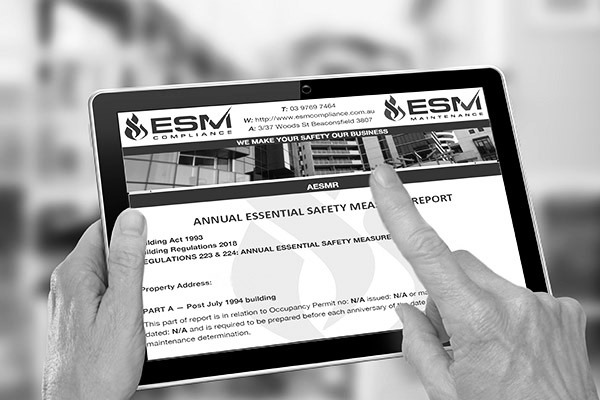
Modern tools elevate standards. Drones inspect hard-to-reach roofs, while IoT sensors monitor smoke and gas in real-time. Platforms like those from ESM simplify audits, generating reports that satisfy regulators.
Property managers using predictive maintenance software cut downtime by 15%, per industry benchmarks. Pair this with tenant education: annual safety briefings foster shared responsibility.
Common Pitfalls and How to Avoid Them
Overlooking tenant modifications is frequent. Prohibit unapproved installations like personal air conditioners without checks. Budget shortfalls hit hard; allocate 1-2% of rental income to safety reserves.
Insurers demand proof. Non-compliant properties face premium hikes or denials, as seen in post-Grenfell audits echoing Australia’s Lacrosse fire lessons.
Partnering for Expert Support
Staying compliant demands expertise. Engage specialists who navigate Australia’s complex regulations, from initial audits to ongoing management.
At ESM Compliance, we provide tailored safety measure compliance services across Australia, helping property managers safeguard assets and communities with precision.