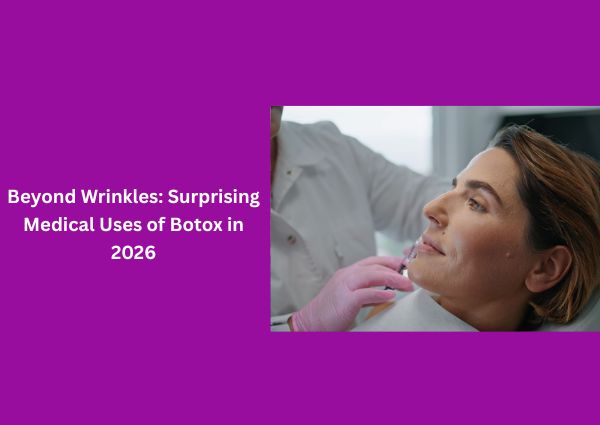

For many people, Botox is still primarily associated with smoothing fine lines and reducing facial wrinkles. While its cosmetic use remains widely recognized, the role of Botox has expanded far beyond aesthetics. In 2026, Botox is increasingly being discussed not just as a beauty treatment, but as a versatile medical tool used across multiple specialties.
Botox, derived from botulinum toxin in highly controlled medical formulations, works by temporarily relaxing targeted muscles or influencing nerve signals. This mechanism has opened the door to a growing number of medical applications that many people find surprising. From pain management to functional disorders, Botox is now being used in ways that go well beyond appearance.
How Botox Is Expanding Beyond Cosmetic Treatment
One of the most established medical uses of Botox is in the treatment of chronic migraine. For some patients who experience frequent debilitating headaches, Botox may be used as part of a medical management plan to help reduce headache frequency and improve quality of life. Its role in migraine care has helped reshape how many people view the treatment.
Another important application is excessive sweating, also known as hyperhidrosis. For individuals struggling with underarm sweating or, in some cases, other affected areas, Botox may help reduce overactive sweat gland signaling. For people whose daily life, confidence, or work is affected by excessive sweating, this can be highly meaningful.
Botox is also used in certain muscle-related conditions involving abnormal contractions or excessive muscle activity. In some cases, it may be part of treatment approaches for muscle spasticity or movement-related disorders, helping support comfort or function under appropriate medical supervision.
Jaw tension and teeth grinding have also become growing areas of interest. In some cases, Botox may be considered as part of management strategies related to overactive jaw muscles, particularly when chronic clenching contributes to discomfort. This has attracted increased attention as stress-related jaw issues continue to rise.
Another evolving area is bladder-related conditions in selected cases, where Botox may play a role in certain treatment approaches under specialist care. While not something most people associate with Botox, it reflects how broad its medical applications have become.
Even pain-related uses continue to expand. In some settings, practitioners are exploring or utilizing Botox in ways connected to specific pain patterns or functional concerns where muscle activity or nerve signaling may play a role.
These uses highlight an important shift: Botox is increasingly recognized not just for what it can soften cosmetically, but for how it may support symptom management in carefully selected medical contexts.
Why Botox’s Medical Role Is Growing in 2026
Several factors are driving this expansion. One is growing research and clinical experience. As specialists better understand how Botox affects muscle activity and nerve communication, more targeted therapeutic uses continue to emerge.
Another factor is patient demand for less invasive treatment options. Many people are interested in non-surgical or minimally invasive approaches when appropriate. In some cases, Botox may offer an option that fits into broader treatment plans without major intervention.
There is also growing collaboration across specialties. Dermatology, neurology, pain management, aesthetic medicine, and other fields have contributed to broader awareness of Botox’s therapeutic potential. As this multidisciplinary understanding grows, so does innovation.
Importantly, however, medical Botox is not a one-size-fits-all solution. Its use depends on proper diagnosis, appropriate patient selection, expert administration, and realistic expectations. Medical applications should always be evaluated and performed by qualified professionals who understand both the condition being addressed and the treatment itself.
This is especially important because the growing popularity of Botox can sometimes lead people to assume it is universally appropriate. In reality, whether Botox is suitable depends entirely on individual circumstances and clinical assessment.
What makes 2026 particularly interesting is not simply that Botox has more uses, but that public perception is changing. It is increasingly seen as a therapeutic tool with both aesthetic and medical relevance.
The phrase “Botox” may still make many people think of wrinkles first, but that is no longer the full story.
From chronic migraine to excessive sweating, muscle-related concerns, and other emerging applications, Botox continues to demonstrate that its value extends well beyond cosmetic treatment.
As medical innovation evolves, its role may continue to expand even further.
Carvers provides best Treatment regarding this and offers expert-led Botox solutions for both aesthetic and advanced medical applications with a focus on safety, precision, and personalized care.