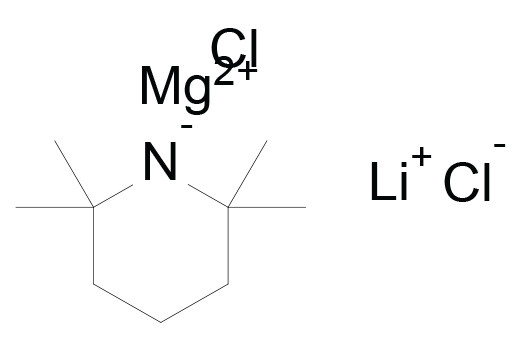

In the evolving landscape of specialty chemicals, few compounds have gained as much attention among researchers and industrial chemists as 2,2,6,6-Tetramethylpiperidinyl Magnesium Chloride Lithium Chloride Complex (commonly abbreviated as TMPMgCl·LiCl). This highly specialized organometallic reagent plays a crucial role in modern organic synthesis, and its manufacturing ecosystem reflects the broader trends shaping the fine chemical industry.
This blog explores the compound, its applications, and the key factors that define manufacturers operating in this niche—without focusing on any specific company.
What is TMPMgCl·LiCl?
2,2,6,6-Tetramethylpiperidinyl Magnesium Chloride Lithium Chloride Complex is a non-nucleophilic strong base widely used in organic chemistry. It belongs to a class of reagents known as Knochel–Hauser bases, which are valued for their selectivity and efficiency in metalation reactions.
Chemically, it is identified by CAS number 898838-07-8 and has the molecular formula C₉H₁₈Cl₂LiMgN.
The compound is typically supplied as a solution in tetrahydrofuran (THF), often at concentrations such as 1.0 M, making it easier to handle in laboratory and industrial environments.
Key Applications Driving Demand
The demand for this complex is closely tied to its versatility in synthesis:
1. Directed Metalation Reactions
TMPMgCl·LiCl is widely used for selective deprotonation of aromatic and heteroaromatic compounds, enabling chemists to precisely control reaction sites.
2. Grignard Reagent Formation
It facilitates the generation of functionalized Grignard reagents, which are essential intermediates in carbon–carbon bond formation.
3. Pharmaceutical and Agrochemical Synthesis
The compound plays a role in synthesizing advanced molecules, including pyridazinones (used in herbicides) and certain drug intermediates.
4. Polymer and Materials Chemistry
It is also used in π-conjugated polymer synthesis, contributing to advanced materials used in electronics and coatings.
Because of these diverse applications, manufacturers must cater to industries ranging from pharmaceuticals to materials science.
Characteristics of Reliable Manufacturers
The production of TMPMgCl·LiCl is not straightforward. It requires precise control over moisture, temperature, and purity. As a result, manufacturers in this space share several defining characteristics:
High Purity Standards
The compound is often required in ultra-high purity grades, especially for pharmaceutical and semiconductor applications. Manufacturers typically offer multiple grades (analytical, reagent, or electronic grade) to meet varying industry needs.
Controlled Production Environments
Since the reagent is highly sensitive to air and moisture, production must occur under inert conditions.
Customization Capabilities
Many buyers require specific concentrations or solvent systems. Manufacturers often provide tailor-made solutions, such as varying molarity or alternative solvents.
Scalable Manufacturing
From gram-scale laboratory supply to bulk industrial production, manufacturers must be capable of scaling efficiently without compromising quality.
Safety and Handling Considerations
Manufacturers must also adhere to strict safety standards due to the compound’s hazardous nature. TMPMgCl·LiCl is:
- Highly flammable
- Corrosive to skin and eyes
- Potentially harmful if inhaled or ingested
Proper labeling, packaging (often in sealed containers), and cold storage (typically 2–8°C) are essential.
These safety requirements significantly influence manufacturing, logistics, and distribution processes.
Global Manufacturing Landscape
The production of TMPMgCl·LiCl is part of the broader organometallic chemicals market, which includes reagents used in catalysis, pharmaceuticals, and advanced materials.
Key Regional Trends
- Asia-Pacific: A major hub due to cost-efficient manufacturing and growing pharmaceutical industries.
- Europe & North America: Focus on high-purity and specialty grades for advanced applications.
- Emerging Markets: Increasing demand driven by research institutions and contract manufacturing organizations (CMOs).
Manufacturers often operate globally, supplying both research laboratories and industrial clients.
Technological Advancements in Manufacturing
Modern manufacturers are investing in:
Automation and Process Control
Advanced reactors and monitoring systems ensure consistent quality and minimize human error.
Green Chemistry Approaches
Efforts are being made to reduce waste and adopt eco-friendly synthesis routes, aligning with global sustainability goals.
Improved Packaging Technologies
Air-sensitive reagents like TMPMgCl·LiCl are increasingly packaged in sealed, single-use containers to maintain stability and performance.
Challenges Faced by Manufacturers
Despite growing demand, manufacturers face several challenges:
Raw Material Sensitivity
The synthesis involves reactive intermediates, requiring strict control over raw materials.
Storage and Transportation
Maintaining stability during shipping—especially across long distances—is complex due to temperature and moisture sensitivity.
Regulatory Compliance
Manufacturers must comply with international chemical safety regulations, including proper classification, labeling, and documentation.
Market Competition
With increasing global suppliers, differentiation often comes down to quality, reliability, and technical support.
Future Outlook
The future of TMPMgCl·LiCl manufacturing looks promising, driven by:
- Growth in pharmaceutical R&D
- Expansion of advanced materials and electronics industries
- Increasing demand for selective and efficient reagents
As synthetic chemistry continues to evolve, reagents like TMPMgCl·LiCl will remain indispensable, ensuring steady demand for high-quality manufacturers.
Conclusion
2,2,6,6-Tetramethylpiperidinyl Magnesium Chloride Lithium Chloride Complex is a cornerstone reagent in modern organic chemistry. Its unique properties make it invaluable across multiple industries, from pharmaceuticals to materials science.
Manufacturers in this domain must balance precision, safety, scalability, and innovation to meet the growing global demand. As technology advances and sustainability becomes a priority, the manufacturing landscape for this compound is set to become even more sophisticated.
For researchers and procurement specialists alike, understanding the capabilities and standards of manufacturers is essential to ensuring consistent and reliable outcomes in chemical synthesis.
Other recommended Link : 3-BUTYN-1-OL Manufacturers