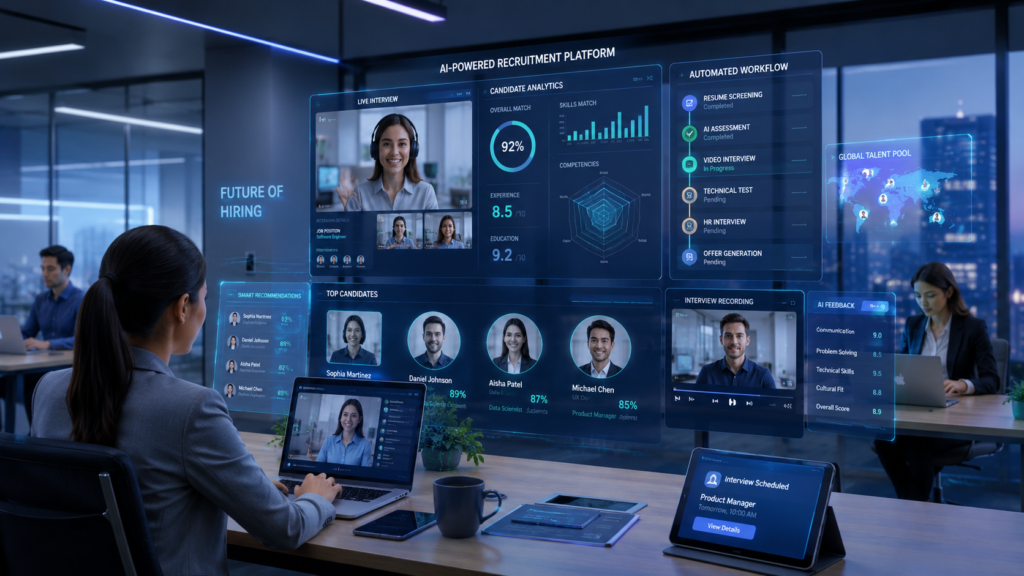

Recruitment has evolved rapidly in recent years. Traditional hiring methods that once relied on face-to-face interviews, printed resumes, and lengthy screening processes are now being replaced with digital hiring solutions. Businesses today need faster, smarter, and more flexible recruitment strategies to compete for top talent in a highly competitive market.
One of the biggest changes in hiring technology is the rise of video interview platforms. These solutions help companies streamline recruitment, connect with remote candidates, reduce hiring time, and improve overall hiring efficiency. Organizations of all sizes are now using digital interview systems to simplify candidate evaluation and create better recruitment experiences.
Modern businesses are no longer restricted by location when searching for skilled professionals. Recruiters can now interview candidates from different cities or countries without arranging physical meetings. This flexibility has made video interviewing an essential part of modern talent acquisition.
Why Businesses Are Choosing Video Interview Technology
Companies are increasingly adopting virtual recruitment tools because they save time and improve hiring accuracy. Scheduling traditional interviews can take days or even weeks, especially when multiple decision-makers are involved. Video-based recruitment solutions help simplify this process through automated scheduling, recorded interviews, and online assessments.
These platforms also reduce travel expenses and administrative costs. Recruiters can quickly screen candidates before moving them to the next hiring stage, helping businesses focus only on the most qualified applicants.
Some major benefits include:
- Faster recruitment process
- Improved remote hiring capabilities
- Better collaboration between hiring teams
- Reduced operational costs
- Flexible interview scheduling
- Enhanced candidate experience
Businesses that hire frequently often struggle with handling large numbers of applications. Video interviews make it easier to shortlist candidates efficiently while maintaining consistency in evaluation.
Key Features to Look for Before Choosing a Platform
Not every hiring solution offers the same capabilities. Before investing in recruitment technology, companies should carefully evaluate features that match their hiring needs.
Easy-to-Use Interface
A simple and user-friendly platform is important for both recruiters and candidates. Complex systems may create confusion and negatively impact the interview process. Candidates should be able to join interviews without technical difficulties or lengthy setup procedures.
Recruiters also benefit from dashboards that allow them to manage interviews, review recordings, and collaborate with hiring managers smoothly.
Live and Pre-Recorded Interviews
Modern hiring platforms often support both live interviews and one-way video interviews.
Live interviews allow real-time interaction between recruiters and candidates. These are useful for detailed discussions, technical evaluations, and final-round interviews.
Pre-recorded interviews enable candidates to answer predefined questions at their convenience. Recruiters can later review responses whenever suitable, making the hiring process more flexible.
AI-Powered Candidate Evaluation
Artificial intelligence is becoming an important part of recruitment technology. Many advanced platforms now offer AI-driven insights that help recruiters analyze communication skills, response quality, and candidate behavior patterns.
AI features can assist hiring teams by:
- Reducing manual screening work
- Identifying strong candidates faster
- Improving hiring consistency
- Supporting data-driven recruitment decisions
However, businesses should always ensure that AI tools are used ethically and fairly during recruitment.
Integration with Recruitment Software
The best interview systems integrate smoothly with existing HR tools and applicant tracking systems. This helps recruiters manage hiring workflows without switching between multiple platforms.
Integration features can support:
- Candidate tracking
- Interview scheduling
- Recruitment analytics
- Automated communication
- Hiring team collaboration
Businesses should always check compatibility with their current HR software before making a decision.
Interview Recording and Playback
Recorded interviews are highly valuable for recruitment teams. Hiring managers can review candidate responses later and compare applicants more effectively.
This feature also helps organizations maintain transparency during the hiring process and allows multiple stakeholders to participate in candidate evaluation.
How Video Interviewing Improves Candidate Experience
A positive hiring experience can significantly improve employer branding. Candidates appreciate flexible interview options that save time and eliminate unnecessary travel.
Video interviews allow applicants to participate from comfortable environments, reducing stress and improving communication. Faster scheduling also helps candidates avoid long waiting periods between hiring stages.
Modern recruitment platforms often provide:
- Mobile-friendly access
- Instant interview notifications
- Flexible scheduling options
- Easy document sharing
- Real-time communication
When candidates experience smooth hiring processes, they are more likely to view the company positively, even if they are not selected.
The Growing Importance of Remote Recruitment
Remote work opportunities have increased dramatically worldwide. As businesses expand globally, hiring teams need efficient ways to connect with talent from different regions.
Video interviewing has become a critical solution for remote recruitment because it enables organizations to evaluate candidates without geographical limitations.
Companies can now:
- Hire international talent
- Conduct remote onboarding
- Reduce location-based hiring barriers
- Build distributed teams efficiently
This flexibility helps businesses access larger talent pools and improve workforce diversity.
Common Challenges Businesses Should Consider
Although virtual interviewing offers many advantages, organizations should also be aware of potential challenges.
Technical Issues
Internet connectivity problems, poor audio quality, or device compatibility issues can sometimes affect interviews. Choosing reliable software with strong technical support is essential.
Candidate Comfort Levels
Some candidates may feel uncomfortable speaking on camera, especially during one-way interviews. Recruiters should create clear instructions and supportive communication to reduce candidate anxiety.
Data Security and Privacy
Recruitment platforms handle sensitive candidate information. Businesses should ensure the platform follows strong security standards and protects user data effectively.
Important considerations include:
- Secure data storage
- User authentication
- Privacy compliance
- Encrypted communication
Protecting candidate information helps build trust and maintain professional recruitment practices.
Future Trends in Video Interview Technology
Hiring technology continues to evolve rapidly. Future recruitment platforms are expected to become even more intelligent and automated.
Some emerging trends include:
- AI-driven interview analytics
- Automated candidate ranking
- Virtual reality interview experiences
- Advanced behavioral assessments
- Real-time language translation
As technology improves, businesses will gain more efficient ways to identify skilled professionals while creating personalized recruitment experiences.
Recruiters are also focusing more on diversity and inclusion in hiring. Advanced systems may help reduce unconscious bias and support fairer candidate evaluations.
Choosing the Right Platform for Your Business
Every company has different hiring goals, recruitment volumes, and budget requirements. Small businesses may need simple and affordable tools, while large enterprises often require advanced automation and integration capabilities.
Before selecting a platform, businesses should evaluate:
- Recruitment volume
- Hiring budget
- Technical requirements
- Integration needs
- Candidate experience goals
- Scalability for future growth
Testing demo versions and reviewing platform support services can also help organizations make informed decisions.
Conclusion
The recruitment industry is undergoing a major digital transformation, and video interview platforms are playing a key role in shaping modern hiring processes. These solutions help businesses recruit faster, improve candidate experiences, and make smarter hiring decisions in increasingly competitive job markets.
As organizations continue embracing remote and technology-driven recruitment, choosing the right interview platform becomes more important than ever. Businesses should focus on usability, flexibility, security, and integration features before making an investment.
At Harjai AI, we understand the importance of intelligent recruitment solutions that help companies simplify hiring and improve workforce quality.