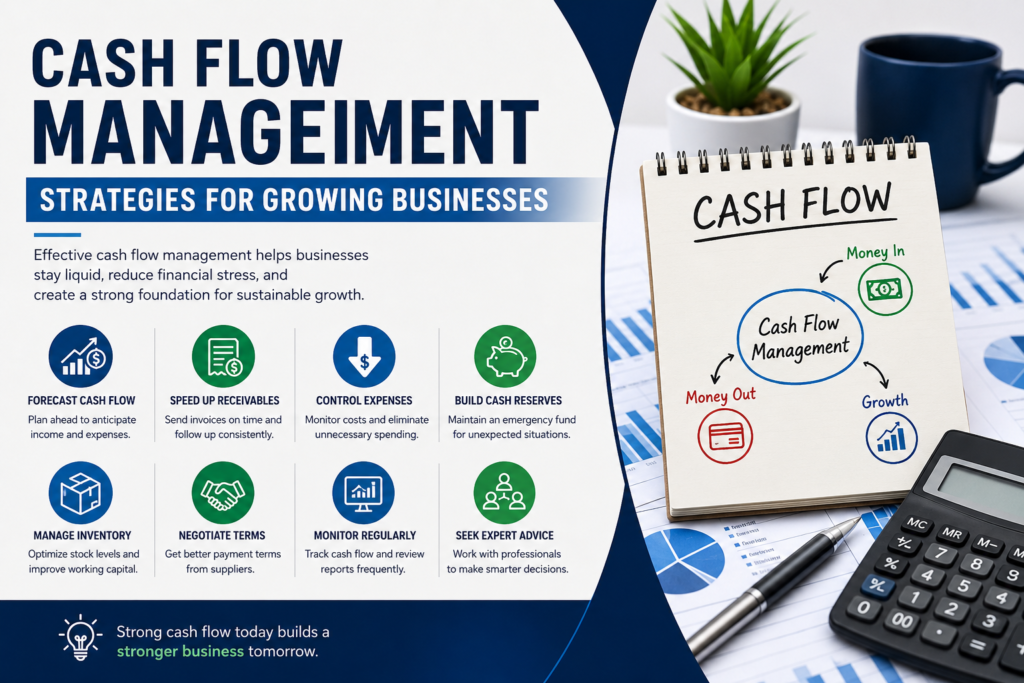

Growing a business is exciting, but rapid expansion often comes with one major challenge – maintaining healthy cash flow. Many profitable businesses still struggle financially because money coming in does not always match money going out. Without effective planning, even a successful company can face operational disruptions, delayed payments, and financial stress.
Cash flow management is more than tracking income and expenses. It involves forecasting future financial needs, managing working capital, controlling costs, and ensuring the business has enough liquidity to support growth opportunities. In today’s competitive market, businesses that master cash flow management are more likely to scale sustainably and survive economic uncertainty.
This guide explores practical cash flow management strategies that can help growing businesses improve financial stability, reduce risk, and create long-term profitability.
Understanding Cash Flow in Business
Cash flow refers to the movement of money into and out of a business. Positive cash flow means more money is coming in than going out, while negative cash flow indicates financial strain.
There are three primary types of cash flow:
- Operating cash flow
- Investing cash flow
- Financing cash flow
For growing businesses, operating cash flow is especially important because it reflects the company’s ability to generate income from daily operations.
A business may show strong sales revenue yet still experience cash shortages due to delayed customer payments, high operational expenses, or poor budgeting practices.
Why Cash Flow Management Matters
Strong cash flow management supports business growth by helping companies:
- Pay suppliers and employees on time
- Manage unexpected expenses
- Invest in expansion opportunities
- Avoid excessive debt
- Maintain financial stability
- Improve investor confidence
Businesses with poor cash flow often struggle with payroll, inventory purchases, tax obligations, and loan repayments. Over time, these problems can damage business reputation and limit growth potential.
Create a Detailed Cash Flow Forecast
One of the most effective ways to improve financial control is by creating a cash flow forecast. A forecast helps businesses estimate future income and expenses over weekly, monthly, or quarterly periods.
A proper cash flow forecast should include:
- Expected customer payments
- Recurring operational costs
- Tax obligations
- Loan repayments
- Seasonal fluctuations
- Planned investments
Forecasting allows businesses to identify potential cash shortages before they become serious problems. It also helps management make informed decisions regarding staffing, inventory, and expansion.
Using cloud accounting software can simplify forecasting and provide real-time financial insights.
Speed Up Accounts Receivable
Late customer payments are one of the biggest causes of cash flow issues for growing businesses. Improving accounts receivable processes can significantly enhance liquidity.
Strategies to accelerate payments include:
Send Invoices Immediately
Delays in invoicing often result in delayed payments. Businesses should issue invoices as soon as products or services are delivered.
Offer Multiple Payment Options
Providing flexible payment methods such as bank transfer, credit card, and digital wallets can encourage faster payments.
Implement Clear Payment Terms
Businesses should communicate payment deadlines clearly and include penalties for overdue invoices where appropriate.
Follow Up on Outstanding Invoices
Automated reminders and regular follow-ups help reduce unpaid accounts.
Many companies also work with a professional business financial advisor to improve receivables management and build stronger financial systems.
Control Operational Expenses
Growing businesses often increase spending rapidly during expansion. Without proper monitoring, operational costs can become unmanageable.
Key cost-control strategies include:
- Reviewing recurring subscriptions and overheads
- Negotiating supplier contracts
- Reducing unnecessary inventory
- Outsourcing non-core tasks
- Improving operational efficiency
Expense management should focus on reducing waste while maintaining service quality and productivity.
Maintain an Emergency Cash Reserve
Unexpected expenses can disrupt business operations at any time. Economic downturns, equipment breakdowns, or market changes may create sudden financial pressure.
An emergency cash reserve provides financial protection and helps businesses avoid relying on high-interest loans during difficult periods.
Many financial experts recommend maintaining enough reserves to cover at least three to six months of operating expenses.
Optimise Inventory Management
Inventory ties up a large amount of working capital. Excess stock increases storage costs and reduces available cash, while insufficient inventory can impact sales and customer satisfaction.
Businesses can improve inventory cash flow by:
- Monitoring sales trends
- Using inventory management software
- Avoiding overstocking
- Negotiating better supplier terms
- Identifying slow-moving products
Efficient inventory management improves working capital and supports smoother business operations.
Negotiate Better Supplier Payment Terms
Negotiating extended payment terms with suppliers can improve short-term cash flow without affecting business operations.
Possible strategies include:
- Requesting longer payment periods
- Securing bulk purchase discounts
- Establishing flexible repayment arrangements
- Building strong supplier relationships
Maintaining transparent communication with suppliers often leads to better financial flexibility during growth phases.
Separate Business and Personal Finances
Many small business owners mix personal and business expenses, making cash flow tracking more difficult.
Maintaining separate accounts helps businesses:
- Monitor financial performance accurately
- Simplify tax reporting
- Improve budgeting
- Maintain professional accounting records
Clear financial separation also helps when applying for business financing or attracting investors.
Monitor Cash Flow Regularly
Cash flow management should not be treated as a once-a-month task. Regular financial monitoring helps businesses identify issues early and respond quickly.
Business owners should review:
- Cash flow statements
- Profit and loss reports
- Outstanding invoices
- Expense trends
- Bank balances
- Financial KPIs
Real-time financial reporting enables faster decision-making and reduces the risk of cash shortages.
Improve Profit Margins
Increasing profitability directly strengthens cash flow. Businesses should regularly evaluate pricing strategies, product performance, and operational efficiency.
Ways to improve margins include:
- Adjusting pricing based on market demand
- Eliminating low-performing products
- Reducing operational inefficiencies
- Focusing on high-margin services
- Increasing customer retention
Higher profit margins create stronger financial stability and provide additional funds for business growth.
Use Business Financing Strategically
Financing can support growth, but businesses should avoid excessive borrowing without proper planning.
Common financing options include:
- Business lines of credit
- Equipment financing
- Invoice financing
- Working capital loans
- Merchant cash advances
Borrowed funds should be used strategically for activities that generate future revenue rather than covering ongoing operational losses.
Invest in Financial Technology
Modern financial technology tools help businesses automate and improve cash flow management.
Popular tools include:
- Cloud accounting software
- Expense tracking apps
- Automated invoicing systems
- Payroll software
- Financial forecasting platforms
Technology reduces manual errors, improves efficiency, and provides real-time visibility into financial performance.
Businesses seeking professional support often explore specialised cash flow management services to strengthen financial planning and improve operational stability.
Plan for Seasonal Cash Flow Fluctuations
Many industries experience seasonal highs and lows that impact cash flow patterns.
Businesses should prepare for fluctuations by:
- Building reserves during strong revenue periods
- Reducing discretionary spending during slower seasons
- Forecasting seasonal demand
- Diversifying revenue streams
Proper planning helps maintain stability throughout changing market conditions.
Reduce Bad Debt Risk
Unpaid invoices and bad debt can significantly impact business cash flow.
To minimise risk, businesses should:
- Conduct customer credit checks
- Set credit limits
- Require deposits for large projects
- Establish clear payment policies
- Monitor overdue accounts closely
Strong credit management reduces financial losses and improves liquidity.
Focus on Customer Retention
Acquiring new customers is often more expensive than retaining existing ones. Strong customer retention improves recurring revenue and creates more predictable cash flow.
Strategies for improving retention include:
- Providing excellent customer service
- Offering loyalty programs
- Maintaining regular communication
- Delivering consistent product quality
Long-term customers often generate higher lifetime value and contribute to stable business growth.
Work With Financial Professionals
Managing cash flow becomes more complex as businesses grow. Professional financial guidance can help companies optimise operations, reduce risks, and improve profitability.
Financial advisors and accountants can assist with:
- Budgeting and forecasting
- Tax planning
- Debt management
- Financial reporting
- Investment strategies
- Growth planning
Professional expertise helps business owners make informed financial decisions and avoid costly mistakes.
Common Cash Flow Mistakes Businesses Should Avoid
Many businesses experience cash flow problems because of avoidable financial mistakes.
Common issues include:
- Overestimating future sales
- Ignoring small expenses
- Expanding too quickly
- Poor inventory management
- Delayed invoicing
- Excessive debt reliance
- Lack of financial forecasting
Avoiding these mistakes improves financial control and business sustainability.
Final Thoughts
Cash flow is the foundation of every successful business. Without proper financial management, even profitable companies can face operational difficulties and growth limitations.
By implementing strong cash flow management strategies such as forecasting, expense control, faster invoicing, inventory optimisation, and financial monitoring, businesses can improve stability and position themselves for sustainable growth.
As markets become increasingly competitive, businesses that prioritise cash flow management will be better prepared to handle economic uncertainty, seize new opportunities, and achieve long-term success.