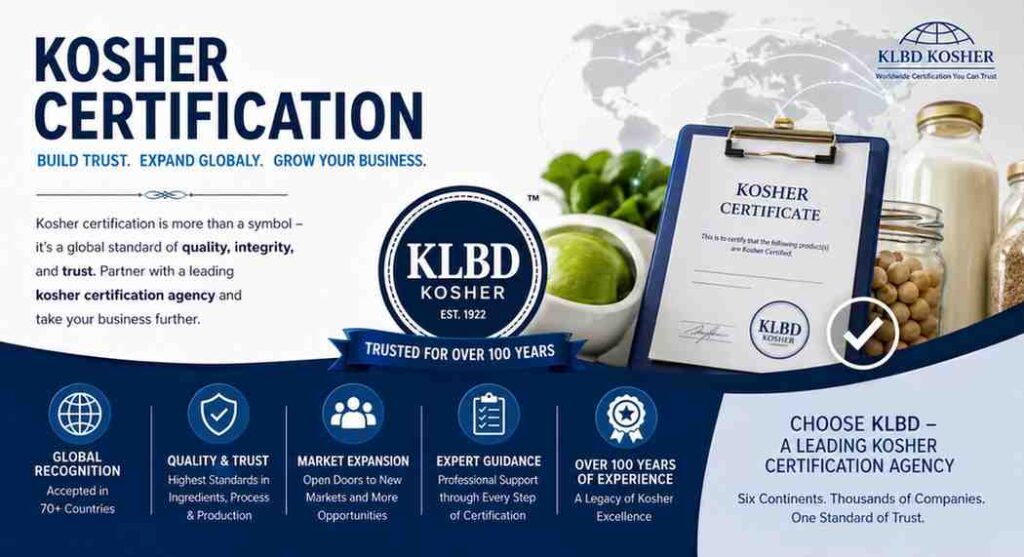

As global markets evolve and consumers demand higher standards of transparency and quality, kosher compliance has become an important benchmark across industries. Businesses are increasingly adopting kosher practices not only to meet religious expectations but also to improve product credibility and gain international recognition.
To succeed in this space, it is essential to understand kosher requirements, the role of a kosher agency, and what is the koshering process in detail.
Breaking Down Kosher Requirements
Kosher requirements are based on Jewish dietary laws (kashrut) that define how food must be sourced, processed, and prepared. These guidelines are highly detailed and cover every stage of production.
Core Kosher Requirements Include:
1. Approved Food Sources
Only certain types of animals and food categories are permitted. For example:
- Land animals must have split hooves and chew the cud
- Fish must have fins and scales
- Certain birds are allowed, while others are restricted
2. Strict Separation Rules
One of the most critical kosher requirements is the separation of meat and dairy. This extends to:
- Cooking equipment
- Storage areas
- Processing lines
Even indirect contact between meat and dairy can make products non-compliant.
3. Ingredient Verification
Every ingredient, including additives and processing aids, must be kosher-approved. This is especially important in processed foods where hidden ingredients may exist.
4. Clean Manufacturing Environment
Facilities must maintain high levels of hygiene and avoid contamination with non-kosher materials.
The Importance of a Kosher Agency
A kosher agency is the backbone of the certification process. It ensures that businesses follow all kosher requirements accurately and consistently.
What Does a Kosher Agency Provide?
- Inspection Services: Regular facility checks to ensure compliance
- Ingredient Approval: Verification of raw materials and suppliers
- Process Monitoring: Oversight of manufacturing methods
- Certification: Authorization to use kosher symbols on products
Kosher agencies act as independent authorities, giving consumers confidence that products meet strict standards.
What is the Koshering Process?
Understanding what is the koshering process is crucial for businesses that handle food production or equipment used in manufacturing.
Koshering (or kashering) is the method of preparing equipment and utensils so they can be used for kosher production. This process removes any absorbed non-kosher substances and ensures compliance with kosher laws.
Detailed Koshering Process Explained
The koshering process is systematic and depends on how the equipment was previously used.
Step 1: Deep Cleaning
All surfaces must be thoroughly cleaned to remove visible residues such as grease, food particles, and contaminants.
Step 2: Idle Time
Equipment is typically left unused for around 24 hours. This waiting period helps neutralize any absorbed flavors.
Step 3: Heat-Based Purification
Heat is applied to eliminate absorbed substances. There are two main methods:
- Hagalah (Boiling Water): Suitable for equipment used with liquids
- Libun (Direct Flame): Used for surfaces exposed to high heat
Step 4: Final Rinse and Setup
After heat treatment, the equipment is rinsed and prepared for kosher use.
Step 5: Supervision
A representative from a kosher agency supervises the process to ensure full compliance.
Why Kosher Compliance Matters for Businesses
1. Strengthens Product Integrity
Following kosher requirements ensures strict control over ingredients and processes, improving overall product quality.
2. Builds Consumer Confidence
Kosher certification is widely recognized as a mark of trust and reliability.
3. Supports Global Expansion
Many international markets prefer kosher-certified products, making it easier for businesses to export and grow.
4. Enhances Brand Reputation
Certification from a reputable kosher agency positions your brand as premium and quality-focused.
Industries That Rely on Kosher Standards
Kosher compliance is not limited to traditional food sectors. It plays a key role in:
- Packaged food and beverage industries
- Ingredient and flavor manufacturing
- Pharmaceutical production
- Cosmetics and personal care
This wide application highlights the growing importance of kosher standards in modern business.
Common Challenges in Meeting Kosher Requirements
While beneficial, achieving kosher compliance can present challenges:
- Complex ingredient sourcing
- Risk of cross-contamination
- Need for specialized equipment handling
- Continuous monitoring and audits
Working with an experienced kosher agency helps businesses overcome these challenges efficiently.
How to Choose the Right Kosher Agency
Selecting the right kosher agency is a critical decision that impacts your certification’s credibility.
Key Considerations:
- International recognition
- Industry-specific expertise
- Transparent certification process
- Ongoing support and guidance
A strong partnership with the right agency ensures smooth certification and long-term compliance.
Future Trends in Kosher Certification
As consumer awareness continues to grow, kosher certification is expected to expand further into global markets. Businesses are increasingly viewing it as a strategic investment rather than just a compliance requirement.
Emerging trends include:
- Increased demand for clean-label products
- Greater focus on transparency and traceability
- Expansion into non-food industries
Companies that adopt kosher standards early will be better positioned to meet these evolving demands.
Final Thoughts
Understanding kosher requirements, working with a trusted kosher agency, and mastering what is the koshering process are essential steps for businesses aiming to succeed in today’s global market.
Kosher certification represents more than tradition—it is a modern standard of quality, safety, and trust. By embracing these principles, businesses can enhance their credibility, reach new markets, and achieve sustainable growth.