
Introduction
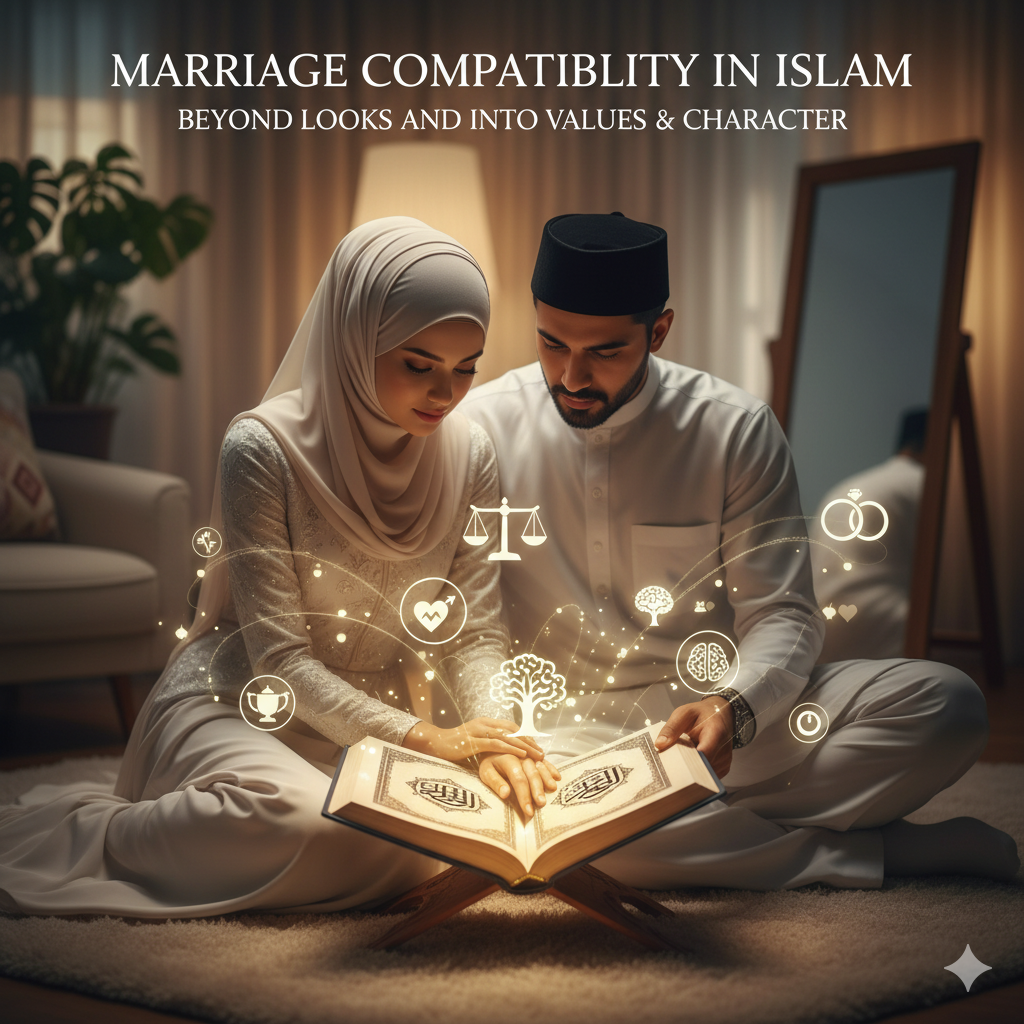
Marriage (nikah) in Islam is one of the most sacred and meaningful relationships. It is not merely a social contract but an act of worship and a means of completing one’s faith. While physical attraction often draws two people together, Islam emphasizes that true compatibility in marriage goes far beyond appearances — it lies in shared values, faith, and character.
In today’s age of social media and superficial standards, understanding what truly makes a marriage successful according to Islamic teachings is more important than ever.
The Foundation of Compatibility in Islam
Islamic scholars describe marriage compatibility (kufu’) as harmony between spouses in key areas — religion, values, and lifestyle — to promote peace (sakinah), mercy (rahmah), and love (mawaddah).
The Prophet Muhammad ﷺ said:
“A woman is married for four things: her wealth, her family status, her beauty, and her religion. So you should marry the religious woman (otherwise) you will be a loser.”
(Sahih al-Bukhari 5090)
This hadith applies equally to both genders — highlighting that piety and character are the ultimate measures of compatibility, not wealth or looks.
1. Faith (Iman) – The Core of Compatibility
Shared belief in Allah and commitment to practicing Islam form the foundation of a stable marriage. When both spouses prioritize deen (religion) over dunya (worldly gain), they handle differences with patience and mutual respect.
Couples who pray together, fast together, and strive to please Allah build spiritual intimacy that outlasts physical beauty.
2. Character (Akhlaq) – The True Beauty
Character determines how a person behaves in private and in public. Good manners, honesty, humility, and patience are key qualities of a righteous spouse.
The Prophet ﷺ said:
“The most complete of the believers in faith are those with the best character.”
(Sunan al-Tirmidhi 1162)
When evaluating a potential spouse, families should pay more attention to their temperament, communication style, and kindness, rather than external appeal.
3. Shared Life Goals and Values
Marriage is not just about living together — it’s about growing together.
A couple should discuss goals like:
-
How they will raise children (Islamic education, values)
-
Financial expectations and responsibilities
-
Priorities in career, family, and religion
A shared vision helps avoid conflict and fosters unity.
4. Cultural and Social Compatibility
Islam does not require identical cultural backgrounds, but shared customs and mutual understanding make adjustment easier. The Prophet ﷺ encouraged marriages across tribes to strengthen the Ummah but always emphasized mutual respect and adaptability.
5. Emotional Maturity and Respect
True compatibility requires emotional intelligence — the ability to handle disagreement without disrespect.
Respectful communication, listening, and forgiveness build trust and long-term happiness.
Physical attraction fades, but respect and emotional connection grow stronger with time when nurtured with sincerity.
What to Avoid When Seeking a Spouse
Modern culture often promotes unrealistic standards. Islam warns against prioritizing:
-
Looks over loyalty
-
Wealth over piety
-
Status over sincerity
A spouse chosen for taqwa (God-consciousness) will bring peace to your heart, while one chosen for status alone can bring endless conflict.
Consulting Scholars and Seeking Guidance
When unsure, it’s wise to seek advice from trusted scholars or elders who understand both Islamic principles and personal circumstances.
For authentic guidance on Islamic marriage, compatibility, and family issues, you can visit AskMuftiTariqMasood.com — a platform dedicated to providing Shariah-based answers to real-life questions.
Conclusion
Marriage in Islam is not about finding the “perfect” person — it’s about finding someone who helps you become a better Muslim. Looks may attract you for a moment, but faith, character, and values sustain love for a lifetime.
May Allah bless all Muslims with righteous spouses who are a source of peace, support, and joy in this world and the next. 🤍