
There’s a moment every student knows too well. You’re deep into a lecture, your brain finally locked in, and then it happens. You need to write something down. The pen comes out, the laptop opens, and just like that, your focus fractures. By the time you look back up, the professor has moved on and you’re left stitching together half an idea.
Here’s the thing. Students aren’t struggling because they’re distracted. They’re struggling because the act of capturing ideas often pulls them out of the moment. That’s exactly where tools like speech note are quietly changing the game.
The Real Cost of Breaking Focus
Let’s break it down. Cognitive science tells us that task-switching isn’t free. According to research from the University of California, it can take over 20 minutes to fully regain focus after an interruption. For students, those interruptions add up fast. Writing, typing, formatting notes. Each tiny switch drains mental energy.
Now imagine a philosophy class where ideas build on each other in real time. Or a coding lecture where one missed explanation makes the rest feel like noise. Students don’t just need notes. They need continuity.
That’s why many are turning to speech to text notes as a way to capture ideas without mentally stepping out of the room.
Talking It Out, Literally
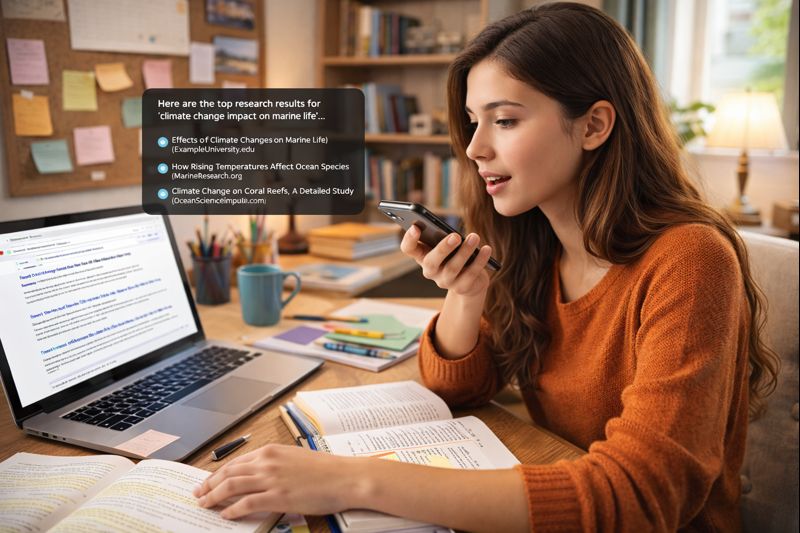
Picture this. A student sits in the back row during a psychology lecture. Instead of scribbling furiously, they quietly tap their phone and speak a short sentence. The app converts it instantly. No typing. No head-down moment. Just a quick thought captured and attention intact.
That’s the power of voice to notes. You think, you speak, you stay present.
Medical and law students especially swear by this. Dense material. Rapid explanations. No pauses. Using voice to text lets them grab key definitions, case references, or sudden insights without missing what comes next.
And yes, it feels weird at first. Talking instead of typing? But after a week, it feels natural. Almost obvious.
How Students Actually Use It Day to Day
This isn’t just about lectures. Students use speech to text notes in all kinds of situations.
During study sessions, they talk through complex problems out loud. The app records their reasoning step by step. Later, when they review, it’s like replaying their own thought process. Messy, honest, and surprisingly effective.
During group projects, one student often becomes the “idea catcher.” While everyone debates, they use voice to text to log ideas in real time. No one waits. No one forgets.
Even outside academics, it shows up. Walking between classes? A sudden idea for an essay intro pops up. Instead of trusting memory, they speak it out and move on.
What this really means is students stop treating ideas like fragile things that might vanish. They trust they can catch them anytime.
Focus First, Notes Second
Traditional note-taking assumes your hands should be busy while your brain listens. But that’s backwards. Listening is cognitive work. Writing is mechanical. Combining both often leads to shallow understanding.
With tools built around voice to text, students flip the equation. They listen deeply first. They capture lightly. The result is fewer notes, but better ones.
Studies back this up. A 2022 survey found that students who used voice-based note tools reported higher comprehension and lower study fatigue compared to heavy typers. Less volume. More meaning.
Why Speech to Note Fits Student Life
Students live on their phones. That’s not a critique. It’s reality. So a lightweight app that turns speech into organized text fits naturally into their routine.
If you’re curious, check out the Speech to Note demo video. It shows exactly how quick the process is. No learning curve. No fluff.
You can also download the app directly from the Apple App Store or Google Play Store and try it during your next class. Most students realize within a day whether it clicks for them. Spoiler. It usually does.
A Small Shift That Adds Up
This isn’t about replacing notebooks or banning laptops. It’s about choosing the right tool at the right moment. When focus matters more than formatting, speech to text notes win.
So here’s the nudge. Try capturing one lecture, one study session, or one walking thought using voice to notes instead of typing. See how it feels. Notice whether your attention stays sharper.
If you’ve already tried voice to text for studying, share what worked and what didn’t. Students learn best from other students, after all.