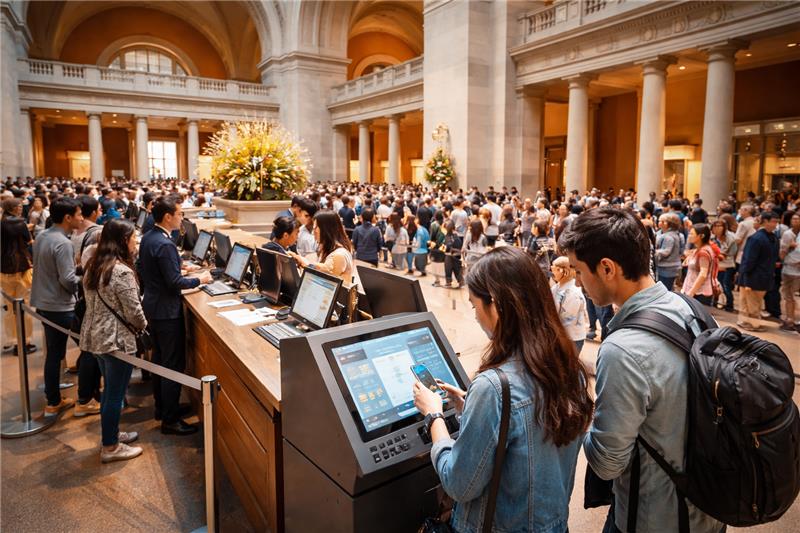

Museum ticketing software is essential for managing large visitor volumes efficiently while improving revenue control and operational visibility.
Museums today are not facing a demand problem – they are facing a capacity management problem.
As visitor numbers grow, traditional ticketing methods fail to handle scale, leading to congestion, inefficiencies, and lost revenue opportunities.
What problems does museum ticketing software actually solve?
It solves operational bottlenecks by digitizing ticketing, automating entry, and centralizing visitor data.
Without a proper system, museums typically deal with:
- Entry congestion during peak hours
- Manual validation delays
- Inconsistent visitor data tracking
- Limited control over daily capacity
These issues compound quickly in high-footfall environments.
How does digital ticketing improve visitor flow?
Digital ticketing improves visitor flow by distributing arrivals through time-slot booking and enabling instant entry validation.
Instead of all visitors arriving at once:
- Entry is spread across time slots
- Tickets are validated in seconds
- Staff workload is reduced
This creates a predictable and controlled flow of visitors, which is critical for large venues.
Why are traditional ticketing systems no longer sufficient?
Traditional ticketing systems fail because they cannot scale with increasing visitor demand or provide real-time insights.
Common limitations include:
- No advance booking system
- Manual record-keeping
- Lack of real-time reporting
- High dependency on staff
As footfall increases, these systems become a bottleneck rather than a solution.
How does ticketing software impact revenue generation?
It improves revenue by maximizing ticket sales opportunities and minimizing operational losses.
Key revenue drivers:
- Advance bookings capture more visitors
- Tiered or dynamic pricing during peak demand
- Add-on services (events, guided tours)
- Accurate tracking reduces financial leakage
Revenue growth often comes from better systems, not more visitors.
What operational insights can museums gain?
Ticketing software provides real-time analytics that enable better planning and resource allocation.
Museums can track:
- Visitor distribution across the day
- Peak traffic periods
- Revenue by ticket type
- Performance of special events
This allows leadership to make data-driven operational decisions instead of assumptions.
Build vs Buy: what’s the smarter approach?
Buying a proven ticketing solution is usually more practical than building one from scratch.
Building requires:
- Dedicated development team
- Ongoing maintenance
- Security and scalability planning
Buying provides:
- Faster implementation
- Lower operational risk
- Continuous updates and support
Unless requirements are highly specific, buying is typically the more efficient route.
How is mobile-first ticketing reshaping visitor experience?
Mobile ticketing eliminates physical friction by enabling instant booking and contactless entry.
Visitors no longer need to:
- Stand in queues
- Print tickets
- Wait for manual verification
Instead, they can:
- Book instantly
- Enter seamlessly
- Experience faster access
For a deeper look at mobile-first systems, this breakdown explains it well:
https://everyticket.in/blog/mobile-ticketing-software-for-museums
What should decision-makers prioritize when choosing a system?
Decision-makers should prioritize reliability, scalability, and ease of adoption over feature complexity.
Critical evaluation factors:
- System performance during peak traffic
- Ease of use for staff
- Integration with existing systems
- Real-time reporting capabilities
A complex system that staff cannot operate effectively creates more problems than it solves.
Where should museums start?
Museums should begin by analyzing their current bottlenecks and evaluating solutions that directly address them.
If you’re exploring implementation:
- 🌐 Website: https://everyticket.in
Initial steps:
- Identify peak-hour challenges
- Evaluate visitor flow issues
- Request a system demo
- Compare scalability options
Even a small system upgrade can significantly improve operations.
Final Thoughts
Museum ticketing software is no longer just an operational upgrade, it’s a strategic necessity for managing scale, improving visitor experience, and driving sustainable revenue growth.
As visitor expectations shift toward speed, convenience, and digital access, museums that rely on manual systems will continue to face bottlenecks and inefficiencies. The real advantage comes from adopting systems that not only handle demand but also provide the data and flexibility to evolve with it.