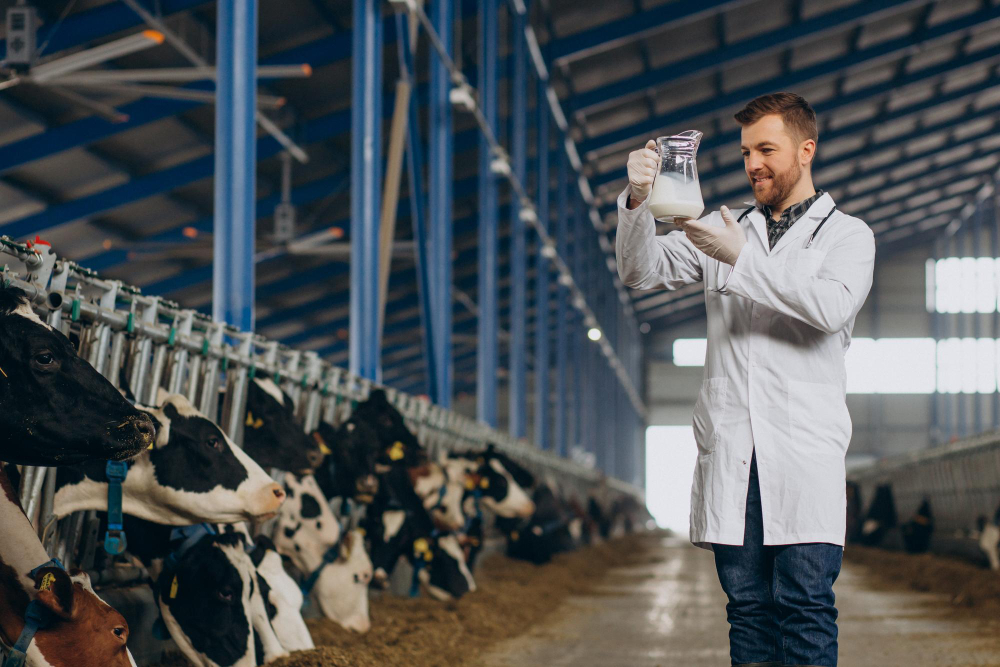

The dairy manufacturing industry operates in one of the most complex and tightly regulated production environments. From raw milk procurement and quality testing to processing, packaging, cold-chain storage, and distribution, dairy businesses must maintain precision at every stage. Managing these processes manually or through disconnected systems often leads to inefficiencies, wastage, compliance risks, and rising operational costs.
This is where Enterprise Resource Planning (ERP) systems become essential. ERP software integrates all dairy manufacturing operations into a single, centralized platform, enabling better control, real-time visibility, and data-driven decision-making. In today’s competitive and compliance-driven market, ERP is no longer optional, it is a strategic necessity.
Understanding the Unique Challenges of the Dairy Manufacturing Industry
Dairy manufacturing differs from other food industries due to its perishable raw materials, strict quality norms, and variable supply chain conditions. Some of the key challenges include:
-
Short shelf life of milk and dairy products
-
Fluctuating milk supply and seasonal demand
-
Stringent food safety and regulatory compliance
-
High wastage due to poor inventory and batch management
-
Complex pricing and margin control
-
Cold-chain dependency for storage and transportation
Without a centralized system, managing these challenges becomes difficult, especially as operations scale. ERP systems are specifically designed to address these complexities.
What Is ERP and How Does It Apply to Dairy Manufacturing?
ERP (Enterprise Resource Planning) is an integrated software solution that connects multiple business functions such as procurement, production, inventory, quality control, finance, sales, and logistics into a single system.
For dairy manufacturers, ERP provides end-to-end process visibility, starting from milk collection at farms to finished goods delivery. It ensures data consistency, eliminates silos, and enables real-time monitoring across departments.
Why ERP Is Essential for Dairy Manufacturing Businesses
1. Centralized Milk Procurement and Supplier Management
Milk procurement is the foundation of dairy manufacturing. ERP systems help manage:
-
Milk collection schedules
-
Supplier and farmer records
-
Quality test results (fat, SNF, adulteration checks)
-
Dynamic pricing based on quality parameters
With ERP, procurement teams gain transparency and traceability, ensuring fair pricing, improved supplier relationships, and consistent raw material quality.
2. Improved Quality Control and Batch Traceability
Quality is critical in dairy manufacturing. ERP systems enable manufacturers to:
-
Track each batch from raw milk to finished product
-
Record quality checks at every production stage
-
Maintain compliance with food safety standards (FSSAI, ISO, HACCP)
-
Quickly trace and recall defective batches if required
This level of traceability not only ensures compliance but also builds brand trust and reduces the risk of costly recalls.
3. Efficient Production Planning and Process Automation
Dairy manufacturing involves multiple product lines such as milk, curd, cheese, butter, yogurt, and ice cream. ERP systems help streamline production by:
-
Automating production planning and scheduling
-
Managing Bills of Materials (BoM) and recipes
-
Optimizing equipment utilization
-
Reducing production downtime and errors
With ERP-driven automation, manufacturers can meet demand efficiently while minimizing wastage and resource misuse.
4. Real-Time Inventory and Cold-Chain Management
Inventory management in dairy manufacturing is highly sensitive due to perishability. ERP provides:
-
Real-time stock visibility across warehouses
-
Expiry date tracking and FIFO/FEFO management
-
Cold-storage monitoring integration
-
Reduced overstocking and stockouts
By optimizing inventory, dairy manufacturers can significantly cut losses caused by spoilage and expired products.
5. Regulatory Compliance and Food Safety Assurance
The dairy industry is governed by strict regulations and audits. ERP systems simplify compliance by:
-
Maintaining digital records for inspections
-
Automating compliance reporting
-
Standardizing quality and safety procedures
-
Ensuring adherence to local and global standards
This reduces the risk of penalties, audit failures, and reputational damage.
6. Accurate Cost Control and Profitability Analysis
Without ERP, tracking true production costs is challenging. ERP systems provide:
-
Real-time cost tracking across procurement, production, and logistics
-
Margin analysis by product, batch, or region
-
Identification of high-cost inefficiencies
-
Better pricing and profitability planning
With clear financial insights, dairy manufacturers can make informed decisions that directly improve profitability.
7. Seamless Distribution and Supply Chain Management
ERP connects production with distribution and sales, enabling:
-
Order management and demand forecasting
-
Route optimization for refrigerated transportation
-
Distributor and retailer management
-
On-time delivery with minimal losses
An integrated supply chain ensures faster order fulfillment and improved customer satisfaction.
8. Data-Driven Decision Making and Business Intelligence
ERP systems generate real-time dashboards and reports that provide insights into:
-
Production efficiency
-
Quality performance
-
Inventory turnover
-
Sales trends and demand patterns
With accurate data, dairy manufacturers can plan proactively, respond to market changes faster, and gain a competitive edge.
ERP as a Growth Enabler for Dairy Manufacturers
As dairy businesses grow, operational complexity increases. ERP systems are scalable and adaptable, making them ideal for:
-
Expanding product lines
-
Managing multi-location operations
-
Supporting exports and global compliance
-
Integrating advanced technologies like IoT and AI
ERP ensures that growth does not compromise efficiency or quality.
Why Modern Dairy Manufacturers Prefer ERP Solutions Like Odoo
Modern ERP platforms such as Odoo are increasingly popular in the dairy manufacturing industry due to their flexibility and modular structure. They offer:
-
Industry-specific customization
-
Seamless integration across departments
-
Cost-effective implementation
-
User-friendly interfaces
With the right ERP partner, dairy manufacturers can tailor the system to meet their exact operational needs.
Conclusion: ERP Is No Longer Optional for Dairy Manufacturing
In today’s competitive, regulated, and fast-moving dairy industry, relying on manual processes or fragmented systems is no longer sustainable. ERP software provides the visibility, control, compliance, and efficiency required to operate profitably and at scale.
By implementing ERP, dairy manufacturers can reduce waste, improve quality, optimize costs, and achieve sustainable growth. Whether you are a small dairy processor or a large manufacturing enterprise, ERP is the backbone of modern dairy manufacturing operations.
Related Blog: ERP Software for Dairy Manufacturers – Everything You Need to Know
Odoo for Dairy Manufacturing: Revolutionizing the Dairy Industry