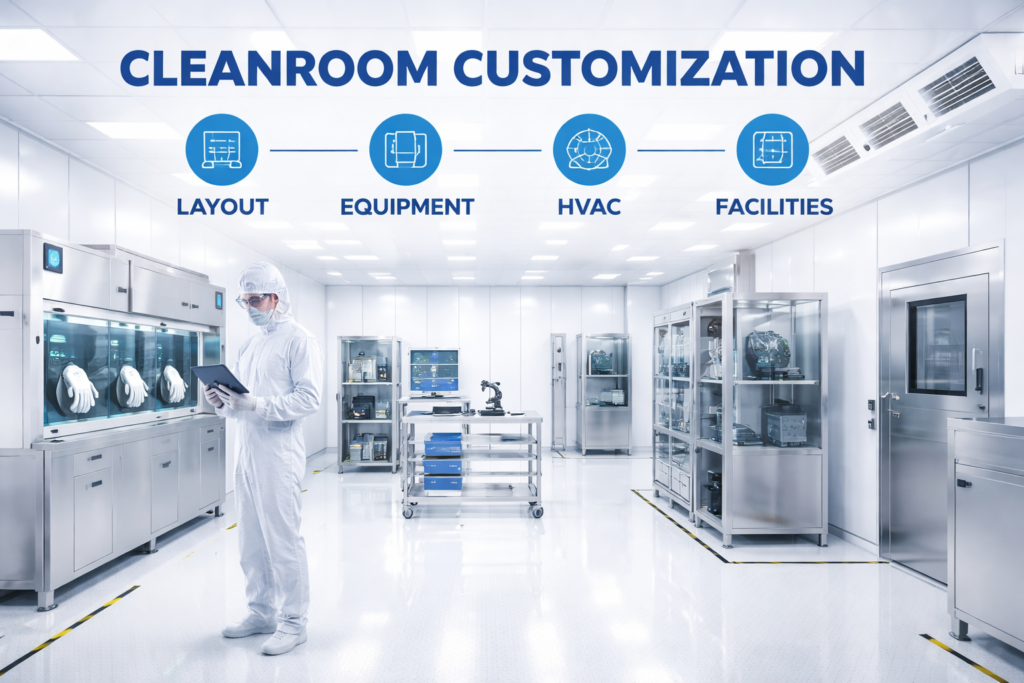

In industries where precision, cleanliness, and efficiency are non-negotiable—such as pharmaceuticals, biotechnology, electronics, and healthcare—cleanrooms play a critical role. However, simply installing a standard cleanroom is not always enough. Every facility has unique workflows, equipment needs, and regulatory requirements. That’s where cleanroom customization becomes essential.
A customized cleanroom is designed specifically to match your operational needs, ensuring that every square foot is used effectively. This not only improves functionality but also maximizes space utilization. In this article, we’ll explore how cleanroom customization helps businesses make the most of their available space while improving productivity and compliance.
Understanding Cleanroom Customization
Cleanroom customization refers to the process of designing and building a cleanroom tailored to specific operational requirements. Instead of using a one-size-fits-all approach, customization considers factors such as:
- Workflow and process layout
- Equipment size and placement
- Personnel movement
- Airflow requirements
- Industry regulations
By aligning the cleanroom design with actual usage, businesses can eliminate wasted space and create a more efficient environment.
Optimized Layout for Workflow Efficiency
One of the biggest advantages of cleanroom customization is the ability to design a layout that supports your workflow.
In a standard cleanroom, equipment and workstations may be arranged in a generic way, which can lead to:
- Unnecessary movement of staff
- Congestion in certain areas
- Delays in production processes
A customized cleanroom, on the other hand, is designed based on how your operations actually function. For example:
- Frequently used equipment can be placed closer together
- Workstations can be arranged in a logical sequence
- Clear pathways can be created for smooth movement
This reduces wasted space and ensures that every area serves a purpose.
Better Equipment Integration
Different industries use specialized equipment that varies in size, shape, and function. Standard cleanrooms may not accommodate this equipment efficiently, leading to unused or awkward spaces.
With customization, you can:
- Design around large or complex machinery
- Allocate exact space for each piece of equipment
- Ensure proper spacing for maintenance and operation
This prevents overcrowding and eliminates gaps that would otherwise go unused. As a result, the cleanroom becomes more compact and efficient without compromising functionality.
Efficient Use of Vertical Space
Many facilities focus only on floor space, but vertical space is equally important. Customized cleanrooms can be designed to utilize height effectively.
Examples include:
- Installing overhead storage systems
- Using ceiling-mounted equipment
- Designing multi-level cleanroom structures
By leveraging vertical space, businesses can free up floor area for critical operations, improving overall space utilization.
Tailored Airflow and HVAC Design
Airflow is a key component of any cleanroom. In a standard setup, airflow systems may not align perfectly with your layout, leading to inefficiencies.
Customized cleanrooms allow for:
- Strategic placement of air vents and filters
- Optimized airflow patterns based on equipment and processes
- Reduced need for excessive ductwork
This not only improves contamination control but also saves space by eliminating unnecessary components. A well-planned HVAC system ensures that every part of the cleanroom is functional and efficiently designed.
Flexible and Modular Design Options
Modern cleanroom customization often includes modular design elements. These allow facilities to adapt their space as needs change.
Benefits include:
- Easy reconfiguration of walls and partitions
- Ability to expand or reduce space as required
- Minimal disruption during upgrades
This flexibility ensures that space is never wasted. Instead of building new areas from scratch, businesses can adjust existing layouts to meet evolving demands.
Reduced Clutter and Improved Organization
A customized cleanroom is designed with organization in mind. Storage, equipment placement, and workflow are all planned carefully.
This leads to:
- Reduced clutter
- Clearly defined work zones
- Better inventory management
When everything has a designated place, there is less chance of overcrowding or unused space. A clean and organized environment also improves productivity and reduces errors.
Compliance Without Compromising Space
Different industries have strict regulations for cleanroom design, such as ISO classifications or GMP standards. Standard cleanrooms may overcompensate in certain areas to meet general requirements, leading to inefficient use of space.
Customization ensures that:
- Only necessary compliance features are included
- Space is allocated based on actual regulatory needs
- No area is overbuilt or underutilized
This balance helps maintain compliance while maximizing usable space.
Improved Personnel Movement
Employee movement plays a major role in space utilization. Poorly designed cleanrooms can create bottlenecks, increasing the risk of contamination and reducing efficiency.
Customized designs consider:
- Entry and exit points
- Gowning and de-gowning areas
- Movement paths for staff and materials
By streamlining movement, the cleanroom uses space more effectively and reduces unnecessary congestion.
Cost Efficiency Through Smart Space Use
Better space utilization directly impacts costs. When space is used efficiently, businesses can:
- Reduce the overall size of the cleanroom
- Lower construction and maintenance costs
- Minimize energy consumption
Customization ensures that you only build what you need—nothing more, nothing less. This leads to long-term savings and a higher return on investment.
Future-Proofing Your Facility
Industries evolve, and so do their requirements. A customized cleanroom can be designed with future growth in mind.
This includes:
- Space for additional equipment
- Scalable layouts
- Upgrade-friendly infrastructure
By planning ahead, businesses can avoid costly redesigns and make better use of their space over time.
Conclusion
Cleanroom customization is not just about meeting technical requirements—it’s about creating a space that works efficiently for your specific operations. By tailoring the design to your workflow, equipment, and regulatory needs, you can eliminate wasted space and maximize every square foot.
From optimized layouts and better equipment integration to improved airflow and flexible designs, customization offers a smarter approach to cleanroom construction. It enhances productivity, reduces costs, and ensures that your facility remains efficient both now and in the future.
If your goal is to achieve better space utilization while maintaining high performance and compliance, investing in a customized cleanroom is the right step forward.