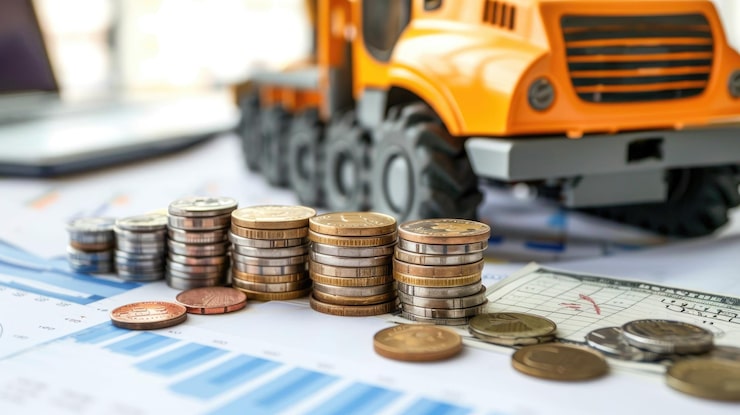

Growth often depends on access to the right tools at the right time. Across industries, equipment plays a direct role in productivity, safety, and scalability. Financing bridges the gap between immediate operational needs and long-term cash flow stability. For many businesses, commercial vehicle loans become part of early conversations because mobility and logistics often define day to day performance.
Equipment financing covers a wide range of assets, from compact tools to large scale machinery. Each industry brings its own priorities, yet the goal stays consistent. Businesses look to preserve working capital while gaining access to reliable equipment. Financing supports momentum without forcing difficult tradeoffs.
Construction and Infrastructure Equipment
Construction remains one of the most equipment intensive industries. Projects rely on machinery that handles earthmoving, lifting, and material transport. Items such as excavators, loaders, cranes, and concrete mixers often qualify under heavy equipment financing, allowing firms to align payments with project timelines.
Beyond large machinery, construction firms also finance support equipment. Power tools, generators, scaffolding systems, and safety gear often enter financing plans as bundled assets. This approach supports operational readiness while maintaining financial balance. Regular access to updated equipment also improves compliance with evolving safety standards.
Transportation and Logistics Assets
Transportation businesses depend on consistency and uptime. Vehicles form the backbone of operations, whether for freight, delivery, or passenger movement. Financing options frequently include trucks, vans, trailers, and specialty transport units. Commercial vehicle loans support fleet expansion while spreading costs across predictable payment cycles.
Logistics operations also rely on warehouse equipment. Forklifts, pallet jacks, conveyor systems, and loading docks often qualify for financing. When combined with vehicle funding, businesses create an integrated logistics ecosystem that supports faster turnaround and reduced downtime.
Manufacturing and Industrial Machinery
Manufacturing environments require precision and efficiency. Equipment such as CNC machines, assembly lines, industrial presses, and robotic systems often involve significant upfront investment. Heavy equipment financing supports acquisition while preserving liquidity for raw materials and labor.
Ancillary equipment also plays a role in manufacturing success. Quality control systems, packaging machinery, and industrial HVAC units often enter financing agreements. Strategic financing allows manufacturers to modernize facilities without slowing production cycles.
Agricultural and Farming Equipment
Agriculture blends tradition with technology. Modern farming depends on machinery that enhances yield and reduces manual effort. Tractors, harvesters, irrigation systems, and seeders often qualify under heavy equipment financing, especially when seasonal revenue patterns influence cash flow.
Livestock operations also finance feeding systems, milking equipment, and climate control solutions. Financing structures often reflect harvest cycles, allowing farmers to align payments with income periods. This flexibility supports sustainability and long term planning.
Healthcare and Medical Equipment
Healthcare providers rely on specialized equipment to deliver accurate diagnoses and effective treatment. Imaging systems, surgical tools, patient monitoring devices, and laboratory analyzers often qualify for financing programs. While not traditionally associated with commercial vehicle loans, mobile medical units and transport vehicles also enter financing strategies.
Smaller practices often finance dental chairs, diagnostic software, and sterilization equipment. Financing supports patient care improvements without disrupting operational budgets. Consistent access to updated technology also strengthens patient trust and clinical outcomes.
Hospitality and Food Service Equipment
Hospitality thrives on experience and efficiency. Restaurants, hotels, and catering services depend on kitchen equipment, refrigeration units, laundry systems, and point of sale technology. Financing allows operators to upgrade facilities while maintaining cash reserves. In delivery focused models, commercial vehicle loans support branded transport units and food trucks.
Event venues and lodging facilities also finance furniture, fixtures, and energy efficient systems. These assets directly influence guest satisfaction and operational efficiency. Thoughtful financing supports brand consistency across locations.
Retail and Point of Sale Systems
Retail businesses balance inventory management with customer experience. Equipment such as shelving, display units, checkout systems, and inventory scanners often qualify for financing. While heavy equipment financing may sound industrial, large retail distribution centers frequently rely on financed material handling systems.
Mobile retail concepts also rely on financed vehicles and kiosks. Financing supports expansion into new markets without overwhelming capital commitments. Retailers gain flexibility to adapt layouts and technology as consumer behavior evolves.
Technology and Office Infrastructure
Modern offices depend on technology that supports collaboration and security. Servers, networking hardware, cybersecurity systems, and cloud infrastructure often qualify for financing. Although commercial vehicle loans sit outside traditional office needs, service based businesses with field teams often finance support vehicles alongside IT assets.
Office furniture, conference systems, and energy efficient upgrades also enter financing plans. These investments improve productivity and employee retention while spreading costs responsibly.
Why Equipment Financing Supports Smarter Growth?
Equipment financing aligns investment with usage. Instead of tying up capital, businesses gain access to assets that drive revenue. Heavy equipment financing supports industries where machinery directly impacts output, while commercial vehicle loans keep operations mobile and responsive.
Financing turns equipment into a growth enabler rather than a financial strain. Businesses retain flexibility, adapt to market shifts, and maintain competitive standards. As industries evolve, access to the right equipment at the right time often defines long term success.
Conclusion
Across industries, equipment financing supports progress without compromising stability. From construction sites to healthcare facilities, financed assets keep operations efficient and future ready. Commercial vehicle loans and heavy equipment financing remain central tools in this strategy, helping businesses scale with confidence while protecting cash flow.