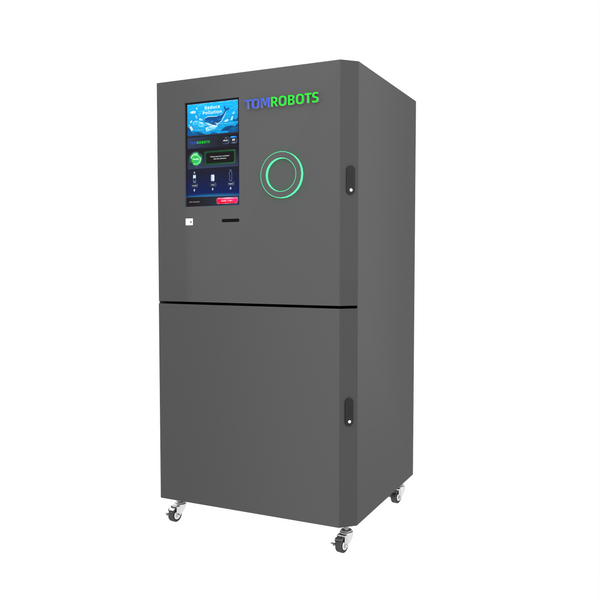

You’ve undoubtedly noticed how rapidly rubbish accumulates if you’ve spent time in crowded public areas like a park or a metro station. There are bins around, but bottles and cans still end up in the wrong place. Not because people don’t care, but because it’s easier to ignore the process than to figure it out.
That’s exactly where automated recycling machines start making sense. They don’t rely on people thinking too much. They just make recycling the easiest option available in that moment.
Convenience at the Right Moment Improves Participation
Most people don’t plan to recycle in advance. They decide in the moment—usually right after finishing a drink.
If there’s no clear option nearby, the bottle goes into the nearest bin or sometimes nowhere at all. But when a machine is right in front of them, the decision changes. It becomes quick and obvious.
That’s what makes these machines useful. They fit into real-life behavior instead of expecting people to change it. This is also why businesses exploring a reverse vending machine for sale focus so much on placement—it only works when it’s right where people need it.
Incentives Make People More Willing to Recycle
Let’s be honest—most people respond better when there’s something in it for them.
Even a small reward, like a discount coupon or a few points, is enough to nudge someone toward using the machine. It doesn’t have to be big. It just has to feel immediate.
Over time, this changes how people behave. What starts as a small incentive slowly turns into a habit. You’ll notice people actually looking for these machines, which explains why searches like “recycling vending machine near me” have become more common.
They Reduce Litter in Busy Public Areas
In crowded places, waste doesn’t just increase—it spreads.
Even when bins are available, recyclable items often get mixed with general waste or left around. It’s not always intentional; it’s just the easiest option in that moment.
A dedicated machine changes that. It provides a clear, unambiguous location for consumers to store bottles and cans. Additionally, it naturally draws attention because it is more noticeable than a typical bin.
Over time, this leads to cleaner surroundings, especially in areas where waste builds up quickly.
They Improve Recycling Quality at the Collection Stage
One thing people don’t usually think about is what happens after the waste is collected.
When everything is mixed together, sorting becomes harder, and a lot of recyclable material loses its value. That’s where these machines quietly do a better job.
Since they only take certain things, the waste is kept apart from the start. Later on, this increases the efficiency of the recycling process without requiring additional work to correct errors.
They Increase Overall Recycling Rates
When recycling feels complicated, participation drops. When it feels simple, more people take part—it’s that straightforward.
These machines remove the confusion. There’s no guessing, no sorting decisions, no extra steps. You just use it and move on.
That simplicity is what increases recycling rates in public spaces. It’s not about forcing people—it’s about making the right action easier than the wrong one.
They Provide Data for Smarter Waste Management
The data these machines gather is another aspect of their usefulness that is completely hidden from users.
Every machine keeps track of how much material it gathers and how frequently it is utilised. This eventually creates a comprehensive picture of waste trends in various places.
For organizations, this is valuable. It helps them decide where to place more machines or how often to service them. So when someone looks into a reverse vending machine for sale, they’re not just buying a machine—they’re getting insights into how waste actually moves in their space.
They Reduce Manual Effort in Public Waste Handling
Managing waste manually in busy areas takes a lot of effort. Bins need to be emptied frequently, and sorting adds another layer of work.
Automated machines reduce that load. They store and often compact the material, which means fewer trips are needed to clear them. Some systems even send alerts when they’re full.
This makes them easier to manage, especially in places where waste builds up quickly throughout the day.
They Support Modern Smart City Infrastructure
Cities are slowly becoming more tech-driven, and waste management is part of that shift.
These machines fit naturally into that setup. They’re not just bins—they interact with users, track data, and support cleaner systems without needing constant supervision.
In areas trying to present a cleaner, more organized image, they add both function and visibility.
What Makes Them Truly Useful Overall
When you step back and look at it, their usefulness comes down to something simple—they make recycling easier than ignoring it.
They don’t depend on people remembering rules or making extra effort. They meet people where they already are and guide them toward a better choice.
That’s why interest is growing, whether it’s businesses searching for a reverse vending machine for sale or individuals looking up “recycling vending machine near me.” The idea isn’t complicated, but in real public spaces, it works surprisingly well.