
Introduction to Customer Communication Management
In today’s highly connected digital world, customers interact with brands across multiple platforms and expect consistency at every touchpoint. Emails, social media, websites, mobile apps, live chat, and even offline channels all contribute to how customers perceive a business. Managing these interactions in a structured, meaningful way is no longer optional. This is where customer communication management becomes essential.
Understanding what is customer communication management helps organizations deliver timely, relevant, and personalized messages while maintaining a unified brand voice. When done correctly, it strengthens relationships, improves satisfaction, and builds long-term loyalty.
What Is Customer Communication Management?
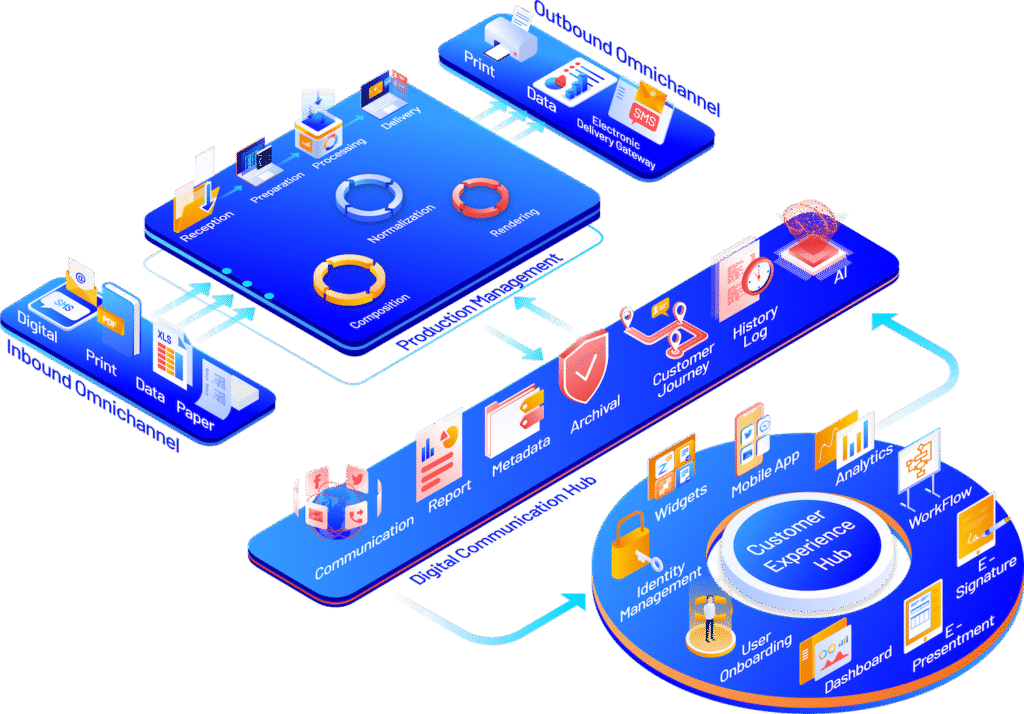
Customer Communication Management, often abbreviated as CCM, refers to the processes, technologies, and strategies used by businesses to manage, create, deliver, and analyze communications with customers across all channels. These communications may include transactional messages, promotional content, service notifications, and personalized updates.
At its core, CCM focuses on ensuring that every message sent to a customer is accurate, consistent, and aligned with their needs and preferences. It connects data, content, and delivery methods into a single framework so businesses can communicate more effectively at scale.
Rather than treating communication as isolated interactions, customer communication management views it as an ongoing conversation between a brand and its customers. This approach enables organizations to respond faster, reduce errors, and maintain compliance while improving overall engagement.
Why Customer Communication Management Matters
Customer expectations have evolved significantly. People want quick responses, personalized experiences, and seamless transitions between channels. When communication feels fragmented or repetitive, trust erodes quickly.
Effective customer communication management helps businesses avoid these issues by centralizing control over messaging. It ensures customers receive the right message at the right time, regardless of whether they are interacting through email, chat, or social media. This consistency directly impacts satisfaction, retention, and brand reputation.
From a business perspective, CCM also improves operational efficiency. Automated workflows reduce manual effort, minimize mistakes, and allow teams to focus on higher-value tasks. Over time, this leads to cost savings and better performance metrics.
The Role of Omnichannel Communication in CCM
Modern customer communication management cannot exist without Omnichannel Communication. Customers no longer follow a linear journey. They might start a conversation on social media, continue it via email, and complete it through a mobile app or phone call.
Omnichannel Communication ensures that all these interactions are connected. Information flows seamlessly between channels, so customers never have to repeat themselves. For businesses, this means having a unified view of each customer and their history across all touchpoints.
When omnichannel strategies are integrated into CCM, communication becomes more responsive and contextual. A customer who receives a shipping update by email can follow up through live chat without confusion. This continuity is critical to building trust and delivering a smooth experience.
Customer Communication Management and the Omnichannel Customer Experience
A strong Omnichannel Customer Experience is built on consistency, personalization, and convenience. Customer communication management provides the foundation for achieving all three.
Consistency comes from maintaining a single source of truth for messaging and customer data. Personalization is achieved by using insights and behavior data to tailor communication. Convenience is delivered when customers can choose their preferred channels without sacrificing quality or speed.
By aligning CCM with omnichannel goals, businesses can create experiences that feel cohesive rather than disjointed. Customers feel understood and valued, which increases engagement and long-term loyalty.
Key Components of an Effective CCM Strategy
An effective customer communication management strategy starts with clear objectives. Businesses must define what they want to achieve, whether it is improving response times, increasing engagement, or enhancing compliance.
Technology plays a significant role in supporting CCM. Platforms that integrate customer data, content management, and delivery channels enable automation and scalability. However, technology alone is not enough. Processes must be designed to ensure collaboration between marketing, customer service, and operations teams.
Data management is another critical component. Accurate, up-to-date customer information allows for relevant and timely communication. Without reliable data, even the most advanced CCM systems will fail to deliver value.
Building an Omnichannel Communication Strategy
Creating an omnichannel communication strategy begins with understanding the customer journey. Businesses must identify where and how customers interact with their brand and determine which channels are most important at each stage.
Once these touchpoints are mapped, communication should be aligned to provide continuity. Messages should feel like part of a single conversation rather than isolated responses. This requires integrating systems and breaking down silos between departments.
Personalization should be embedded into the strategy from the start. By leveraging customer data responsibly, businesses can deliver messages that resonate with individual needs and preferences. Over time, this personalization strengthens relationships and improves conversion rates.
Measuring the Success of Customer Communication Management
To ensure long-term success, customer communication management efforts must be measured and refined. Key performance indicators such as response time, customer satisfaction, engagement rates, and retention provide valuable insights into effectiveness.
Feedback loops are essential. Customer input helps identify gaps and opportunities for improvement. Analytics tools can reveal patterns in behavior and communication preferences, enabling continuous optimization.
Successful CCM is not a one-time initiative but an ongoing process. As customer expectations and technologies evolve, strategies must adapt accordingly.
Common Challenges and How to Overcome Them
One of the most common challenges in customer communication management is fragmentation. Disconnected systems and teams lead to inconsistent messaging and poor experiences. Overcoming this requires integration and cross-functional collaboration.
Another challenge is balancing automation with personalization. While automation improves efficiency, overuse can make communication feel impersonal. The key is to use automation to support, not replace, human connection.
Compliance and data privacy also present challenges. Businesses must ensure that communications meet regulatory requirements while maintaining transparency and trust with customers.
The Future of Customer Communication Management
The future of customer communication management will be shaped by artificial intelligence, real-time data, and predictive analytics. These technologies will enable even more personalized and proactive communication.
As customers continue to expect seamless interactions, omnichannel strategies will become standard rather than optional. Businesses that invest in CCM today will be better positioned to adapt and thrive in an increasingly competitive landscape.
Conclusion
Understanding what is customer communication management is essential for any business aiming to deliver meaningful, consistent, and personalized interactions. By combining CCM with Omnichannel Communication, organizations can create a strong Omnichannel Customer Experience that meets modern customer expectations.
A well-executed customer communication management strategy not only improves customer satisfaction but also drives efficiency, loyalty, and long-term growth. In a world where communication defines brand perception, mastering CCM is a strategic advantage no business can afford to ignore.