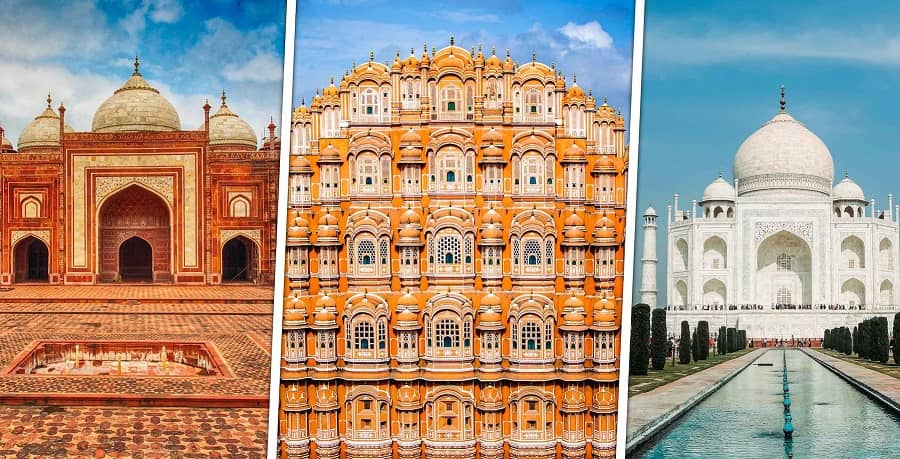

India tells stories through its forts, tombs, temples, and old cities. Every wall, gate, and pillar shows the life of people from the past. When you travel on the Golden Triangle Tour, you step into these stories. This famous route connects Delhi, Agra, and Jaipur. These three cities hold some of the most important UNESCO World Heritage Sites in India.
Travelers love this tour because they can see history, culture, art, and architecture in a short time. You do not just visit places. You feel the royal lifestyle of kings, the creativity of old builders, and the beauty of Mughal and Rajput designs.
In this blog, you will learn about all the UNESCO World Heritage Sites covered in the Golden Triangle Tour and how you can explore them in a 6–7 days trip.
What is a UNESCO World Heritage Site?
UNESCO stands for United Nations Educational, Scientific and Cultural Organization. UNESCO selects special places around the world that hold great cultural or natural value. These places show human history, art, science, and traditions.
When UNESCO adds a site to its list, it means:
-
The place has global importance
-
The place needs protection for future generations
-
The place shows unique history or architecture
India has many UNESCO sites, and some of the best ones fall on the Golden Triangle route.
Overview of the Golden Triangle Route
The Golden Triangle forms a triangle shape on the map of North India.
-
Delhi – The capital city with Mughal and Sultanate history
-
Agra – The city of the Taj Mahal and Mughal glory
-
Jaipur – The Pink City of Rajput kings and royal forts
The distance between these cities stays comfortable for road travel. You can complete this route in 6 to 7 days without feeling tired. During this journey, you cover multiple UNESCO World Heritage Sites that show different styles of architecture and history.
UNESCO World Heritage Sites in Delhi
Delhi has three famous UNESCO World Heritage Sites. These monuments show the power of Mughal rulers and the Delhi Sultanate.
1. Qutub Minar
Qutub Minar stands tall at 73 meters. Qutb-ud-din Aibak started its construction in 1193. This tower shows Indo-Islamic Afghan architecture. Builders used red sandstone and carved Quran verses on the walls.
You can also see:
-
Quwwat-ul-Islam Mosque
-
Iron Pillar that does not rust
-
Old ruins and arches
This place gives a clear picture of early Muslim rule in India.
2. Humayun’s Tomb
Humayun’s Tomb looks like a garden palace. Builders created this tomb in 1570 for Mughal Emperor Humayun. This monument inspired the design of the Taj Mahal.
You see:
-
Persian-style gardens
-
Water channels
-
Red sandstone and white marble design
The peaceful garden and grand design make this place very special.
3. Red Fort (Lal Qila)
Mughal Emperor Shah Jahan built the Red Fort in 1648. This fort served as the main residence of Mughal emperors for many years.
Inside the fort, you can visit:
-
Diwan-i-Aam (Hall of Public Audience)
-
Diwan-i-Khas (Hall of Private Audience)
-
Rang Mahal and beautiful gates
The fort shows Mughal luxury and power.
UNESCO World Heritage Sites in Agra
Agra holds two world-famous UNESCO sites and one nearby site at Fatehpur Sikri.
1. Taj Mahal
The Taj Mahal stands as a symbol of love. Shah Jahan built it in memory of Mumtaz Mahal. Builders used white marble and precious stones to create floral designs.
You notice:
-
Perfect symmetry
-
Beautiful gardens
-
Reflecting pool
-
Detailed marble carvings
The Taj Mahal looks different at sunrise, sunset, and moonlight.
2. Agra Fort
Agra Fort shows Mughal strength. Emperor Akbar built this fort with red sandstone. Later rulers added marble palaces inside.
You can explore:
-
Jahangir Palace
-
Khas Mahal
-
Musamman Burj (where Shah Jahan stayed)
From here, you can also see the Taj Mahal from a distance.
3. Fatehpur Sikri (Near Agra)
Emperor Akbar built Fatehpur Sikri as his capital city. People later left this city due to water shortage. Today, this place stands as a well-preserved Mughal city.
Important spots include:
-
Buland Darwaza
-
Jama Masjid
-
Tomb of Salim Chishti
-
Royal palaces and courtyards
This site shows Mughal planning and architecture.
UNESCO World Heritage Sites in Jaipur
Jaipur has one UNESCO site within the city and one hill fort included in a group listing.
1. Jantar Mantar
Maharaja Sawai Jai Singh II built Jantar Mantar in the 18th century. This place holds the world’s largest stone sundial.
You see:
-
Tools to measure time
-
Tools to study stars and planets
-
Scientific knowledge of old India
This site shows how Indians studied astronomy without modern machines.
2. Amber Fort (Part of Hill Forts of Rajasthan)
Amber Fort sits on a hill near Jaipur. This fort comes under the UNESCO list as part of the Hill Forts of Rajasthan.
You can explore:
-
Sheesh Mahal (Mirror Palace)
-
Large courtyards
-
Royal rooms
-
Elephant pathway
The fort shows Rajput bravery and royal life.
Why the Golden Triangle Tour is Perfect for Heritage Lovers
Heritage lovers want to see real history, not just pictures. The Golden Triangle offers:
-
Mughal architecture in Delhi and Agra
-
Rajput architecture in Jaipur
-
Tombs, forts, observatories, and palaces
-
Stories of kings, queens, and empires
-
Different building styles in one journey
You travel through 800 years of history in less than a week.
Suggested 6–7 Days Itinerary Covering All UNESCO Sites
Day 1: Arrival in Delhi
Visit Qutub Minar and Humayun’s Tomb.
Day 2: Delhi Sightseeing
Explore Red Fort and other markets.
Day 3: Delhi to Agra (4 hours)
Visit Agra Fort.
Day 4: Agra Sightseeing
Visit Taj Mahal at sunrise. Travel to Fatehpur Sikri. Continue to Jaipur.
Day 5: Jaipur Sightseeing
Visit Amber Fort.
Day 6: Jaipur Sightseeing
Visit Jantar Mantar and city attractions.
Day 7: Return Journey
Travel back to Delhi.
Travel Tips for Visiting UNESCO Sites
-
Start early to avoid crowds
-
Wear comfortable shoes
-
Carry water and sunglasses
-
Hire a local guide for better understanding
-
Respect monument rules
-
Do not touch carvings or walls
-
Carry your ID card
Conclusion
The Golden Triangle Tour gives you a chance to explore India’s proud heritage. You walk through Mughal gardens, climb Rajput forts, and watch ancient science tools. Every UNESCO site on this route tells a powerful story.
If you love history, culture, and architecture, this tour will give you memories for life. You will not only see monuments. You will understand the glorious past of India.