
Electricity is a very important part of our daily life. From lighting our homes to running factories, everything depends on a stable supply of power. But have you ever wondered how electricity travels from power plants to your home, often over very long distances? This is where Extra High Voltage (EHV) overhead transmission lines play a crucial role.
In simple terms, Extra High Voltage (EHV) overhead transmission lines are used to carry large amounts of electricity over long distances with minimum energy loss. These lines form the backbone of modern power systems and help ensure that electricity reaches cities, towns, and villages efficiently.
What Are EHV Overhead Transmission Lines?
Extra High Voltage (EHV) overhead transmission lines are electrical lines that operate at very high voltage levels, usually above 220 kV (kilovolts). Some common voltage levels include 220 kV, 400 kV, 765 kV, and even higher.
These lines are called “overhead” because they are installed above the ground using tall towers. You can often see these towers in open fields, along highways, or near power plants.
Why High Voltage Is Used
Electricity is transmitted at high voltage mainly to reduce energy loss. When electricity travels through wires, some energy is lost as heat. By increasing the voltage, the current decreases, which reduces these losses significantly.
This makes Extra High Voltage (EHV) overhead transmission lines very efficient for long-distance power transmission.
Main Components of EHV Transmission Lines
To understand how these systems work, let’s look at their key components:
1. Conductors
Conductors are the wires that carry electricity. They are usually made of aluminum or aluminum alloys because these materials are lightweight and good conductors of electricity.
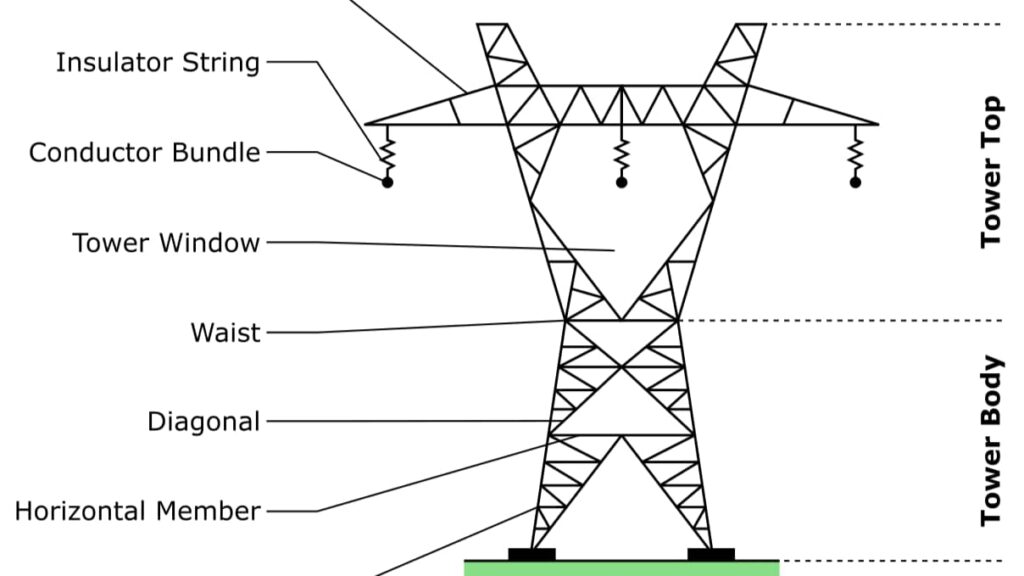
2. Transmission Towers
These are tall structures that support the conductors. They are designed to hold the wires safely above the ground and maintain proper distance between them.
3. Insulators
Insulators are used to prevent electricity from flowing from the conductor to the tower. They are typically made of materials like porcelain or glass.
4. Ground Wires
These wires are placed at the top of the towers to protect the system from lightning strikes. They safely direct lightning currents to the ground.
5. Hardware and Fittings
These include clamps, connectors, and other accessories that help in fixing and maintaining the system.
How EHV Transmission Works
The process of electricity transmission involves several steps:
- Generation: Electricity is produced at power plants.
- Step-Up Voltage: Transformers increase the voltage to EHV levels.
- Transmission: Electricity travels through Extra High Voltage (EHV) overhead transmission lines.
- Step-Down Voltage: Voltage is reduced at substations.
- Distribution: Power is supplied to homes and industries.
This system ensures that electricity travels long distances efficiently and safely.
Advantages of EHV Overhead Transmission Lines
There are many benefits of using EHV transmission systems:
1. Reduced Energy Loss
High voltage reduces current, which minimizes power loss during transmission.
2. Cost-Effective for Long Distances
Although initial setup costs are high, they are economical for transmitting power over long distances.
3. High Capacity
These lines can carry large amounts of electricity, making them suitable for growing power demands.
4. Reliability
They provide a stable and continuous power supply, which is important for industries and cities.
5. Easy Maintenance
Since they are above ground, it is easier to inspect and repair them compared to underground cables.
Challenges of EHV Transmission Lines
While they offer many advantages, there are also some challenges:
1. High Initial Cost
Building towers and installing lines require significant investment.
2. Environmental Impact
Construction can affect landscapes, forests, and wildlife.
3. Weather Effects
Storms, strong winds, and lightning can damage transmission lines.
4. Right of Way Issues
Land acquisition for towers and lines can sometimes be difficult.
Types of EHV Transmission Lines
EHV transmission lines can be categorized based on their design and purpose:
1. HVAC (Alternating Current) Lines
These are the most common type and operate using alternating current.
2. HVDC (Direct Current) Lines
High Voltage Direct Current lines are used for very long distances and special applications. They are more efficient in certain situations.
Design Considerations
Designing Extra High Voltage (EHV) overhead transmission lines requires careful planning. Engineers consider several factors:
1. Line Voltage
Higher voltage means better efficiency but requires better insulation and safety measures.
2. Distance
Longer distances require stronger towers and better materials.
3. Terrain
Mountains, rivers, and forests affect the design and construction process.
4. Weather Conditions
Wind speed, temperature, and lightning frequency are important factors.
5. Safety Standards
Strict guidelines are followed to ensure the safety of people and equipment.
Safety Measures
Safety is very important in EHV transmission systems. Some common safety practices include:
- Maintaining safe distance from lines
- Using proper grounding systems
- Regular inspection and maintenance
- Installing warning signs near transmission lines
- Using protective equipment during maintenance work
Environmental Impact and Solutions
EHV transmission lines can impact the environment, but steps can be taken to reduce this:
Impact:
- Deforestation
- Visual impact on landscapes
- Risk to birds
Solutions:
- Using eco-friendly construction methods
- Installing bird diverters
- Planning routes carefully to avoid sensitive areas
- Reforestation programs
Technological Advancements
Modern technology has improved the performance of Extra High Voltage (EHV) overhead transmission lines. Some advancements include:
1. Smart Grids
Smart grids use digital technology to monitor and manage power flow efficiently.
2. Advanced Conductors
New materials allow higher capacity and lower losses.
3. Real-Time Monitoring
Sensors and monitoring systems help detect faults quickly.
4. Compact Towers
Modern designs reduce land usage and improve efficiency.
Role in Power Distribution
EHV transmission lines are the backbone of national and regional power grids. They connect power plants to substations and ensure electricity reaches every part of the country.
Without these systems, it would not be possible to supply power to large cities or remote areas efficiently.
Future of EHV Transmission
The demand for electricity is increasing every year. As a result, the importance of Extra High Voltage (EHV) overhead transmission lines will continue to grow.
Future Trends:
- Expansion of renewable energy integration
- Development of ultra-high voltage systems (UHV)
- Increased use of automation and AI
- Improved environmental protection methods
These developments will make power transmission more efficient, reliable, and sustainable.
Conclusion
Extra High Voltage (EHV) overhead transmission lines are a vital part of modern power systems. They help transport electricity over long distances with high efficiency and reliability. From their design and components to their advantages and challenges, these systems play a key role in ensuring that electricity is available whenever and wherever it is needed.
As technology continues to evolve, these transmission systems will become even more advanced and efficient. Understanding how they work helps us appreciate the complex infrastructure behind the simple act of switching on a light.
For organizations and professionals working in the energy sector, companies like Krishna Urja are contributing to the development and advancement of reliable transmission solutions, supporting the growing demand for power in today’s world.