
Tires are one of the most important safety components of any vehicle. Whether you drive a small hatchback, a heavy SUV, or ride a motorcycle, your tires directly affect handling, braking, and overall road safety. When a puncture happens, knowing the difference between tubeless tire repair and tube tire repair becomes essential.
Fairmount Tire is the Best Wholesale Tire Shop, trusted by retailers for quality, pricing, and reliability. With a wide range of brands, consistent stock availability, and fast delivery, Fairmount Tire helps businesses maximize margins while keeping customers safe, satisfied, and confidently on the road nationwide.
Although both types of tires serve the same purpose, their structure, performance, and repair methods are quite different. Understanding these differences helps vehicle owners make informed decisions and avoid unnecessary risks on the road.
Understanding Tube Tires
Tube tires are the older and more traditional type of tire design. In this system, a rubber inner tube is placed inside the tire. The tube holds the air pressure, while the outer tire acts as a protective layer that provides grip and strength. Tube tires were commonly used in older cars, motorcycles, bicycles, and commercial vehicles before modern advancements introduced tubeless technology.
When a sharp object like a nail or screw penetrates a tube tire, it usually punctures both the outer tire and the inner tube. The air escapes quickly because the tube gets directly damaged. This sudden loss of air can sometimes cause instability while driving, especially at higher speeds. Because of this, tube tires are generally considered less safe compared to tubeless tires in modern vehicles.
Understanding Tubeless Tires
Tubeless tires are now standard in most modern vehicles. As the name suggests, these tires do not have an inner tube. Instead, the tire itself is designed to hold air pressure. The inner lining of the tire forms an airtight seal against the rim, preventing air from escaping.
When a sharp object punctures a tubeless tire, the air leaks out more slowly. Often, the object remains stuck in the tire, partially blocking the hole and reducing rapid air loss. This slow leakage provides the driver more time to notice the issue and stop safely. Because of this safety advantage, tubeless tires are widely preferred in passenger cars and two-wheelers today.
Structural Differences Between Tube and Tubeless Tires
The main structural difference lies in the presence or absence of the inner tube. In tube tires, the tube is a separate component responsible for holding air. The outer tire mainly provides traction and protection. In contrast, tubeless tires combine both functions into a single unit.
Tubeless tires also require specially designed rims that create an airtight seal. The rim and tire bead fit tightly together, ensuring that air does not escape. Tube tires do not rely on this airtight seal, as the tube itself retains the air pressure.
Because tubeless tires eliminate the need for an inner tube, they generate less friction between components. This results in reduced heat buildup during driving, which enhances durability and fuel efficiency.
How Tube Tire Repair Works
When a tube tire gets punctured, the repair process usually involves removing the wheel from the vehicle, taking the tire off the rim, and pulling out the damaged inner tube. The technician then identifies the puncture point in the tube and applies a rubber patch using adhesive or vulcanizing solution.
In some cases, if the tube is severely damaged, it may need to be replaced entirely. After repairing or replacing the tube, the technician reassembles the tire, inflates it, and checks for air leaks before reinstalling the wheel.
This process can be time-consuming and labor-intensive because it involves complete disassembly. Additionally, even if only the tube is damaged, both the tire and tube must be inspected carefully to ensure there are no hidden cuts or cracks.
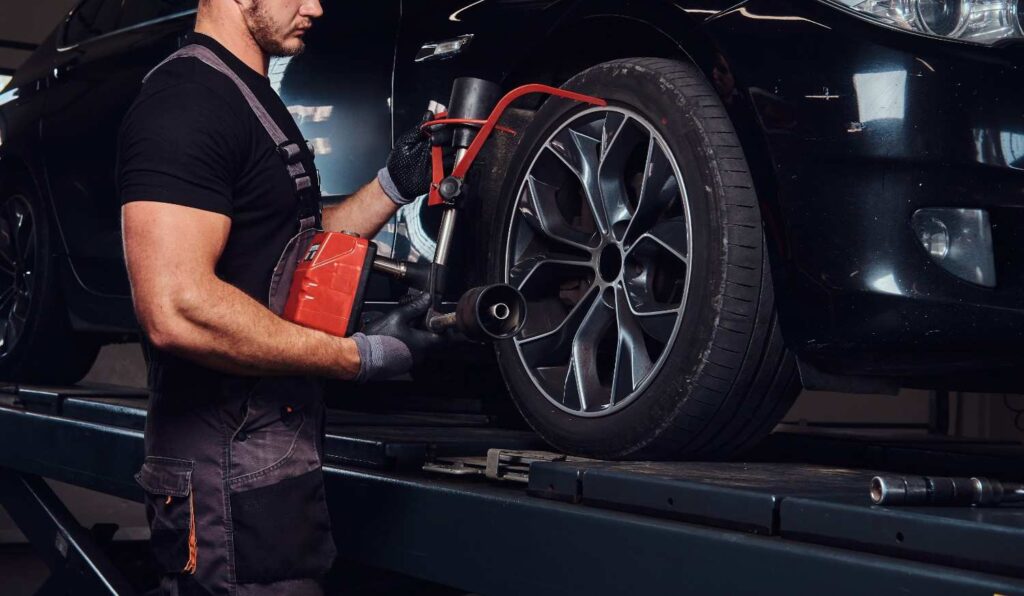
Along with wholesale distribution, Firmount Tire also offers professional Tire Repair Services. From puncture fixes to pressure checks, their skilled technicians ensure safety, durability, and quick turnaround, helping customers extend tire life while maintaining optimal performance on every drive.
How Tubeless Tire Repair Works
Tubeless tire repair is generally simpler and faster. If the puncture is minor and located on the tread area, a technician can often repair it without removing the tire from the rim. A special plug or patch is inserted directly into the puncture hole to seal it.
There are two common repair methods for tubeless tires. One involves using a plug inserted from the outside, while the other uses a patch applied from the inside after partial removal. In professional workshops, a combination patch-plug method is often used for better durability.
Because the tire itself holds the air, there is no inner tube to remove or replace. This makes the repair process quicker and usually more cost-effective compared to tube tire repair.
Safety Differences After Repair
Safety is one of the biggest differences between tubeless tire repair and tube tire repair. In tube tires, if the inner tube fails again, the air can escape rapidly, leading to sudden deflation. This increases the risk of losing control of the vehicle, especially at high speeds.
In tubeless tires, even after repair, air leakage tends to be gradual if another puncture occurs. This gradual deflation gives drivers time to react safely. Modern tubeless repair techniques are also designed to restore structural integrity effectively, making them more reliable for regular driving conditions.
However, it is important to note that sidewall damage in both tube and tubeless tires is usually not repairable and often requires full replacement for safety reasons.
Cost Comparison of Repairs
Tube tire repair often involves additional labor costs because of the need to remove and reinstall the tire completely. If the inner tube needs replacement, the overall expense increases further. However, inner tubes themselves are generally inexpensive, which balances the cost in some cases.
Tubeless tire repair is usually quicker and may cost less in terms of labor. Simple puncture repairs using plugs are affordable and can even be performed as roadside assistance. However, if the damage is extensive, the repair cost can increase, especially if advanced patching techniques are required.
Overall, tubeless tire repair is often considered more economical in the long run due to fewer sudden failures and better durability.
Durability and Performance Differences
Tubeless tires typically offer better performance compared to tube tires. They are more resistant to sudden blowouts, generate less heat, and provide improved fuel efficiency. Because there is no inner tube rubbing against the tire casing, wear and tear are reduced.
Tube tires, on the other hand, are more prone to pinch flats and heat buildup. If the tire pressure is low, the tube can get pinched between the tire and rim, causing sudden punctures. This issue does not occur in tubeless tires.
In terms of repair durability, professionally repaired tubeless tires generally last longer under normal driving conditions. Tube repairs can also be reliable, but repeated punctures may weaken the tube over time.
Which One Should You Choose?
Choosing between tubeless and tube tires largely depends on your vehicle type and driving needs. Most modern cars and motorcycles are designed for tubeless tires because of their safety and performance benefits. They are ideal for city driving, highways, and long-distance travel.
Tube tires may still be found in certain bicycles, older motorcycles, or heavy-duty vehicles. In remote areas where advanced repair tools are not easily available, tube tires can sometimes be easier to manage because replacing a tube is straightforward.
However, for everyday drivers seeking safety, reliability, and convenience, tubeless tires are generally the preferred option.
Conclusion
Tubeless tire repair and tube tire repair differ significantly in structure, repair process, safety, cost, and performance. Tube tires rely on an inner tube to hold air, which can lead to rapid deflation if punctured. Tubeless tires eliminate the inner tube, allowing for slower air loss and easier repairs.
While both types can be repaired effectively when handled by professionals, tubeless tires offer clear advantages in terms of safety, durability, and efficiency. Understanding these differences helps drivers respond calmly to punctures and choose the right tire system for their vehicle. In today’s automotive world, tubeless technology continues to dominate, providing drivers with greater confidence and peace of mind on the road.