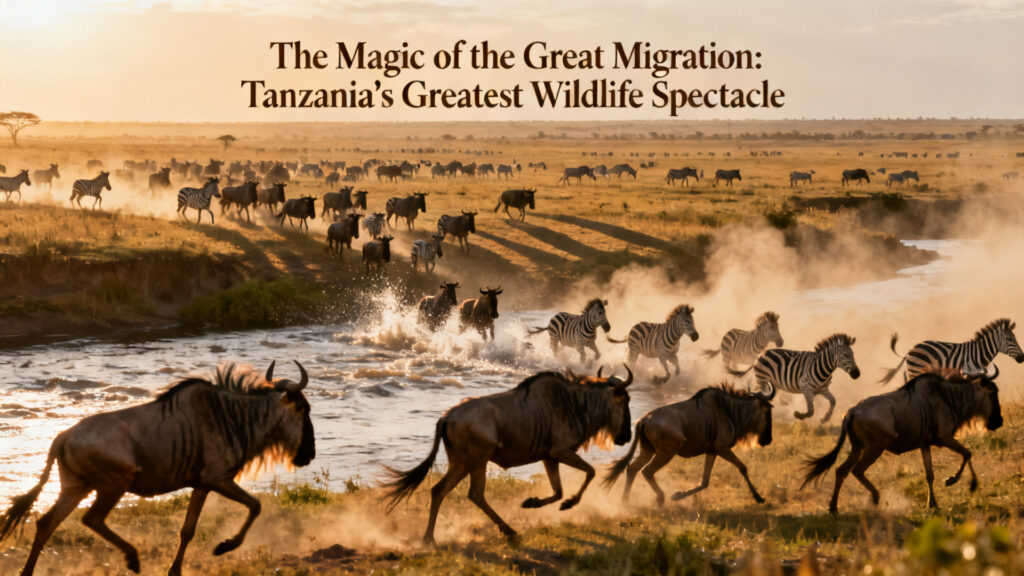

Few natural events on Earth rival the sheer scale and drama of the Tanzania Great Migration. Every year, over two million wildebeest, zebras, and gazelles move in a continuous loop across the plains of northern Tanzania and into Kenya, driven by the search for fresh grazing and water. This breathtaking journey is not just a migration—it’s a living, moving ecosystem and one of the most extraordinary wildlife spectacles on the planet.
What Is the Tanzania Great Migration?
The Tanzania Great Migration is an annual cycle where massive herds of herbivores travel through the Serengeti ecosystem in search of greener pastures. Unlike a simple one-way journey, this migration is a year-round, circular movement shaped by rainfall patterns and survival instincts.
The main stars of this event are:
- Wildebeest (over 1.5 million)
- Zebras
- Thomson’s gazelles
But they are not alone. Predators such as lions, cheetahs, and crocodiles closely follow the herds, making this migration a dramatic display of life and death in the wild.
Why the Tanzania Great Migration Is So Unique
What sets the Tanzania Great Migration apart from other wildlife events is its sheer scale and unpredictability. It is the largest land-based animal migration in the world, and no two years are exactly the same.
Rainfall patterns determine the timing and movement of the herds, meaning that even the most experienced guides cannot predict events with absolute certainty. This element of surprise adds to the excitement and authenticity of the experience.
Additionally, the migration is not just about the animals—it’s about the entire ecosystem. The movement of the herds affects vegetation, predator populations, and even the landscape itself. It’s a living, breathing system where every element plays a role.
The Journey Through Tanzania
The migration largely takes place within Tanzania’s Serengeti, offering some of the best opportunities to witness it up close. The cycle typically unfolds in stages:
1. Calving Season (January to March)
In the southern Serengeti, thousands of wildebeest calves are born every day. This period attracts predators, creating intense wildlife action and incredible viewing opportunities.
2. The Move North (April to June)
As the rains end, the herds begin moving northwest. This phase is marked by long columns of animals stretching across the plains.
3. River Crossings (July to September)
One of the most iconic moments of the Tanzania Great Migration is when herds cross crocodile-infested rivers. These crossings are chaotic, dramatic, and unforgettable.
4. Return Journey (October to December)
With the return of rains, the herds head back south, completing the cycle and starting it all over again.
Why the Tanzania Great Migration Is So Special
What makes the Tanzania Great Migration truly magical is its unpredictability. While general patterns exist, the exact timing depends on rainfall, making each year slightly different. This ensures that no two safaris are ever the same.
Other reasons it stands out:
- It’s the largest land-based migration in the world
- It offers unmatched wildlife viewing opportunities
- It showcases raw, unfiltered nature
From thunderous hooves shaking the ground to the tense silence before a predator attack, every moment feels cinematic.
Best Time to Experience the Migration
While the Tanzania Great Migration is a year-round event, the best time depends on what you want to see:
- Calving season: January–March
- Grumeti River crossings: May–June
- Dramatic river crossings: July–September
- Scenic movement and fewer crowds: October–December
Planning your trip around these phases can greatly enhance your experience.
Tips for Witnessing the Great Migration
To make the most of your adventure:
- Book your safari well in advance
- Choose experienced guides familiar with migration patterns
- Be flexible with travel dates
- Bring binoculars and a good camera
- Stay patient—nature operates on its own schedule
A Once-in-a-Lifetime Experience
The Tanzania Great Migration is more than just a wildlife event—it’s a powerful reminder of nature’s rhythm and resilience. Watching thousands of animals move together across vast landscapes is both humbling and awe-inspiring.
Whether you’re a wildlife enthusiast, photographer, or traveler seeking something extraordinary, experiencing the Great Migration in Tanzania is something that stays with you forever.