
Synthetic Call Option Strategy: A Simple Guide for Beginners | Firstock
Introduction
If you have ever explored the world of trading, you might have heard terms like options, futures, or derivatives. At first glance, these words can sound intimidating. But when you break them down, they are simply tools traders use to manage risk and potentially earn profits.
One such tool is the synthetic call option strategy. It may sound technical, but the concept is surprisingly simple. Think of it like building something using different pieces. Just as you can assemble a chair using separate parts, traders can combine different positions to create something that behaves like a call option.
This is where synthetic futures and synthetic future strategy come into play. By combining certain trades, investors can mimic the payoff of another instrument without actually owning it.
For beginners using trading apps for beginners, understanding strategies like this can be a powerful step toward smarter investing. In this article, we’ll break everything down in plain English so anyone can understand how synthetic strategies work and why traders use them.
Learn synthetic futures, synthetic future strategy, synthetic futures contract, synthetic call option strategy and trading apps for beginners in this easy guide.
Understanding Options Trading
Before jumping into synthetic strategies, it helps to understand options trading.
An option is a contract that gives you the right, but not the obligation, to buy or sell an asset at a specific price before a certain date.
There are two main types:
Call Option
Gives you the right to buy an asset at a specific price.
Put Option
Gives you the right to sell an asset at a specific price.
Imagine you believe a stock will rise in the future. Instead of buying the stock outright, you might buy a call option. If the price rises, your option becomes valuable.
But traders often go one step further. Instead of buying the option directly, they create a synthetic version of it using other instruments.
That’s where synthetic strategies begin.
What Is a Synthetic Call Option Strategy?
A synthetic call option strategy is a trading setup that behaves like a call option but is created using different positions.
In simple terms:
Synthetic Call = Long Stock + Long Put Option
This combination creates the same profit and loss structure as a call option.
Why would someone do this instead of buying a call option directly?
Because sometimes:
- Options are expensive
- Liquidity may be low
- Traders want more flexibility
By combining positions, traders replicate the same outcome.
Think of it like building your own burger instead of ordering one. The ingredients are different, but the final result tastes the same.
The Concept of Synthetic Futures
To understand synthetic calls better, we must discuss synthetic futures.
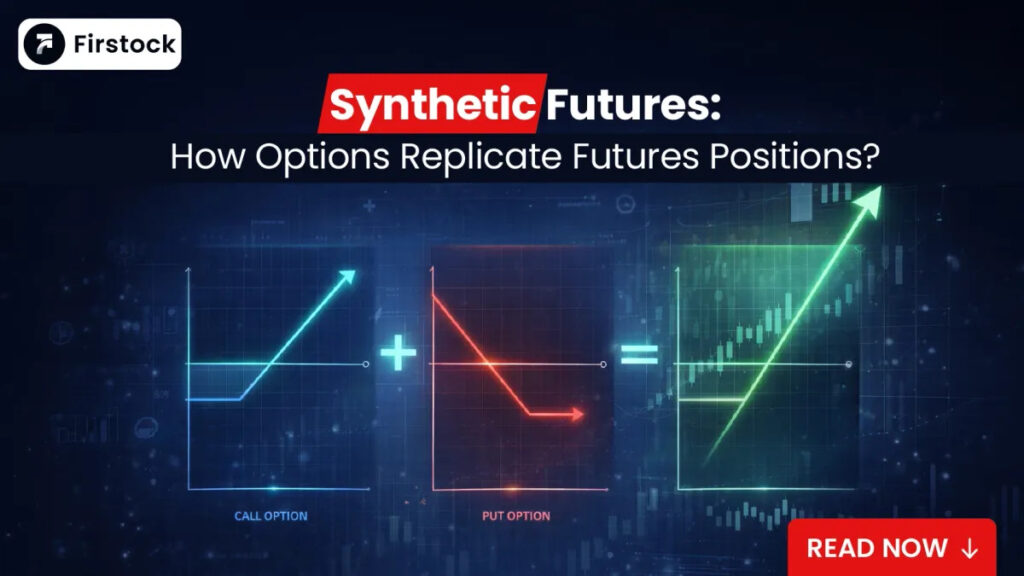
A synthetic future strategy recreates a futures contract using options.
Typically it involves:
Buying a Call Option + Selling a Put Option
Both with the same strike price and expiration date.
This combination behaves like a synthetic futures contract.
Why is this interesting?
Because it lets traders gain exposure to price movements without directly trading futures.
This flexibility is one reason synthetic strategies are popular in modern trading.
How a Synthetic Futures Contract Works
Let’s break down a synthetic futures contract in simple terms.
Suppose a stock is trading at ₹100.
A trader could:
- Buy a Call Option at ₹100
- Sell a Put Option at ₹100
Both expire on the same date.
This position behaves almost exactly like owning a futures contract.
If the price rises:
You profit.
If the price falls:
You lose.
The payoff is nearly identical to a standard futures position.
This is why traders call it synthetic futures.
Components of the Synthetic Call Option Strategy
A synthetic call option strategy is built using two key components.
1. Buying the Stock
This means owning the underlying asset.
Example:
You buy 100 shares of a stock.
2. Buying a Put Option
This protects you if the price falls.
The put option acts like insurance.
Together, they replicate a call option payoff.
Key Point:
Your downside risk is limited while you keep the upside potential.
Why Traders Use Synthetic Strategies
You might wonder:
Why go through all this trouble?
There are several reasons traders prefer synthetic strategies.
Flexibility
Traders can customize their positions.
Better Pricing
Sometimes options are overpriced.
Synthetic setups can be cheaper.
Hedging
Investors use them to protect existing investments.
Advanced Trading
Professional traders often use synthetic futures to manage complex portfolios.
Real-Life Example of Synthetic Call Strategy
Let’s simplify this with a practical example.
Suppose a stock is trading at ₹500.
You expect the price to rise.
Instead of buying a call option, you do the following:
- Buy the stock at ₹500
- Buy a put option at ₹500
This combination creates a synthetic call option strategy.
If the stock rises to ₹600:
You profit from the price increase.
If the stock falls to ₹450:
The put option protects you.
So your loss is limited.
It’s like wearing a seatbelt while driving fast. You still move forward quickly, but you have protection if something goes wrong.
Risks Involved in Synthetic Futures
Every trading strategy comes with risks.
Synthetic futures are no exception.
Market Risk
Prices may move in the opposite direction.
Option Premium Cost
Buying options requires paying premiums.
Complexity
Synthetic strategies involve multiple positions.
Execution Risk
If trades are not executed correctly, the strategy may not work as expected.
This is why beginners should practice first before using real money.
Advantages of Synthetic Future Strategy
Despite risks, synthetic strategies offer several benefits.
Lower Capital Requirement
Sometimes synthetic positions require less capital.
Strategic Flexibility
You can adjust positions easily.
Hedging Capability
Investors can protect portfolios.
Access Without Futures Trading
Some traders prefer synthetic futures instead of direct futures contracts.
These advantages make synthetic strategies popular among experienced traders.
Synthetic Strategies vs Regular Options
You may wonder:
Why not simply buy a call option?
Let’s compare.
| Feature | Synthetic Call | Regular Call |
| Structure | Combination trade | Single option |
| Flexibility | High | Moderate |
| Complexity | Higher | Lower |
| Customization | High | Limited |
For beginners, regular options may be easier.
But advanced traders often prefer synthetic strategies for greater control.
How Beginners Can Use Trading Apps
Today, learning trading is easier than ever thanks to trading apps for beginners.
Most modern apps offer:
- Options trading
- Strategy builders
- Demo trading accounts
- Educational resources
Beginners can use these tools to simulate synthetic strategies before risking real money.
Popular features include:
Virtual trading accounts
These let you practice risk-free.
Strategy calculators
They show profit and loss scenarios.
Market analytics
Helpful for decision making.
Using these tools helps beginners gain confidence.
Tips for Practicing Synthetic Strategies
If you’re new to trading, keep these tips in mind.
Start Small
Never invest large amounts initially.
Use Paper Trading
Practice strategies without real money.
Understand Payoff Diagrams
They show profit and loss visually.
Learn Risk Management
Protecting capital is more important than chasing profits.
Think of trading like learning to ride a bicycle. You don’t start on a busy highway—you start slowly in a safe place.
Common Mistakes to Avoid
Many beginners make similar mistakes when trying advanced strategies.
Ignoring Risk
Always calculate maximum loss.
Overtrading
More trades do not mean more profits.
Not Understanding Options
Synthetic strategies require options knowledge.
Skipping Research
Always analyze the market before entering trades.
Avoiding these mistakes can save both money and stress.
When Should You Use Synthetic Strategies?
Synthetic strategies work best in certain situations.
When Options Are Expensive
Creating a synthetic position may reduce cost.
When You Want Flexibility
Traders can adjust components.
For Hedging
Investors use synthetic strategies to protect positions.
For Advanced Portfolio Management
Professional traders often combine synthetic futures with other strategies.
But beginners should start slowly and learn step by step.
Conclusion
The synthetic call option strategy might sound complicated at first, but the idea behind it is straightforward. By combining different positions, traders can create setups that mimic other financial instruments.
Concepts like synthetic futures, synthetic future strategy, and synthetic futures contract give traders flexibility and control over their investments. Instead of relying on a single instrument, they can design positions that match their expectations and risk tolerance.
However, like any financial strategy, synthetic trading requires knowledge and discipline. Beginners should first understand basic options trading and practice using trading apps for beginners that offer demo accounts and strategy tools.
Remember, successful trading is not about rushing into complex strategies. It’s about learning gradually, managing risk carefully, and making informed decisions. Once you understand the building blocks, strategies like synthetic options become far less intimidating—and potentially far more powerful.
FAQs
1. What is a synthetic call option strategy?
A synthetic call option strategy is a combination of positions—usually buying stock and buying a put option—to replicate the payoff of a traditional call option.
2. What are synthetic futures?
Synthetic futures are positions created using options that behave like a futures contract, typically by buying a call option and selling a put option with the same strike price and expiry.
3. Why do traders use synthetic future strategies?
Traders use synthetic future strategies for flexibility, hedging, cost efficiency, and to replicate futures exposure without directly trading futures contracts.
4. Are synthetic futures contracts risky?
Yes. Like any trading strategy, synthetic futures contracts carry risks including market movement, option premiums, and execution complexity.
5. Can beginners use synthetic strategies on trading apps?
Yes, but beginners should start with trading apps for beginners that provide demo accounts and educational tools before using real money.