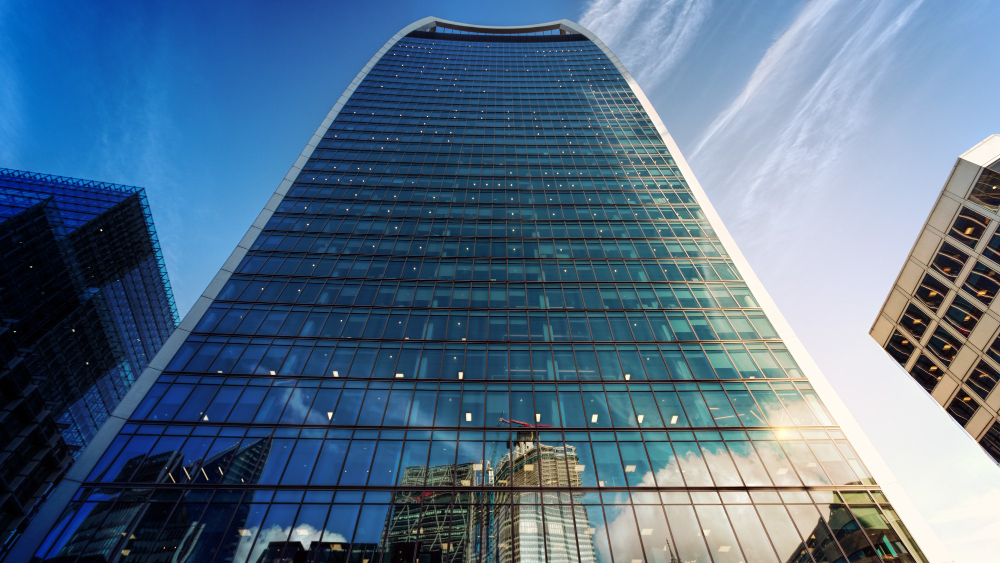

Sustainable Architecture Firms Redefining US Cities
Cities across the United States are in the middle of a quiet transformation. It doesn’t always make headlines, and it doesn’t always announce itself with dramatic gestures — but walk through the newer districts of Austin, Denver, Seattle, or Boston and you’ll feel it. Buildings that breathe differently. Streets that relate to weather and light in ways that older blocks don’t. Structures that seem to belong to their landscape rather than imposed upon it.
Behind that transformation, more often than not, are sustainable architecture firms — practices that have spent years building the expertise, the tools, and the project portfolio to design buildings that genuinely work with the environment rather than against it.
This isn’t a niche movement anymore. It’s becoming the new standard. And if you’re a developer, a city planner, a real estate investor, or a business owner planning a significant build, understanding what these firms do and how to work with them is increasingly essential knowledge.
The Shift From Green Features to Systems Thinking
A decade ago, sustainable building in the US was largely a features conversation. Solar panels. Low-flow fixtures. Recycled-content carpet tiles. These were add-ons to a conventional design process — checkboxes that justified a certification and a marketing talking point.
The leading sustainable architecture firms have moved well beyond that. The shift is from individual green features to systems thinking — understanding a building as an integrated system where energy, water, materials, indoor environment, and site all interact, and designing for the performance of the whole rather than the sum of its parts.
That sounds abstract, but it has very concrete implications. A systems-thinking approach might lead a design team to invest less in photovoltaic panels and more in envelope performance — because reducing the heating and cooling load through better insulation and glazing delivers a better return than generating renewable energy to cover a higher load. It might lead to a decision to use cross-laminated timber instead of steel framing — because the structural system has lower embodied carbon, contributes to a biophilic interior environment, and provides thermal mass benefits.
These are integrated decisions, not isolated ones. And making them well requires a depth of technical expertise that separates genuinely capable sustainable architecture firms from firms that are simply using the language.
Urban Context and Site Responsiveness
One of the most important — and most frequently overlooked — dimensions of sustainable architecture is the relationship between a building and its urban context. A building doesn’t exist in isolation. It’s part of a neighborhood, a watershed, a heat island, a pedestrian network.
Sustainable architecture firms think carefully about this relationship. How does a building affect the microclimate around it? Does it cast shadows on adjacent buildings or public spaces in ways that affect solar access and outdoor comfort? Does its stormwater strategy contribute to local flood resilience, or does it export runoff to an already-stressed drainage system? Does it support pedestrian activity and neighborhood vitality, or does it turn its back on the street?
These are design questions with environmental consequences, and they don’t get answered well unless the architecture team is thinking at the scale of the neighborhood, not just the lot line.
Adaptive Reuse: Sustainability’s Most Powerful Tool
The most sustainable building is often the one you don’t build from scratch. The embodied carbon in an existing structure — the concrete, the steel, the brick — is already spent. Demolishing it and starting over wastes that investment and generates more. Renovating and adapting an existing building for a new use preserves it.
Adaptive reuse projects — converting industrial buildings into housing, repurposing office buildings as hotels, transforming obsolete retail into mixed-use developments — are some of the most exciting and impactful work happening in sustainable architecture in the US right now. They’re also some of the most technically demanding, because existing buildings rarely conform neatly to current codes, structural requirements, or performance standards.
This is where precision in documentation becomes critical. Building Measurement Services — comprehensive laser scanning, as-built documentation, and spatial data capture of existing conditions — is often the foundation on which a successful adaptive reuse project is built. When you’re working with a structure whose original drawings may be incomplete, inaccurate, or nonexistent, having a precise, current record of what’s actually there is the difference between a smooth design process and a project that’s constantly discovering expensive surprises in the field.
Sustainable architecture firms that specialize in adaptive reuse typically have deep experience with building documentation and measurement — because they’ve learned, sometimes painfully, what happens when you don’t.
The Indoor Environment: Where Sustainability Meets Human Health
There’s a version of sustainable building that’s entirely focused on energy and carbon — and it misses half the picture. The people inside a building spend the majority of their waking hours there. The quality of the air they breathe, the light they’re exposed to, the acoustic environment they work in, the thermal comfort they experience — all of it directly affects their health, their productivity, and their wellbeing.
The leading sustainable architecture firms treat indoor environmental quality as a core performance metric, not a secondary consideration. That means specifying materials with low VOC emissions. It means designing ventilation systems that deliver actual fresh air, not just recirculated conditioned air. It means optimizing daylighting to support circadian rhythms and reduce reliance on artificial lighting. It means designing acoustic environments that support focus and communication.
The WELL Building Standard has helped codify this dimension of sustainable practice, but the best firms go beyond the standard — because the goal isn’t to achieve a score, it’s to create an environment where people genuinely thrive.
How Sustainable Design Communicates Brand Values
Here’s something that doesn’t come up often enough in technical sustainability conversations: a building is also a communication. For organizations with genuine sustainability commitments — B Corps, mission-driven nonprofits, companies with public ESG targets — the building they occupy or build is one of the most powerful expressions of those values available to them.
Architectural branding — the intentional alignment of a building’s design with an organization’s identity and values — takes on a particular significance in the context of sustainability. When structural systems are exposed because they’re beautiful and because they tell a story about responsible material choices, when renewable energy systems are made visible as an expression of environmental commitment, when a building’s connection to daylight and landscape is designed to communicate transparency and openness — the architecture is doing brand work as well as environmental work.
The firms who understand this intersection are helping their clients think about buildings not just as assets but as statements — and the clients who lean into that thinking tend to end up with spaces that are both higher-performing and more meaningful.
The Regulatory Environment Is Changing Fast
If you’re a developer or building owner who’s been watching the sustainable building conversation from a comfortable distance, it’s worth knowing that the regulatory environment in the US is shifting in ways that will make that distance harder to maintain.
Building performance standards — laws that require existing buildings to meet energy performance benchmarks on defined timelines, with financial penalties for non-compliance — have been enacted in New York, Washington DC, Boston, Denver, and Seattle, and are under consideration in dozens of other jurisdictions. New construction energy codes are tightening in most states. Federal funding programs are increasingly tied to sustainable performance criteria.
The practical implication is that sustainable design is no longer a choice between doing the right thing and doing the financially prudent thing. For a growing number of project types and locations, it’s simply the minimum required standard — with leading practice continuing to move further ahead of that baseline.
Choosing the Right Firm for Your Project
Not every project needs the same kind of sustainable architecture firm. A high-rise mixed-use development in a dense urban core has different sustainability challenges and opportunities than a suburban corporate campus, a rural educational facility, or an urban adaptive reuse project. The firm you choose should have demonstrated experience in your project type, your climate zone, and the performance standards you’re targeting.
Beyond technical credentials, look for firms whose values genuinely align with yours. Sustainable practice requires a level of commitment and investment — in energy modeling, in materials research, in post-occupancy measurement — that goes beyond what a conventional project demands. You want a partner who brings that commitment because they believe in it, not just because you asked for it.
Ask for introductions to past clients, not just project photos. The client experience on a sustainable project — how the team communicated, how they handled trade-offs, how the building is actually performing — tells you far more than any portfolio image.
The Standard Is Rising. Get Ahead of It.
Sustainable architecture firms in the US are no longer on the fringe of the profession. They’re setting the standard that the rest of the industry is being pulled toward — by regulation, by market demand, by the growing evidence that high-performance buildings are better investments.
The businesses and developers who engage these firms now, before compliance requirements force the issue, are building assets that will be ahead of the curve for decades. The ones who wait are building tomorrow’s retrofit problem.
If you’re planning a project and you want to build something that will perform, endure, and mean something — connect with a sustainable architecture firm that can show you what’s possible. The conversation is worth having before the first line is drawn.