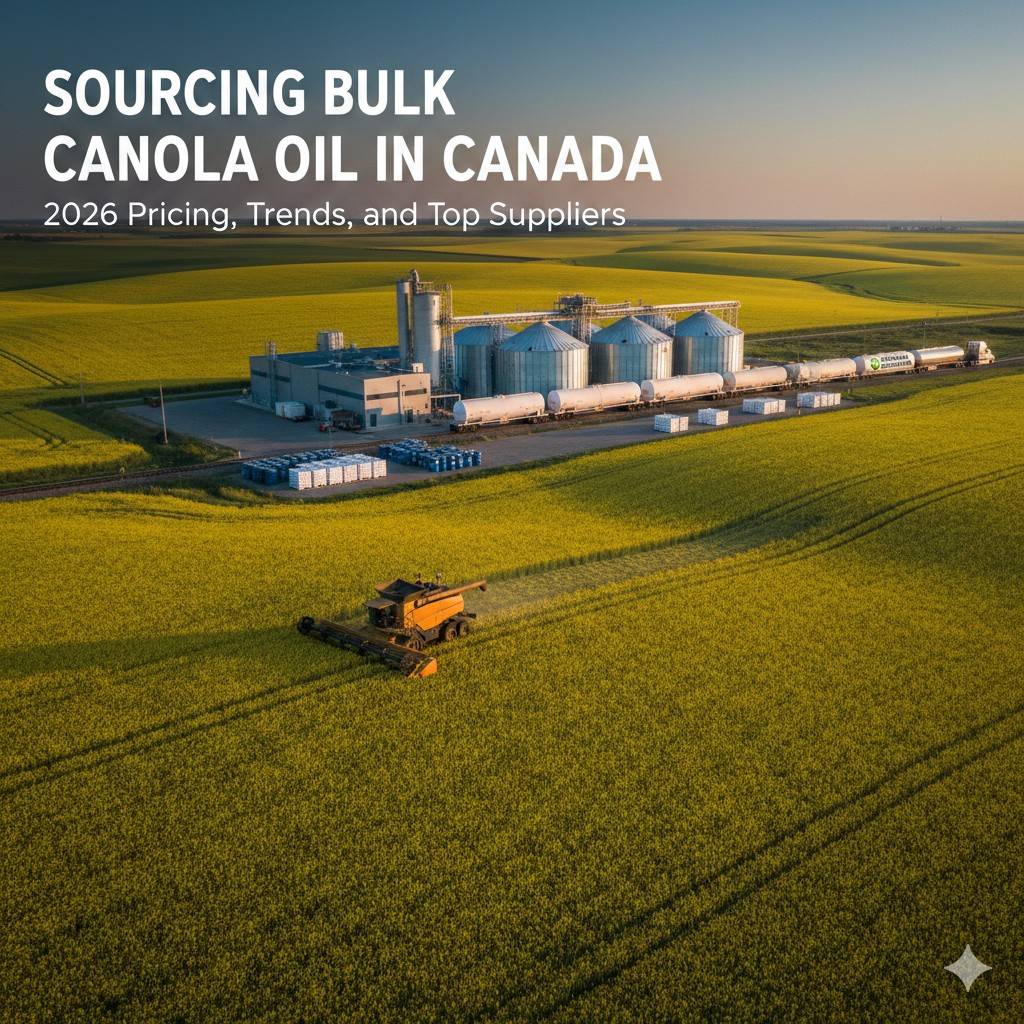

In 2026, Canada remains the “Silicon Valley” of the agricultural world, and its flagship product—canola oil—is more than just a kitchen staple. For food manufacturers, biofuel producers, and restaurant chains, purchasing canola oil in bulk isn’t just about quantity; it’s a strategic hedge against a volatile global market.
If you are looking to source high-quality Canadian canola oil at scale, here is everything you need to know to navigate the 2026 landscape.
1. Why Canadian Canola Oil? The Gold Standard
Developed right here in the Canadian Prairies, “Canola” (short for Canadian Oil, Low Acid) is world-renowned for its purity. In 2026, it remains the third-largest vegetable oil produced globally, with Canada supplying nearly 99% of the US import market.
Key Advantages for Bulk Buyers:
- Low Saturated Fat: At only 7%, it has the lowest saturated fat of any common cooking oil.
- Neutral Flavor Profile: It doesn’t interfere with the taste of your final product, making it the “blank canvas” for the food processing industry.
- High Smoke Point: With a smoke point of approximately 220°C (428°F), it is ideal for high-heat frying and industrial baking.
- Sustainability: Canadian farmers have pioneered carbon-sequestering farming techniques, making our canola a preferred feedstock for the growing North American biofuel industry.
2. Market Pulse: 2026 Price Trends and Forecasts
As of February 2026, the canola market is experiencing a significant “bull run.” Canola futures on the Intercontinental Exchange (ICE) have recently hit six-month highs, climbing past CAD $690 per metric tonne.
What’s Driving the Price?
- Biofuel Regulations: New clean fuel tax credits (like the 45Z in the US) have skyrocketed demand for North American feedstocks.
- Trade Realignment: Following the recent Canada-China trade deal, China has lowered tariffs to approximately 15% (effective March 1, 2026), reopening a massive export channel.
- Tighter Ending Stocks: Agriculture Canada (AAFC) projects 2026-27 ending stocks to fall by nearly 1 million metric tons, suggesting that bulk buyers should secure their contracts sooner rather than later to avoid late-season spikes.
3. Bulk Packaging Options
When buying in bulk, the packaging is as important as the product. Your choice should depend on your storage capacity and handling equipment.
| Packaging Type | Capacity (Approx.) | Best For |
| Rail Car / Bulk Truck | 20,000L – 90,000L | Large-scale food processing & Biofuel |
| IBC Totes | 1,000 Litres | Mid-sized bakeries & Cosmetic labs |
| Steel Drums | 190 – 210 Litres | Specialized manufacturing |
| Jerry Cans | 10L – 25L | Foodservice & Restaurants |
4. How to Source the Best Bulk Canola Oil in Canada
Finding a reliable supplier is the difference between a smooth supply chain and a logistical nightmare. Look for these “Must-Have” certifications:
- ISO 22000 / HACCP: Ensures the highest food safety standards.
- Non-GMO Project Verified: Essential for the growing “clean label” market.
- Traceability: The ability to trace the oil back to the specific Canadian farm.
Top Canadian Suppliers to Watch
Several industry leaders dominate the 2026 landscape, including Viterra Canada, ADM, and specialized exporters like Canadian Canola Oil Exporters. These companies offer everything from standard Refined, Bleached, and Deodorized (RBD) oil to High-Oleic varieties for extended fry life.
Summary for Canadian Buyers
The outlook for the Canadian canola industry in 2026 is robust. While prices are currently at a premium due to high demand in the biofuel and export sectors, the reliability and nutritional profile of Canadian canola remain unmatched.
Pro Tip: If you are a mid-sized buyer, consider locking in Forward Contracts during the spring planting season (April-May) when price volatility often dips before the summer heat.
Frequently Asked Questions: Bulk Canola Oil in Canada
Q1: What is the current bulk price of canola oil in Canada for 2026?
As of February 2026, canola futures are trading near CAD $690–$700 per metric tonne. However, “delivered” bulk prices for refined oil (RBD) typically range higher depending on packaging (totes vs. tankers) and transportation costs from the Prairies. It is recommended to request a quote for “spot pricing” or look into forward contracts to hedge against volatility.
Q2: How long does bulk canola oil last?
When stored in a cool, dark environment in sealed containers (like IBC totes or drums), bulk canola oil has a shelf life of 12 to 24 months. Once opened, it should be used within 6 to 12 months to ensure peak freshness and prevent oxidation, which can lower the smoke point.
Q3: Is all Canadian canola oil genetically modified (GMO)?
While about 95% of canola grown in Canada is herbicide-tolerant (GMO), Canada is a world leader in Non-GMO Project Verified and Certified Organic canola production. If your brand requires “Clean Label” ingredients, ensure your supplier provides IP (Identity Preserved) certification.