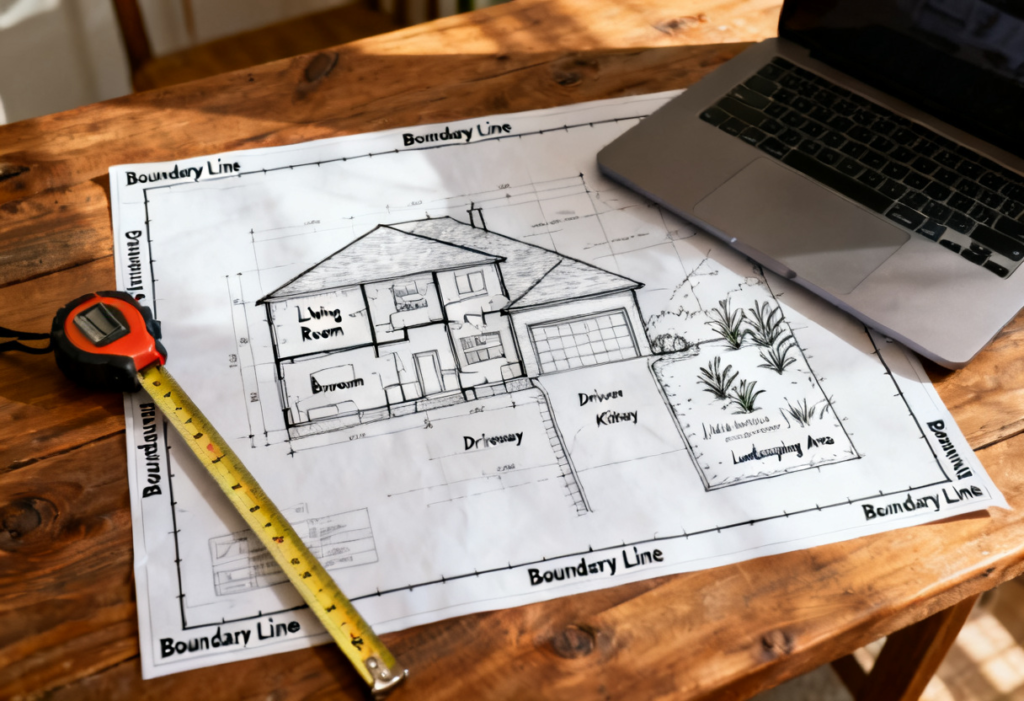

Planning a home construction or renovation project is exciting, but it also comes with technical requirements that can feel overwhelming. One of the most important documents you will need is a site plan. Whether you are building a new house, adding an extension, or applying for permits, a properly prepared site plan ensures your project meets local regulations and avoids costly delays.
Many homeowners search for terms like plot plan for permit, site plans online, or site plan vs survey because they are unsure where to start. The truth is, understanding these concepts early can save time, money, and stress during your project approval process.
This guide will walk you through everything you need to know about site plans in a simple, expert, and beginner-friendly way.
What Is a Site Plan?
A site plan is a detailed overhead drawing that shows the layout of your property and how your construction project will fit within it. It includes the position of buildings, boundaries, driveways, utilities, landscaping, and other important features.
Think of it as a map of your land that helps builders, architects, and permit offices understand exactly what you are planning.
A proper site plan usually includes:
- Property boundaries and dimensions
- Existing structures (house, garage, sheds)
- Proposed construction or additions
- Setback lines (distance from property edges)
- Access points like driveways or roads
- Utility connections (water, sewer, electricity)
Without a clear site plan, approval authorities may reject your application or request revisions, which can delay your project.
Site Plan vs Survey: What’s the Difference?
One of the most common confusions homeowners face is understanding the difference between a site plan and a survey.
A land survey is conducted by a licensed surveyor. It provides precise measurements of your property boundaries using professional equipment. It is a legal document and is often required before creating a site plan.
A site plan, on the other hand, is a drawing created using survey data. It shows how your project will be placed on the land, including proposed structures and design elements.
In simple terms:
- Survey = Measures the land
- Site Plan = Designs how you use the land
Both are important, but they serve different purposes. For permit approval, authorities often require both documents to ensure accuracy and compliance.
Why You Need a Plot Plan for Permit Approval
A plot plan for permit is essentially a type of site plan required by local building departments before construction begins. It ensures your project follows zoning laws, safety regulations, and property boundaries.
Without a proper plot plan, your permit application may be delayed or rejected.
Here’s why it matters:
- Ensures your building meets setback rules
- Prevents encroachment on neighboring properties
- Confirms compliance with zoning regulations
- Helps avoid legal disputes in the future
- Speeds up approval from local authorities
For example, if you are adding a room or garage, the plot plan shows exactly where it will sit on your property and whether it meets required distances from boundaries.
Site Plans Online: A Modern Solution for Homeowners
In the past, getting a site plan required hiring professionals, scheduling site visits, and waiting weeks for drawings. Today, site plans online services have made the process much faster and more affordable.
Online site plan services typically allow you to:
- Submit property details digitally
- Upload survey documents or sketches
- Receive professionally drawn site plans
- Request revisions quickly
- Download plans for permit submission
This digital approach is especially useful for homeowners who want a faster turnaround or are working on small to medium residential projects.
However, it’s still important to ensure the service you choose follows local building codes and provides accurate, permit-ready drawings.
How to Get a Site Plan for Your Project
Getting a site plan is easier than most people think. Here’s a simple step-by-step process:
1. Gather Property Information
Start with your property deed, previous survey, or any existing drawings.
2. Get a Land Survey (if needed)
If you don’t already have one, hire a licensed surveyor to measure your land accurately.
3. Choose a Site Plan Method
You can either:
- Hire a local architect or designer
- Use an online site plan service
- Work with a surveyor who offers drafting services
4. Define Your Project
Clearly explain what you are building—new house, extension, garage, or landscaping changes.
5. Review and Approve Draft
Check the draft carefully for accuracy before final submission.
6. Submit for Permit
Once finalized, use your site plan for permit approval at your local authority.
Common Mistakes to Avoid
Many homeowners face delays because of simple mistakes in their site plans. Avoid these common issues:
1. Incorrect Measurements
Even small errors can lead to permit rejection.
2. Missing Setback Lines
Always include required distances from property boundaries.
3. Outdated Survey Data
Using old or inaccurate surveys can cause major problems.
4. Overcomplicated Drawings
A site plan should be clear and easy to understand.
5. Ignoring Local Rules
Every city or region has different zoning requirements.
Being careful with these details ensures a smoother approval process.
Conclusion
A well-prepared site plan is one of the most important steps in any home construction or renovation project. Whether you are applying for permits, comparing site plan vs survey, or looking for a plot plan for permit, understanding the basics helps you move forward with confidence.
With modern site plans online services, homeowners now have faster and more accessible options than ever before. However, accuracy and compliance should always remain your top priority.
By following the right process and avoiding common mistakes, you can ensure your project gets approved smoothly and built exactly as you envisioned.