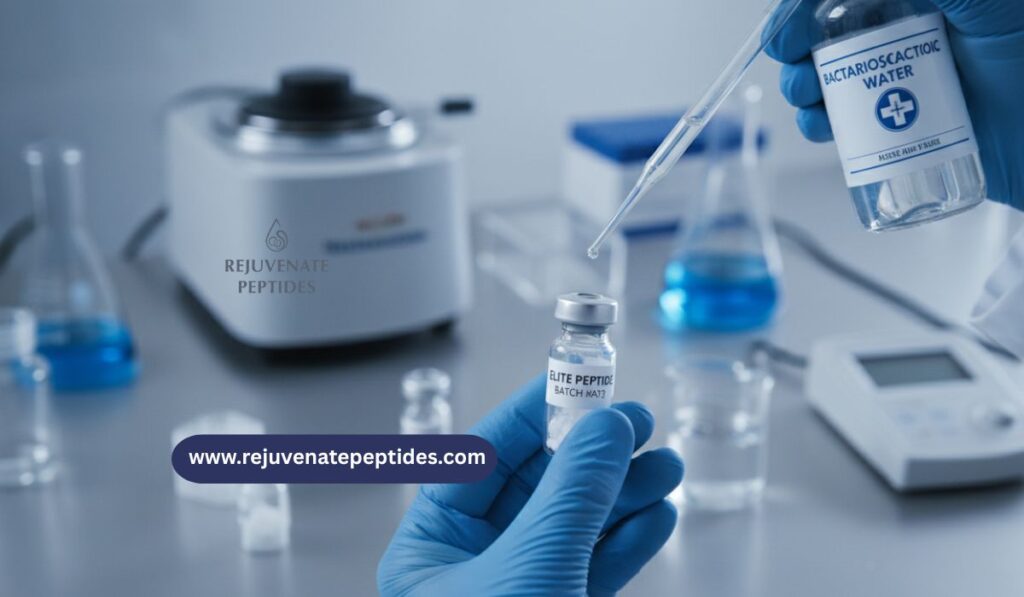

In modern laboratory environments, peptides are commonly supplied in a freeze-dried form to maintain stability during storage and transportation. Before these compounds can be used in experiments, researchers must dissolve them using an appropriate reconstitution solution. This process plays an essential role in peptide research because the solvent used can affect the stability, concentration, and accuracy of experimental results.
Choosing the correct peptide reconstitution method ensures that researchers can prepare solutions with consistent quality. Whether scientists are studying molecular signaling, cellular interactions, or biochemical responses, selecting the right peptide reconstitution solution helps maintain reliable research conditions.
Understanding Peptide Reconstitution
Peptide reconstitution refers to the process of dissolving a lyophilized (freeze-dried) peptide powder into a liquid solvent. This process converts the peptide into a usable liquid form that can be measured, diluted, or analyzed during laboratory experiments.
Freeze-drying is commonly used for peptides because it preserves the compound’s structure and extends its shelf life. However, in order to perform scientific studies, researchers must carefully add a solvent that allows the peptide to dissolve completely without damaging its molecular structure.
When done correctly, peptide reconstitution helps ensure that the compound maintains its intended stability and activity during research applications.
Why Choosing the Right Reconstitution Solution Matters
Not all solvents behave the same way when interacting with peptides. Some peptides dissolve easily in water-based solutions, while others may require specific solvents to achieve full solubility.
Selecting the right solution is important because it can influence:
- peptide stability during storage
- the accuracy of concentration measurements
- the reliability of experimental outcomes
- the integrity of the peptide structure
If the wrong solvent is used, the peptide may not dissolve properly or could degrade over time. For this reason, many laboratories follow established research guidelines when preparing peptide solutions.
Common Types of Peptide Reconstitution Solutions
Researchers typically use a few common types of solutions when dissolving peptides. Each solvent serves a specific purpose depending on the characteristics of the peptide being studied.
Sterile Water
Sterile water is often used for peptides that dissolve easily in aqueous solutions. It is simple, clean, and suitable for short-term experimental use.
Bacteriostatic Water
Bacteriostatic water contains a small amount of preservative that helps prevent bacterial growth. Because of this feature, it is often used when peptide solutions need to be stored for longer periods.
Buffered Solutions
In some research environments, buffered solutions are used to maintain stable pH levels. This can be important for peptides that are sensitive to changes in acidity or alkalinity.
These different options allow researchers to select the most suitable peptide solvent based on the specific compound they are studying.
Factors Researchers Consider When Selecting a Peptide Solvent
When preparing peptides for scientific experiments, researchers carefully evaluate several important factors before choosing a solvent.
Peptide Solubility
Some peptides dissolve easily in water-based solutions, while others require specific solvents to fully dissolve.
Stability of the Compound
Certain peptides are sensitive to environmental changes. Selecting the correct solvent helps maintain molecular stability.
Storage Conditions
If the peptide solution needs to be stored for extended periods, researchers may choose solvents that support longer shelf life.
Experimental Requirements
Different laboratory experiments may require peptides to be prepared in specific concentrations or solution environments.
By considering these factors, scientists can determine the most appropriate peptide reconstitution solution for their research needs.
Best Practices for Peptide Reconstitution
Proper laboratory techniques are essential when preparing peptides. Researchers typically follow a series of steps to ensure the peptide dissolves correctly and remains stable.
Some common best practices include:
- allowing the peptide vial to reach room temperature before opening
- slowly adding the solvent to avoid foaming
- gently swirling the vial instead of shaking it
- using sterile laboratory tools and procedures
These practices help maintain the quality and accuracy of the prepared peptide solution.
Why Proper Reconstitution Supports Reliable Research
Peptide research often involves precise measurements and controlled experimental environments. If a peptide is not prepared correctly, the results of the study could be affected.
A well-prepared peptide solution ensures that:
- the peptide concentration remains accurate
- experiments can be repeated reliably
- researchers obtain consistent data
This is why scientists pay close attention to the reconstitution process when working with peptides in research laboratories.
The Role of Peptide Preparation in Modern Research
As scientific research continues to expand, peptides have become valuable tools for studying biological processes. Researchers use peptides to explore cellular communication, biochemical signaling pathways, and molecular interactions.
Proper preparation of peptides allows scientists to conduct detailed studies that contribute to a better understanding of complex biological systems. The correct solvent and preparation methods help maintain the integrity of the peptide throughout the research process.
Conclusion
Preparing peptides correctly is a critical step in many laboratory studies. Choosing the right peptide solvent and understanding how to create a reliable peptide reconstitution solution ensures that researchers can maintain stable and accurate experimental conditions.
When scientists follow proper preparation methods and select appropriate solvents, they can improve the reliability and consistency of their research outcomes. For laboratories seeking carefully produced research compounds designed for scientific investigation, suppliers like Rejuvenate Peptides support the research community by offering high-quality peptides intended for controlled laboratory studies.