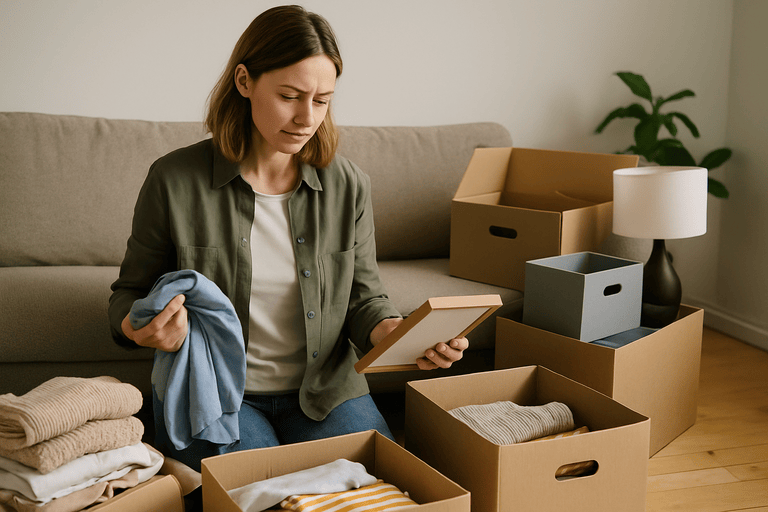

Life rarely stays still. Moving house, welcoming a new family member, navigating separation, downsizing, or managing a loved one’s estate often brings emotional and logistical shifts at the same time. In the middle of these changes, the home often absorbs the impact. Cupboards fill quickly, once-clear surfaces become crowded, and rooms may no longer support how life now functions. Organizing home during these moments is less about visual neatness and more about restoring calm, usability, and a sense of direction.
Rather than approaching organization as a rushed clean-up, it helps to see it as a supportive process that moves at a pace aligned with what is happening personally. When handled thoughtfully, organizing home after a life change may become a stabilizing step forward rather than another source of pressure.
Why life changes often disrupt the home
Major transitions almost always affect routines. When routines change, storage systems that once worked may quietly fail. Items linked to past roles, habits, or relationships remain in place even when they are no longer needed. This creates a mismatch between the home and current life.
Emotional weight also plays a role. Decision-making tends to slow during stressful periods, making it easier to delay sorting tasks. Objects may carry memories or responsibilities that feel difficult to address all at once. Over time, this combination of disrupted routines and postponed decisions often leads to clutter that feels heavier than its physical size suggests.
Articles exploring stress and lifestyle adjustments on platforms such as Smart-Article often highlight how environments influence mental load. Reading broader reflections on life transitions through resources like the Smart-Article lifestyle section may help place household clutter in a wider context of change rather than personal failure.
https://www.smart-article.com/post-new-articles/
Understanding how emotional shifts shape physical spaces
Organizing home is rarely a purely practical exercise during major life changes. Sentimental attachment, uncertainty, and fatigue all affect how possessions are viewed. Items once used daily may no longer fit the current household, yet letting them go may feel premature or uncomfortable.
Common situations that trigger this pattern include relocating to a smaller home, merging households, becoming a carer, or clearing belongings after a bereavement. Each scenario brings its own challenges, but they share a need for patience and flexibility. Acknowledging this emotional layer may make the process feel more manageable and less confronting.
Smart-Article frequently publishes pieces on adapting to new circumstances and building resilience. Revisiting these themes alongside organizing home decisions may help readers approach the task with more compassion and realism.
https://www.smart-article.com/post-new-articles/
Organizing home with compassion rather than pressure
One of the most common mistakes people make is trying to “fix everything” quickly. While a fast clear-out may seem appealing, it often leads to rushed decisions or regret. Sustainable organizing home practices tend to be gradual and responsive rather than absolute.
Setting realistic expectations may involve accepting that some areas will take longer than others. It may also mean recognizing that order does not have to look magazine-ready to be functional. The aim is to support daily life, not to meet an external standard.
Approaching organizing home as an ongoing adjustment rather than a one-time task may reduce frustration and increase long-term success.
Practical ways to start when everything feels overwhelming
When the home feels out of control, choosing a strategic starting point often helps. High-use areas such as the kitchen, bedroom, or entryway usually provide the most immediate benefit. Improving how these spaces function may ease daily stress even if other rooms remain unchanged.
Sorting with simple categories can also reduce pressure. Separating items into “keep,” “let go,” and “review later” groups allows progress without forcing immediate decisions. The “review later” category is especially useful during emotional transitions, as it respects uncertainty without creating permanent clutter.
Organizing home in small, purposeful sessions rather than long marathons may help maintain momentum while avoiding burnout.
When additional support may be helpful
There are times when organizing home becomes more complex than expected. Emotional ties, time constraints, or the sheer volume of belongings may make independent progress difficult. In these situations, seeking outside assistance is not a failure but a practical choice.
Working with experienced professionals may offer structure and neutrality during sensitive periods. Services that focus on understanding personal circumstances rather than enforcing rigid systems often provide the most meaningful outcomes. Many people find that accessing trusted home organizing services offers guidance, emotional reassurance, and practical solutions that respect both the space and the situation.
Introducing professional support as a temporary measure may also help establish systems that remain effective long after the initial transition has passed.
Creating systems that adapt as life continues to change
Homes rarely remain static. Organizing home with adaptability in mind allows spaces to evolve alongside changing needs. Flexible storage, clear labelling, and realistic routines all contribute to maintaining order without constant effort.
Regular, gentle reviews may prevent future build-up. Rather than waiting for clutter to become overwhelming again, brief seasonal check-ins often keep systems aligned with daily life. This approach supports consistency without demanding perfection.
Letting go of the idea of a permanently “finished” home may be one of the most helpful mindset shifts during and after major life changes.
Organizing home as a way forward
Ultimately, organizing home after a life change is about restoring balance. It may help people reconnect with their space, redefine how rooms are used, and create environments that support present circumstances rather than past ones.
Handled with patience, organizing home may become a grounding process that supports emotional recovery and practical clarity at the same time. Whether approached independently or with professional assistance, the goal remains the same: a home that works with life, not against it.