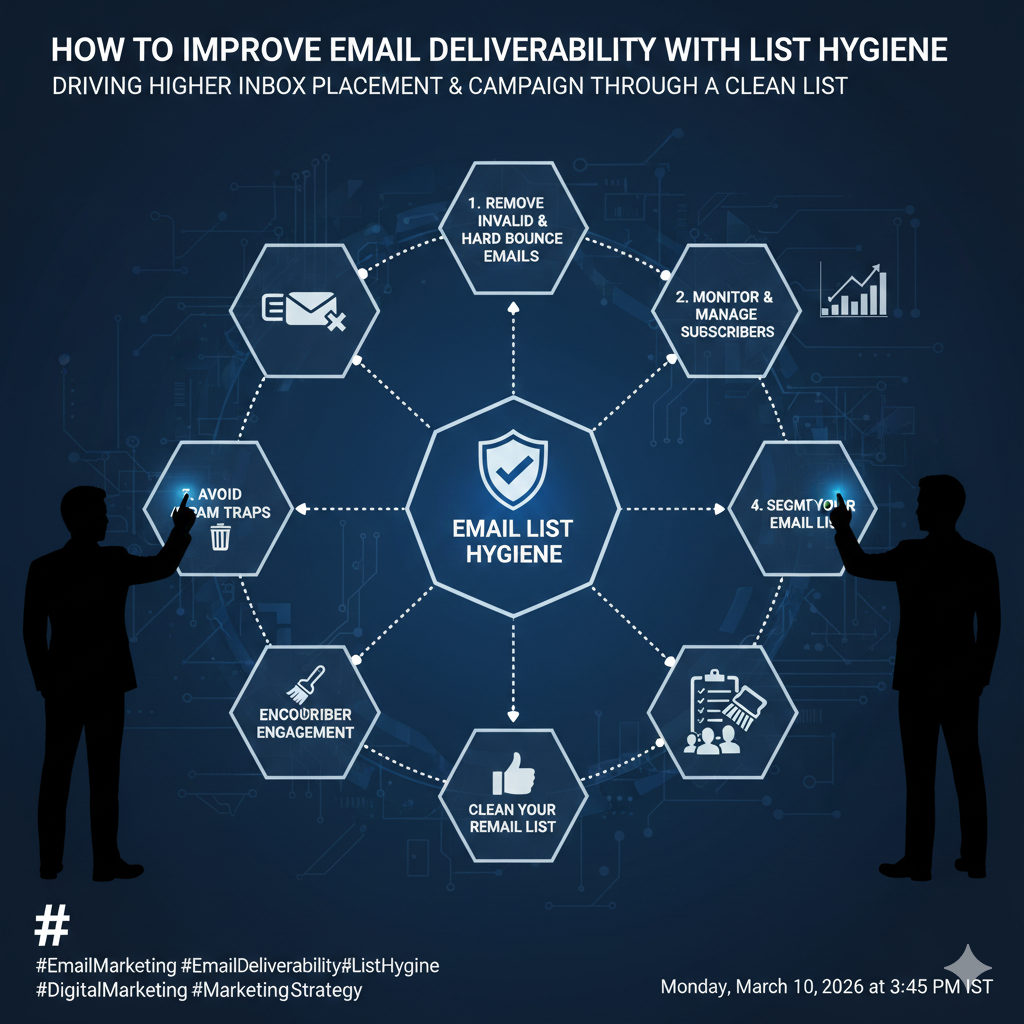

Email marketing continues to be one of the most powerful digital channels—but its success depends heavily on whether your emails reach the inbox. Mastering Email Deliverability Through List Hygiene Techniques is essential for maintaining sender reputation, improving engagement, and maximizing ROI.
List hygiene isn’t just about deleting a few bad email addresses. It’s a strategic, ongoing process that ensures your database remains clean, engaged, and compliant.
Why Email Deliverability Matters
Email deliverability determines whether your campaigns:
- Reach the inbox
- Land in spam
- Bounce entirely
Poor deliverability can lead to:
- Declining open rates
- Lower click-through rates
- Increased spam complaints
- Damaged sender reputation
- Reduced marketing ROI
By mastering email deliverability through list hygiene techniques, marketers can protect their domain credibility and strengthen audience relationships.
What Is List Hygiene?
List hygiene refers to maintaining a high-quality email list by:
- Removing invalid addresses
- Managing bounces
- Eliminating inactive subscribers
- Monitoring engagement levels
- Ensuring compliance with consent regulations
A clean list improves inbox placement and ensures your emails are reaching real, interested subscribers.
1. Eliminate Hard Bounces Immediately
Hard bounces occur when an email address is permanently invalid.
Common causes:
- Misspelled email addresses
- Fake signups
- Deactivated domains
Best practices:
- Automatically suppress hard bounces after one failed attempt
- Use real-time email validation tools at signup
- Regularly review bounce reports
Removing invalid contacts protects your sender reputation and reduces the risk of being flagged by email service providers.
2. Monitor and Manage Soft Bounces
Soft bounces are temporary delivery failures caused by:
- Full inboxes
- Server downtime
- Large email sizes
While occasional soft bounces are normal, repeated soft bounces may indicate deeper issues.
Steps to manage them:
- Monitor recurring soft bounce patterns
- Suppress addresses after multiple failed attempts
- Review email formatting and file sizes
Keeping bounce rates low is a key part of mastering email deliverability through list hygiene techniques.
3. Remove Inactive Subscribers
Inactive subscribers lower engagement rates, which negatively impacts deliverability.
Mailbox providers track:
- Opens
- Clicks
- Replies
- Spam complaints
If subscribers haven’t engaged in 90–180 days, consider:
- Sending a re-engagement campaign
- Offering a preference update option
- Removing those who remain inactive
A smaller, engaged list performs better than a large, disengaged one.
4. Use Double Opt-In to Improve List Quality
Double opt-in requires subscribers to confirm their email address before being added to your list.
Benefits include:
- Reduced fake signups
- Higher engagement rates
- Lower spam complaints
- Improved data accuracy
This proactive step strengthens list integrity and supports long-term deliverability.
5. Segment Your Audience for Better Engagement
Sending the same email to your entire list can hurt performance.
Segment based on:
- Demographics
- Purchase behavior
- Engagement level
- Interests
- Location
Targeted messaging increases relevance, leading to:
- Higher open rates
- Better click-through rates
- Fewer spam complaints
Segmentation enhances both engagement and inbox placement.
6. Avoid Purchased or Scraped Lists
Buying or scraping email lists may seem like a shortcut—but it severely damages deliverability.
Risks include:
- Spam traps
- High bounce rates
- Legal compliance issues
- Reputation blacklisting
Instead, grow your list organically through:
- Website forms
- Gated content
- Webinars
- Newsletters
- Social media campaigns
Permission-based marketing is foundational when mastering email deliverability through list hygiene techniques.
7. Conduct Regular List Cleaning Audits
List hygiene is not a one-time task. It requires a consistent maintenance schedule.
Recommended frequency:
- Monthly bounce review
- Quarterly inactive user analysis
- Ongoing spam complaint monitoring
- Continuous validation of new contacts
Automation tools within email marketing platforms can simplify this process.
8. Maintain Proper Email Authentication
While list hygiene focuses on contacts, technical setup also impacts deliverability.
Ensure your domain includes:
- SPF authentication
- DKIM signatures
- DMARC policies
These protocols verify your identity and prevent spoofing, building trust with mailbox providers.
9. Encourage Subscriber Interaction
Engagement signals help improve inbox placement.
Boost interaction by:
- Personalizing subject lines
- Using dynamic content
- Sending at optimal times
- Including clear calls-to-action
- Encouraging replies
The more subscribers engage, the stronger your sender reputation becomes.
Common Mistakes to Avoid
When mastering email deliverability through list hygiene techniques, avoid:
- Ignoring bounce reports
- Holding onto inactive subscribers too long
- Sending too frequently
- Using misleading subject lines
- Making it difficult to unsubscribe
Easy opt-outs reduce spam complaints and protect your domain credibility.
Long-Term Benefits of Strong List Hygiene
When you prioritize list quality over list size, you gain:
- Improved inbox placement
- Higher engagement metrics
- Stronger sender reputation
- Increased conversion rates
- Sustainable email marketing growth
Mastering email deliverability through list hygiene techniques ensures your email strategy remains effective, compliant, and performance-driven.
Final Thoughts
Email success isn’t about how many emails you send—it’s about who receives them. By consistently applying smart list hygiene practices, marketers can safeguard their sender reputation and build meaningful subscriber relationships.
Mastering email deliverability through list hygiene techniques transforms email marketing from a volume-based strategy into a precision-driven growth engine.
Hashtags
#EmailMarketing
#EmailDeliverability
#ListHygiene
#DigitalStrategy
#MarketingAutomation