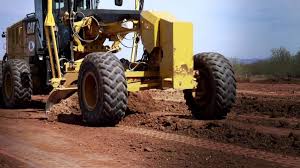

The question that contractors and fleet managers are frequently confronted with is: should you choose a low hrs motor grader for sale or is it wiser to go with a high-hour machine that is well maintained? Both options offer distinct advantages, but contractors will make the correct decision based on the project requirements, budget limitations, and long-term maintenance plan. Understanding these differences can save thousands in operating costs and downtime throughout the life of a machine.
Understanding Grader Hours and Their Significance
Machine hours are the number of hours that a grader has been operating since its inception. This measure is a significant measure of wear and tear, yet it does not give the entire picture. For example, a well-maintained 12,000-hour grader can remain in great condition, while a poorly maintained 3,000-hour machine may already show severe problems.
- In the current used market, premium low-hour graders are usually those with less than 3,000 hours.
- High-hour graders typically surpass 15,000 hours, which is the standard design life for major drivetrain components, but with the right maintenance, they can still be fully functional.
- Machine hours determine resale value, reliability, and the life of operation of the equipment, and thus are a major factor when purchasing or selling used equipment.
Benefits of Low-Hour Graders
A low-hour motor grader may be particularly attractive to contractors who are concerned with reliability and little or no maintenance interruptions.
- Reduced wear of key parts: Engines, transmissions, and hydraulic systems are less worn out.
- Increased resale value: These machines are likely to retain more of their original market value.
- Fewer short-term repairs: Minimal chances of component failures in the short term.
- Increased precision on complicated projects: This would be especially significant in large infrastructure or fine-grading tasks where tight tolerances are required.
- Availability of newer technology: A lot of the low-hour graders have newer cabs, electronic controls, and integrated, mastless 3D grade control.
Low-hour graders can offer a sense of security and predictability to contractors working on high-profile projects in which downtime is expensive.
Advantages of Well-Maintained High-Hour Graders
Conversely, well-kept high-hour graders can deliver a surprisingly high return on investment, especially when experienced operators use them, and the maintenance program is strong.
- Reduced buying cost: Machines with high hours tend to be less expensive compared to those with low hours.
- Performance history: A large number of high-hour graders have a long history of performance, which has proven to be reliable.
- Proven Reliability: The machine has already demonstrated its durability, and a consistent service history suggests that the critical systems have been well-managed.
- Familiarity with operators: Operators may like working with machines that they are familiar with, and this saves them the training.
- Budget flexibility: Purchase cost savings may be used in maintenance, tools, or more equipment.
To contractors who have limited capital and high maintenance capacity, high-hour graders can potentially provide almost the same operating value as newer machines at a fraction of the price.
Key Considerations When Choosing Between the Two
The choice is a trade-off between lower upfront capital and higher long-term maintenance costs.
- Maintenance records: The machines with high hours of use should have detailed service records.
- Project requirements: Large and high-precision projects might prefer low-hour machines as they are reliable.
- Operator experience: Experienced operators are able to extract the maximum value from high-hour graders.
- Budget constraints: The initial expenditure and the possible maintenance and downtime should be compared.
- Technology requirement: Low-hour units can be fitted with modern controls, GPS, or automation.
By considering these factors in relation to your project’s type and operational objectives. You can identify the grader that best fits your budget and performance requirements.
Case Studies: Real-World Applications
Contractors across the country have put low-hour and high-hour graders to good use according to their requirements.
- A road construction company purchased a low-hour grader for a large road-widening project. The machine with low hours needed little maintenance for many years, and the team was able to work within a strict deadline.
- A commercial construction company handling site preparation for commercial projects purchased a well-maintained high-hour grader. With detailed maintenance records, the team performed exceptionally well, using the minimal initial investment to buy more grading equipment.
These cases demonstrate that both variants might be feasible. It is necessary to match the choice of the machine with the needs of operations and maintenance possibilities.
Maintenance and Longevity Tips
Contractors can properly maintain a grader, whether low-hour or high-hour, to optimize its life and value.
- Frequent checks: Hydraulic lines, tires, cutting edges, and pivot points.
- Preventive maintenance: Adhere to the recommended service schedule by the manufacturer.
- Component replacement: Change wear parts like cutting edges, end bits, and transmission filters in advance.
- Documentation: Have records of all maintenance works properly documented to justify the resale value and reliability of the machine.
- Operator training: Wear reduction and prevention of expensive damage through proper handling.
By investing in maintenance, a high-hour grader can be made to act nearly like a low-hour unit, and a low hrs motor grader for sale can be made to still provide the best performance.
Choosing the Right Grader for Your Needs
Finally, choosing between a low-hour motor grader or a high-hour well-maintained grader is a matter of your project priorities, budget, and working practices. Graders with low hours are less risky in the short term and have more recent technology. Which is suitable for some urgent projects. Well-maintained high-hour graders provide cost savings and reliable performance.
Contractors should weigh initial expenses, potential downtime, and maintenance capacity before making a decision. With these factors in mind, you can choose a grader that will bring you long-term value and suit your construction needs.
FAQs
1. Is a low-hour grader always better than a high-hour grader?
A: Not necessarily. Although low-hour graders may require less immediate maintenance. Contractors can achieve great performance at a lower initial cost with a well-maintained high-hour machine.
2. What should I look for in a high-hour grader?
A: Examine detailed maintenance manuals, examine important parts of the machine such as hydraulics and transmissions, and make sure that the operator is conversant with the machine.
3. Can high-hour graders still be reliable for heavy projects?
A: Yes, contractors can depend on high-hour graders over years of service when they remain in good condition, and operators follow preventive maintenance schedules.
4. Where can I find a low hrs motor grader for sale?
A: Used equipment dealers and online auction websites frequently sell low-hour graders. This allows contractors to find machines that meet their project and budget needs.