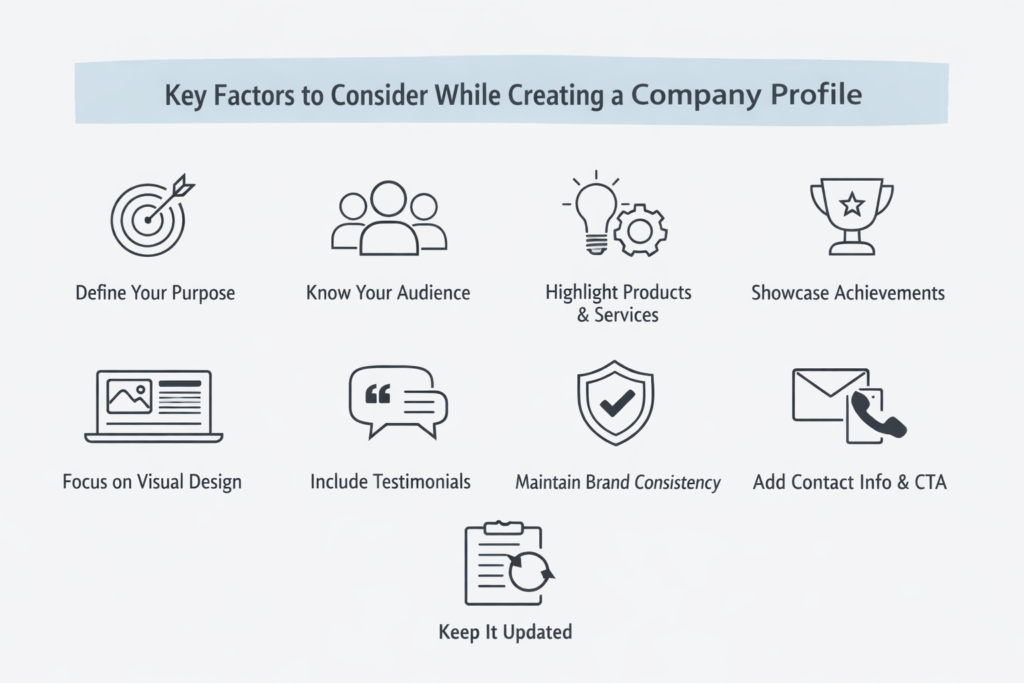

Creating a strong company profile is essential for any business that wants to build trust, attract clients, and stand out in a competitive market. A well-crafted company profile acts as the face of your business, offering a clear picture of who you are, what you do, and why you matter. It tells your story, highlights your strengths, and communicates your value in a way that connects with your audience. To make your company profile effective, engaging, and professional, there are several key factors you should carefully consider.
1. Define Your Purpose Clearly
Before you begin writing or designing your company profile, it is important to define its purpose. Ask yourself: Who is this profile for? Is it meant for potential clients, investors, partners, or stakeholders? Each audience has different expectations. A profile aimed at investors will focus more on growth, performance, and financial potential, while a client-focused profile highlights services and reliability. Having a clear purpose ensures your content remains focused, relevant, and impactful.
2. Know Your Target Audience
Understanding your target audience is one of the most important steps in creating an effective company profile. You need to identify who will read your profile and what information they are looking for. Knowing your audience helps you choose the right tone, language, and structure. For example, a corporate audience may prefer a formal tone, while startups may benefit from a more creative and friendly approach. When your content speaks directly to your audience’s needs, it becomes more engaging and persuasive.
3. Craft a Strong Company Overview
Your company overview is the first section readers will see, making it one of the most important parts of your profile. It should provide a clear and concise introduction to your business. Include your mission, vision, history, and core values. This section should reflect your brand identity and give readers a reason to trust your business. Keep the language simple and avoid unnecessary jargon. A strong overview creates a positive first impression and encourages readers to continue exploring.
4. Highlight Your Products and Services
Clearly explaining your products and services is essential. This section should answer the question: What does your business offer? Use simple and direct language to describe your offerings. Focus on the benefits rather than just listing features. Explain how your products or services solve problems or add value to your customers. This helps potential clients quickly understand why they should choose your business.
5. Showcase Your Achievements
Including achievements, milestones, and recognitions can significantly boost your credibility. This may include awards, certifications, successful projects, or years of experience. When possible, add numbers or statistics to make your achievements more impactful. For example, mentioning the number of clients served or projects completed builds trust and shows your track record of success.
6. Focus on Visual Design
Design plays a crucial role in how your company profile is perceived. A clean, modern, and visually appealing design can capture attention and keep readers engaged. Use a consistent color palette, readable fonts, and high-quality images. Avoid clutter and keep the layout organized. Visual elements such as icons, infographics, and images can enhance understanding and make your profile more attractive.
7. Maintain Brand Consistency
Consistency is key when it comes to branding. Your company profile should align with your overall brand identity. Use the same logo, colors, typography, and tone of voice as your other marketing materials. This consistency helps build recognition and trust. When your branding is uniform across all platforms, it creates a stronger and more professional image.
8. Keep Content Clear and Concise
Clarity is essential in a company profile. Avoid long, complex sentences that may confuse the reader. Use short paragraphs, bullet points, and simple language to improve readability. A clear and concise profile ensures that your message is easily understood. Readers should be able to quickly find the information they need without feeling overwhelmed.
9. Include Client Testimonials
Client testimonials are a powerful way to build trust and credibility. They provide real-life proof of your business’s quality and reliability. Include short and impactful quotes from satisfied clients that highlight your strengths. Testimonials add authenticity and help potential clients feel more confident about choosing your services.
10. Add Contact Information and Call to Action
Your company profile should always include clear and accurate contact information. Provide details such as phone number, email address, website, and social media links. In addition, include a strong call to action (CTA) that encourages readers to take the next step. Phrases like “Contact us today,” “Get in touch,” or “Learn more about our services” can drive engagement and generate leads.
11. Optimize for SEO
If your company profile is available online, search engine optimization (SEO) is an important factor. Use relevant keywords naturally throughout your content to improve visibility in search engines. Keywords such as “company profile design,” “business profile,” and “brand identity” can help your profile reach a wider audience. However, avoid keyword stuffing, as it can affect readability and user experience.
12. Keep It Updated
A company profile should not remain static. Businesses evolve over time, and your profile should reflect those changes. Regularly update your profile with new achievements, services, or company developments. Keeping your profile current ensures accuracy and shows that your business is active and growing.
13. Tell a Compelling Story
Beyond facts and figures, a great company profile tells a story. Share your journey, challenges, and successes in a way that connects emotionally with your audience. Storytelling makes your brand more relatable and memorable. It helps readers understand not just what you do, but why you do it.
14. Use a Logical Structure
Organizing your content in a logical flow makes your profile easier to read. Start with an introduction, followed by company details, services, achievements, and contact information. A well-structured profile improves user experience and ensures that readers can navigate through the content effortlessly.
Conclusion
Creating an effective company profile requires a balance of clear content, strong design, and strategic thinking. By defining your purpose, understanding your audience, and presenting your strengths in a clear and engaging way, you can create a profile that truly represents your brand. A well-designed company profile not only informs but also builds trust, strengthens your brand image, and drives business growth. Investing time and effort into creating a professional company profile can make a significant difference in how your business is perceived in the market.