
Introduction
Jaipur National University (JNU), located in the vibrant city of Jaipur, Rajasthan, has emerged as one of the prominent private universities in North India offering quality education in multiple disciplines, including medical sciences. Established with a vision to create skilled professionals and promote academic excellence, JNU Jaipur has developed strong infrastructure, modern laboratories, experienced faculty, and a student-focused learning environment.
For students aspiring to pursue medical education, the university offers MBBS and other healthcare programs through its medical college and associated teaching hospital. The institution focuses not only on theoretical learning but also emphasizes clinical exposure, research opportunities, and practical training. Over the years, JNU Jaipur has attracted students from across India due to its academic standards, campus facilities, and commitment to healthcare education.
This article provides a detailed overview of Jaipur National University, including its history, courses, infrastructure, admission process, facilities, and why it is becoming a preferred destination for medical aspirants.
About Jaipur National University
Jaipur National University was established in 2007 under the Jaipur National University Act passed by the Rajasthan State Legislature. The university was founded with the goal of providing accessible and high-quality education in diverse fields such as medicine, engineering, management, law, pharmacy, and social sciences.
The university campus is situated in Jagatpura, Jaipur, which is one of the fastest-growing educational hubs in the state. JNU Jaipur provides a dynamic academic atmosphere supported by modern technology, experienced professors, and research-driven programs.
The university places strong emphasis on professional education and skill development. Its medical programs aim to produce competent doctors who can serve society with compassion, knowledge, and ethical values.
JNU Medical College and Hospital
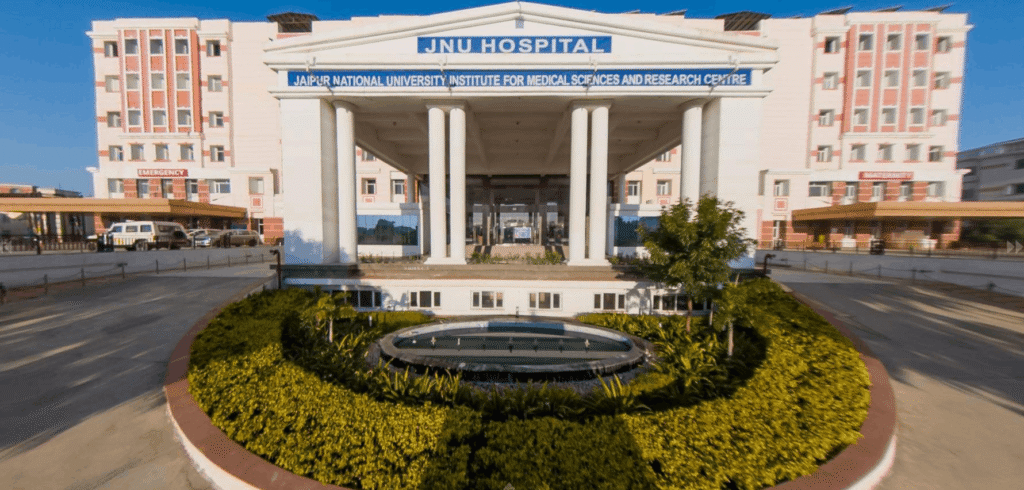
The medical education at Jaipur National University is delivered through its medical college and teaching hospital, which provide both academic learning and practical clinical exposure. The medical college is equipped with advanced laboratories, lecture halls, demonstration rooms, and clinical training facilities.
The teaching hospital associated with the university plays a crucial role in the training of MBBS students. Students gain hands-on experience by interacting with patients under the supervision of experienced doctors and faculty members.
Clinical departments such as General Medicine, Surgery, Pediatrics, Orthopedics, Gynecology, and others allow students to develop strong diagnostic and treatment skills during their medical education.
The hospital also serves the surrounding community by providing healthcare services, which helps students understand real-world medical challenges and patient care.
MBBS Course at JNU Jaipur
The MBBS program at Jaipur National University is one of the most sought-after courses offered by the institution. The course follows the guidelines and curriculum prescribed by the National Medical Commission.
The duration of the MBBS program is five and a half years, which includes four and a half years of academic study followed by a one-year compulsory rotating internship.
During the academic years, students study subjects such as anatomy, physiology, biochemistry, pathology, microbiology, pharmacology, community medicine, surgery, and medicine. The internship period provides practical training in different hospital departments where students learn patient management, diagnosis, and treatment procedures.
The program is designed to develop both theoretical knowledge and clinical competence so that graduates can successfully pursue medical practice or higher studies.
Eligibility Criteria for MBBS Admission
Students who wish to pursue MBBS at JNU Jaipur must meet the eligibility criteria set by the National Medical Commission and the university.
Applicants must have completed their 10+2 education with Physics, Chemistry, and Biology as main subjects from a recognized board. They must also have secured the minimum required percentage in these subjects as prescribed by the regulatory authorities.
In addition to academic qualifications, candidates must qualify the NEET (National Eligibility cum Entrance Test), which is the mandatory entrance examination for MBBS admission in India. Admission to the MBBS program is granted through the counseling process based on NEET scores.
Students are advised to participate in the official counseling process conducted by the designated authorities to secure a seat in the university.
Infrastructure and Campus Facilities
Jaipur National University offers a modern campus designed to provide a comfortable and productive environment for students. The university has invested significantly in infrastructure to support academic learning and student development.
The campus includes spacious lecture halls equipped with modern audio-visual teaching aids that enhance classroom learning. Laboratories are designed according to medical education standards and allow students to conduct experiments and practical training effectively.
The university library is another important facility that provides access to a wide collection of medical textbooks, journals, research publications, and digital resources. Students can use these resources to deepen their understanding of medical subjects and stay updated with recent developments in healthcare.
In addition, the campus includes hostels, sports facilities, cafeterias, and recreational spaces that contribute to a balanced student life.
Faculty and Teaching Methodology
One of the key strengths of Jaipur National University is its experienced faculty members. The medical faculty includes professors, associate professors, and assistant professors who possess strong academic backgrounds and clinical experience.
The teaching methodology at the university combines traditional lectures with interactive learning techniques. Students are encouraged to participate in discussions, case studies, and clinical demonstrations.
Practical training and hospital exposure form an essential part of the learning process. Faculty members guide students during clinical rounds and ensure that they develop the necessary skills to diagnose and manage medical conditions effectively.
The university also promotes research and encourages students to participate in academic conferences, seminars, and workshops.
Clinical Training and Hospital Exposure
Clinical exposure plays a vital role in shaping the competence of future doctors. At JNU Jaipur, students receive extensive clinical training through the associated teaching hospital.
During their clinical postings, students interact with patients, observe medical procedures, and assist doctors in various departments. This hands-on experience helps them understand disease patterns, diagnostic techniques, and treatment protocols.
Students also learn essential communication skills while interacting with patients and their families. These experiences help them develop empathy and professionalism, which are essential qualities for a successful medical career.
Student Life at JNU Jaipur
Life at Jaipur National University is not limited to academic learning. The university encourages students to participate in extracurricular activities that contribute to their personal and professional growth.
Cultural events, sports competitions, academic seminars, and student clubs provide opportunities for students to explore their talents and interests. These activities help in building teamwork, leadership, and communication skills.
The university campus promotes a diverse and inclusive environment where students from different regions and backgrounds come together to learn and grow.
Hostel facilities provide a safe and comfortable living environment for students who come from outside Jaipur. The hostels are equipped with essential amenities and provide a supportive community atmosphere.
Research and Academic Development
Research plays an important role in medical education, and Jaipur National University encourages students and faculty members to engage in research activities.
The university organizes workshops, training programs, and conferences that allow students to learn about new medical technologies and advancements. Faculty members also guide students in conducting research projects and publishing academic papers.
Participation in research activities enhances critical thinking and helps students understand the scientific foundations of medical practice.
Career Opportunities After MBBS
Graduates from Jaipur National University have several career opportunities available after completing their MBBS degree.
Many students choose to pursue postgraduate medical education such as MD or MS in various specialties. Others begin their careers as practicing doctors in hospitals, clinics, or healthcare institutions.
Some graduates also explore opportunities in medical research, public health organizations, healthcare administration, and medical education.
The training and clinical exposure provided during the MBBS program help students develop the skills needed to succeed in the healthcare sector.
Why Choose JNU Jaipur for Medical Education
There are several reasons why Jaipur National University has become an attractive option for students seeking medical education.
The university offers modern infrastructure, experienced faculty, and strong clinical training opportunities. Its teaching hospital allows students to gain real-world medical experience during their studies.
The location of the university in Jaipur provides access to a growing healthcare ecosystem and a supportive academic environment.
In addition, the university focuses on holistic development by encouraging students to participate in academic, cultural, and research activities.
These factors contribute to the overall quality of education and help prepare students for successful careers in medicine.
Conclusion
Jaipur National University has established itself as a respected institution offering comprehensive medical education in Rajasthan. With its well-structured MBBS program, modern infrastructure, experienced faculty, and strong clinical training facilities, the university provides a solid foundation for aspiring doctors.
The emphasis on practical learning, research opportunities, and student development makes JNU Jaipur a promising choice for medical aspirants who wish to pursue their dreams of becoming healthcare professionals.
For students seeking a balanced combination of academic excellence, clinical exposure, and supportive campus life, Jaipur National University continues to grow as a reliable destination for medical education in India.