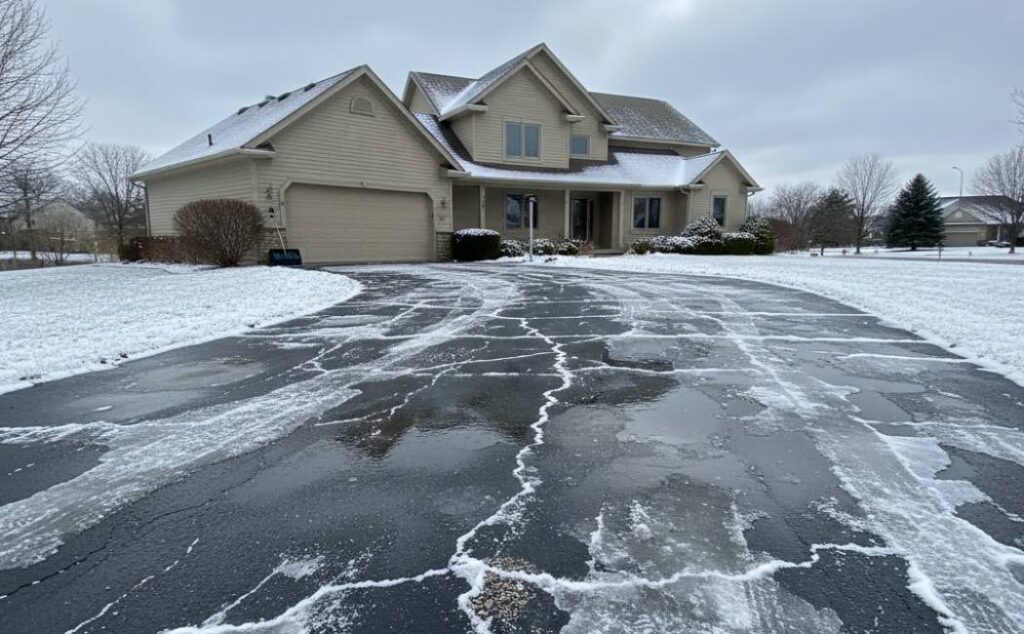

Winter weather can be tough on asphalt driveways, walkways, and parking areas. Snow piles up, ice forms, and melting water often sits in low spots for days. At first, this damage is easy to miss. Over time, it leads to cracks, sinking areas, and serious surface failure.
The good news is that asphalt damage from winter can be slowed or even avoided. With the right care and early repairs, homeowners can protect their pavement and avoid expensive fixes later.
How Winter Weather Breaks Down Asphalt
Snow and Ice Pressure
Asphalt is strong, but it is not flexible enough to handle constant freezing and thawing. Snow and ice add weight to the surface. When water seeps into tiny cracks and freezes, it expands. This process pushes the asphalt apart little by little.
Even after snow is cleared, leftover ice and moisture continue to weaken the surface. Small cracks widen, the surface roughens, and safety becomes a concern for both driving and walking.
Ice Melt and Salt Damage
Ice melt products and rock salt help with traction, but they can harm asphalt when overused. These materials dry out the surface and make it brittle. Over time, this leads to faster cracking and surface breakdown.
Using asphalt safe ice melt in small amounts is a better option. It costs more upfront but saves money by extending the life of your driveway.
Standing Water Problems
Puddles on asphalt are a major warning sign. Standing water slowly works its way into cracks and joints. When it freezes, it lifts the asphalt and creates weak spots. Water can also wash away the base underneath, causing sinking or uneven areas.
Proper drainage is key. Professionals who handle residential asphalt installation and repair can correct grading issues and help water flow away from paved surfaces.
Signs Your Asphalt Needs Attention
Catching problems early makes repairs simpler and cheaper. Watch for these warning signs:
-
Thin surface cracks
-
Potholes forming in traffic areas
-
Low or hollow spots
-
Water that does not drain after melting snow
Ignoring these issues allows winter damage to spread quickly.
How Professionals Repair Winter Asphalt Damage
Some asphalt problems need expert tools and experience. Professional crews know how to restore strength and smoothness without replacing the entire surface.
Common services include:
-
Crack sealing to block water entry
-
Patching to repair holes and weak spots
-
Resurfacing to add a fresh asphalt layer
Residential chip sealing is another effective option. It adds a protective seal that blocks water and reduces ice damage. This treatment helps extend the life of asphalt surfaces and is especially useful before or after winter.
Simple Ways Homeowners Can Protect Asphalt
You can reduce winter damage with a few practical steps:
-
Remove snow quickly after storms
-
Check that water drains away from the driveway
-
Use asphalt safe ice melt sparingly
-
Inspect the surface before and after winter
-
Fix small cracks right away
For homeowners who want extra support, Top Texas Asphalt Services offers inspections, repairs, and surface protection throughout the year. Regular maintenance helps prevent winter damage before it starts.
Why Acting Early Matters
Small cracks may not seem urgent, but winter turns them into serious problems fast. One season of freeze and thaw can turn a tiny crack into a deep pothole.
Early repairs save money and keep your driveway safe. Smooth asphalt reduces trip hazards and protects vehicles from damage.
Final Thoughts
Winter weather is unavoidable, but asphalt damage does not have to be. Snow, ice melt, and standing water all place stress on paved surfaces. Left alone, they cause cracks, potholes, and sinking areas.
By clearing snow, managing water, using safe products, and scheduling timely repairs, homeowners can protect their asphalt for years to come. If your driveway shows signs of winter wear, contact a professional asphalt service and take action before the damage spreads.