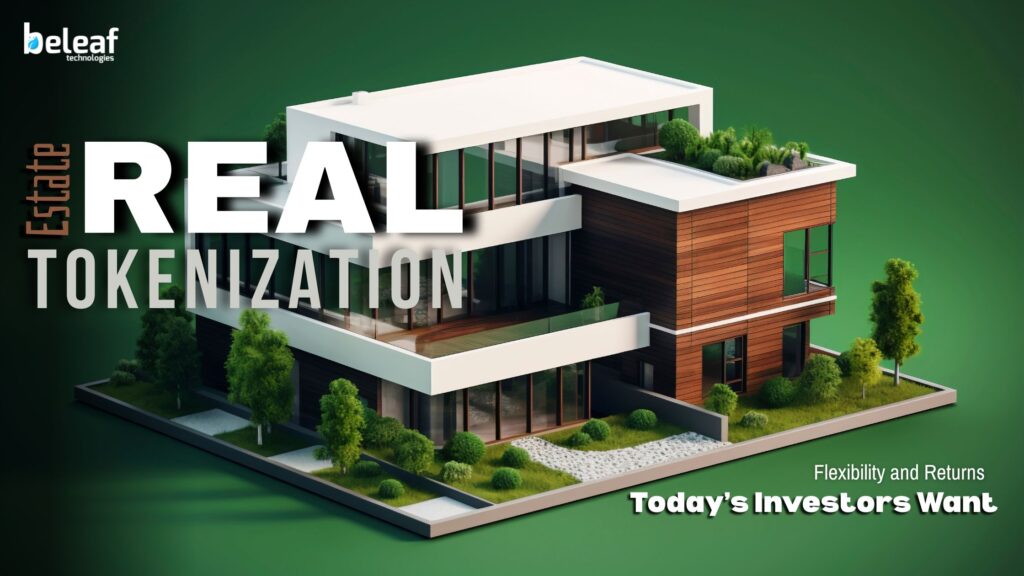

Investing in real estate has always meant tying up a lot of money, dealing with slow processes, and being limited to certain locations. Real Estate Tokenization is changing all that. Using blockchain technology, it allows investors to own just a fraction of a property, complete transactions quickly, and access opportunities around the world offering the kind of flexibility and returns modern investors are looking for.
How Real Estate Tokenization Works and Why It’s Valuable
At its core, Real Estate Tokenization refers to the process of converting ownership rights of a property into digital tokens on a blockchain. Each token represents a fractional stake in the asset, allowing multiple investors to participate without the burden of full property ownership.
Historically, real estate was a market limited to those with significant capital. Buying a commercial building or luxury apartment required millions, leaving small investors out of the game. Property tokenization changes that dynamic. With tokens, an investor can own a slice of a property worth as little as a few hundred dollars, unlocking opportunities previously inaccessible.
The benefits go beyond accessibility. Tokenization allows for instant settlement, automated legal processes via smart contracts, and greater transparency. Investors can track transactions in real-time, reducing the friction and bureaucracy typical of traditional real estate investments.
How Tokenization Has Evolved in Real Estate
While the idea of tokenized real estate has been around for several years, the market truly began evolving around 2025. Early hype painted tokenization as a disruptive force capable of outpacing traditional real estate. Promises of fully liquid property markets and global investor access generated excitement. However, reality presented a more nuanced picture.
Traditional real estate platforms, hybrid digital-property services, and carefully managed rental portfolios continued to perform strongly. Pure blockchain-based offerings sometimes struggled to meet investor expectations due to a lack of practical integration with real-world property management. This led to a critical realization: Tokenization of Asset alone isn’t enough. Investors increasingly prefer platforms that combine blockchain efficiency with tangible, value-driven management.
Projects that blended tokenization with technology like AI, smart contracts, and digital marketplaces saw faster adoption. By streamlining property management and enhancing user experience, these hybrid platforms proved that tokenization works best when paired with real-world practicality.
Why Fractional Ownership Is a Game-Changer for Investors
One of the most significant advantages of property tokenization is the flexibility it offers investors. Traditional real estate often requires long-term commitments, making it difficult to adjust portfolios in response to market changes. Tokenized assets, however, can be traded on digital marketplaces, providing liquidity similar to stocks or bonds.
Fractional ownership also allows investors to diversify their holdings across multiple properties and geographic locations. Rather than putting all capital into a single building, investors can own fractions of several properties, mitigating risk and enhancing portfolio performance. This diversification aligns perfectly with the demands of modern investors, who seek flexibility and control over their investments.
How Tokenization Improves Investment Returns
Beyond flexibility, Real Estate Tokenization Development is creating avenues for improved returns. Blockchain enables transparent revenue sharing, allowing investors to receive rental income or profit distributions automatically through smart contracts. This reduces administrative costs, ensures timely payouts, and minimizes human error.
Moreover, tokenized platforms often integrate analytical tools powered by AI, helping investors make data-driven decisions. By leveraging real-time market insights, predictive modeling, and automated reporting, tokenized real estate platforms empower investors to optimize returns while minimizing risks.
Investors no longer have to rely solely on property appreciation for gains. Rental income, fractional trading opportunities, and early access to high-demand projects create multiple revenue streams all facilitated by tokenization.
Why UAE Investors Should Consider Tokenized Real Estate
The UAE has long been a hub for global investors seeking high-quality real estate opportunities. With property tokenization, UAE investors can now access international markets and diversify beyond local properties without the usual barriers of capital and bureaucracy.
Tokenized platforms allow UAE investors to participate in fractional ownership of prime properties in cities like London, New York, or Berlin, while also managing local investments more efficiently. Smart contracts streamline payments and legal processes, reducing dependency on intermediaries.
Furthermore, the UAE’s strong regulatory framework for fintech and blockchain innovation provides a supportive environment for tokenized real estate investments. Local investors benefit from transparency, liquidity, and technology-driven efficiency, making it easier to balance portfolios and achieve competitive returns.
How Tokenization Is Making Real Estate Accessible to Everyone
Perhaps the most transformative impact of Real Estate Tokenization is democratization. For decades, real estate was an exclusive domain dominated by wealthy individuals and institutional investors. Tokenization breaks down those barriers.
Platforms now allow anyone, regardless of capital, to invest in properties worldwide. From a luxury apartment in New York to a commercial property in Berlin, fractional tokens open doors for a broader audience. This inclusivity not only empowers small investors but also stimulates global capital flows into previously inaccessible markets.
What Challenges Tokenized Real Estate Faces and How It’s Adapting
Despite its promise, tokenized real estate is not without challenges. Regulatory uncertainty remains a significant obstacle, as governments work to define frameworks for digital securities and fractional ownership. Market education is also crucial; many investors are still learning how blockchain integrates with real estate.
However, the trajectory of Real Estate Tokenization Development is clear. Projects that combine innovative technology with practical, real-world solutions are gaining traction. Investors are gravitating toward platforms that provide transparency, liquidity, and proven performance rather than hype alone.
The market is maturing. The focus is shifting from mere tokenization to sustainable, technology-driven property investment solutions. Fractional ownership, automated management, and digital marketplaces are no longer theoretical they are actively reshaping how real estate investment works.
Conclusion: Why Tokenized Real Estate Is the Future
Investors today look for flexibility, accessibility, and returns are non-negotiable. Real Estate Tokenization is delivering on all three fronts by enabling fractional ownership, global access, and automated financial management. As platforms continue to innovate and integrate real-world solutions, tokenization is evolving from a futuristic concept into a practical investment tool.
For investors seeking a smooth bridge between technology and property markets, the future is bright. The rise of comprehensive solutions highlights the growing importance of Token of Real Estates Service, providing users with a reliable, efficient, and inclusive way to participate in the property market like never before.