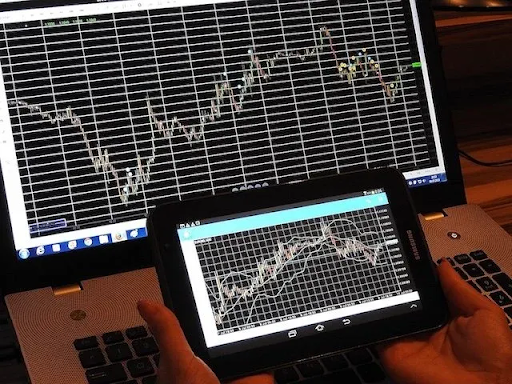

Technical analysis can sound complicated at first. Charts, indicators, patterns, and different methods all come up at once, which makes it feel like there’s a lot to learn before anything starts to make sense.
For many traders in Australia, CFD trading becomes easier to approach when technical analysis is treated as something practical rather than something you need to master all at once.
Start With Price Before Anything Else
Before adding tools, it helps to spend time just watching how price moves. The way it rises, pulls back, pauses, and reacts in certain areas already gives a lot of information.
You don’t need to label everything.
In CFD trading, understanding how price behaves on its own often creates a stronger foundation than relying on multiple indicators from the start.
Use Levels That Stand Out
One of the simplest ways to apply technical analysis is by marking areas where price has reacted before. These are often points where movement slows down, reverses, or hesitates.
They don’t need to be exact lines.
For traders in Australia, these levels act more like zones. In CFD trading, they help you focus on where something might happen rather than guessing anywhere on the chart.
Keep Indicators to a Minimum
It’s tempting to add several indicators, especially when trying to improve accuracy. Each one promises to show something useful, but too many can create conflicting signals.
That’s where confusion starts.
Many traders prefer using one or two tools at most, or sometimes none at all. In CFD trading, clarity often improves when there’s less on the screen.
Pay Attention to How Price Moves Between Points
Technical analysis isn’t only about where price is, but how it gets there.
Does it move smoothly or with hesitation? Does it react quickly or slowly? These details can say more than a single signal.
For beginners in Australia, observing this flow makes CFD trading feel less mechanical and more understandable.
Use Timeframes to Build Perspective
Looking at one timeframe can give a limited view. A move that looks strong on a smaller timeframe might appear less significant on a larger one.
Switching between them adds context.
In CFD trading, this helps you see whether you’re looking at a short term movement or something with a broader direction.
Combine Simple Observations
Technical analysis doesn’t need to rely on one single factor. It often works better when a few simple observations come together.
For example, a level, a type of movement, and a general direction.
Some traders keep it straightforward:
- identify a level where price has reacted before
• observe how price approaches that area
• look at the overall direction on a higher timeframe
These steps don’t guarantee results, but they help create a clearer picture.
Avoid Trying to Predict Everything
It’s easy to fall into the habit of trying to predict exactly what will happen next. Technical analysis can sometimes feel like a tool for forecasting.
But it works better as a way of understanding what’s happening now.
For traders in Australia, CFD trading becomes less stressful when analysis is used for observation rather than prediction.
Let Experience Shape Your Approach
At first, technical analysis can feel inconsistent. Sometimes it makes sense, other times it doesn’t, and it’s not always clear why.
But with time, certain patterns and behaviours start to feel familiar.
In CFD trading, this familiarity matters more than memorising techniques. You begin to recognise situations rather than analyse everything from scratch.
Technical analysis is not about finding a perfect method. It’s about developing a way of looking at the market that feels clear and manageable.
A good setup isn’t about finding something perfect. It’s about finding something clear enough to understand and structured enough to follow.With CFD trading, that clarity is what helps turn observation into decision, especially in the early stages.