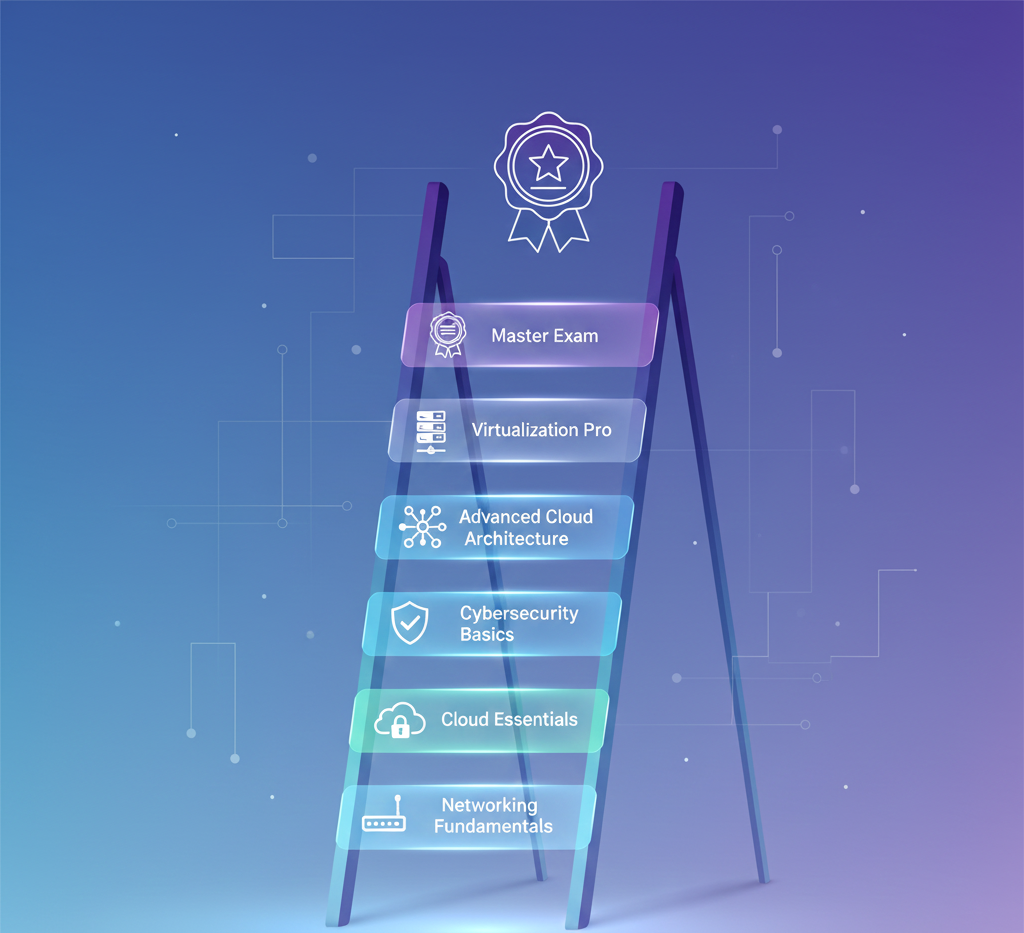

The journey from beginner to advanced IT certification is one of the most powerful ways to build real technical confidence. Whether you’re entering technology for the first time or already working in the field and aiming for a senior role, an IT exam study path gives you a structured, reliable method for upgrading your skills. The key is following a progression that starts with fundamentals, expands into broader domains, and ultimately prepares you for high-level certifications that require deep understanding and practical reasoning.
For beginners, IT exams introduce the foundational concepts needed to understand systems, networks, cloud technologies, and security. As candidates move toward intermediate and advanced levels, these certifications shift their focus from simple definitions to real-world scenarios, troubleshooting logic, and architectural design. That layered approach is what makes the beginner-to-advanced path so effective: each stage builds naturally on the previous one.
This guide walks you through how beginners can start, how to transition into intermediate learning, and how to handle advanced certifications confidently. For a full roadmap from IT exam beginners to advanced, you can explore here to check recommended preparation steps.
Start With Certifications Designed for Absolute Beginners
Beginner-level IT exams are built to teach the fundamentals of computing without requiring previous industry experience. These certifications cover essential topics such as operating systems, networking basics, computer hardware, cloud concepts, file systems, user management, and basic troubleshooting.
At the beginner phase, your main goals are:
-
Build technical vocabulary
-
Understand how systems work
-
Learn troubleshooting patterns
-
Get familiar with IT environments
-
Gain foundational confidence
Certifications like CompTIA ITF+, Google Career Certificates, basic Microsoft fundamentals, and other entry-level exams help create a strong learning base.
Why Beginner Exams Matter in Long-Term Growth?
Entering IT through structured certification is valuable because beginner exams help you understand how technology fits together. Instead of trying to learn everything at once, these exams provide a clear sequence. Because of that sequence, learners avoid confusion and can progress systematically without feeling overwhelmed.
Beginner exams improve:
-
Learning speed
-
Comprehension of future concepts
-
Comfort inside IT environments
-
Problem-solving logic
-
Confidence moving toward advanced certifications
Without a strong start, intermediate and advanced exams become unnecessarily hard.
Transitioning Into Intermediate Certifications
Once you build your foundation, the next step is moving into intermediate exams that focus on real-world applications. These certifications introduce more complex topics, including networking protocols, security frameworks, virtualization, cloud infrastructure, and system administration.
Intermediate certifications are where candidates begin to understand how theory translates into daily IT operations. You’ll start encountering scenario-based questions, configuration tasks, and troubleshooting environments that require layered thinking.
This phase is where your learning becomes hands-on and analytical.
Developing a Study Structure for Intermediate Preparation
Intermediate exams require more depth and consistent practice. You can’t rely on memorization alone. You need to practice, experiment, and reason out solutions.
A smart study pattern includes:
-
Learning concepts through structured notes
-
Practicing questions that reflect real exam logic
-
Performing hands-on tasks in small labs
-
Reviewing mistakes carefully
-
Revising high-value topics multiple times
This consistent routine helps you solve harder questions with clarity.
Moving Into Advanced IT Certifications
Advanced certifications focus on large-scale system administration, enterprise networking, cloud architecture, cybersecurity, and automation. These exams are longer, more challenging, and more focused on real-world engineering roles.
Advanced-level exam:
-
Architecture design
-
Problem-solving under constraints
-
Multi-step configuration workflows
-
Security analysis
-
Strategic decision-making
Because advanced certifications often align with job-specific responsibilities, they carry strong industry value. These exams demonstrate that you can reason like a professional engineer, not just follow basic steps.
Why Practical Experience Matters at the Advanced Level?
Advanced certifications require scenario-driven thinking. The more hands-on experience you have, the easier it becomes to interpret exam questions. This doesn’t mean you need an enterprise environment, virtual labs, cloud free tiers, and small simulations are enough to understand how systems behave.
Hands-on learning helps you connect:
-
Cause and effect
-
Configuration and outcome
-
Symptoms and solutions
-
Security behavior and attack patterns
This type of understanding is essential for certifications in networking, cybersecurity, systems, and cloud architecture.
Using Practice Questions to Strengthen Exam Logic
Practice questions are one of the most effective tools in IT exam preparation because they simulate the way real exams are written. High-quality practice questions strengthen your reasoning by exposing you to both simple and complex scenarios. Many learners use platforms like Cert Empire to study with practice sets that include a mix of difficulty levels aligned with real exam pacing.
Practice questions help you:
-
Recognize patterns
-
Identify distractor options
-
Build troubleshooting instincts
-
Understand technical sequences
-
Prepare for timed environments
Consistent practice builds familiarity, which turns into confidence on exam day.
How to Build a Beginner-to-Advanced Study Roadmap?
A successful IT learner follows a clear progression:
Beginner Phase:
Start with fundamentals, definitions, interfaces, setup tasks, and basic logs.
Intermediate Phase:
Transition into configuration, troubleshooting, system behavior, and networking logic.
Advanced Phase:
Focus on architecture design, security analysis, cloud ecosystems, and enterprise-level systems.
This natural progression mirrors how skills develop inside the IT workforce.
Time Management for Different Skill Levels
Each stage of learning requires a different approach to time management. Beginners often need shorter sessions to avoid overload, whereas advanced learners can handle longer blocks for complex scenarios.
A simple pattern that works across all levels:
-
Understand the concept
-
Practice with questions
-
Study the reason behind mistakes
-
Revisit complex logic
-
Review notes regularly
This loop makes your progress stable and predictable.
Beginner to Advanced IT Exam Progression
| Level | Focus Area | Goals |
|---|---|---|
| Beginner | Fundamentals | Build vocabulary, understand systems |
| Intermediate | Applied skills | Learn configuration, troubleshooting |
| Advanced | Architecture | Develop high-level reasoning and analysis |
Final Reflections
The path from beginner to advanced IT exams is not about rushing; it’s about growing structured knowledge over time. Every stage plays a role in shaping your technical thinking and preparing you for professional roles. When you follow a clear learning progression, practice consistently, and reinforce your understanding through realistic questions, you develop the exact skills hiring managers look for. For a quick breakdown, you can check the Facebook post we shared about this subject.
With persistence, the right study resources, and hands-on exploration, anyone can move from absolute beginner to advanced-level IT professional and open doors to some of the strongest career opportunities in the technology field.
Read Here: The Power of Practice: How Online Tests Improve Exam Performance