
Email marketing remains one of the highest ROI digital channels—but only if your emails actually reach the inbox. If your open rates are declining or your campaigns are landing in spam, it’s time to focus on How to Improve Email Deliverability with List Hygiene.
List hygiene is not just about cleaning emails occasionally. It’s a continuous process of maintaining a healthy, engaged, and permission-based subscriber list. Below is a practical breakdown in both paragraph and pointer format to help you optimize deliverability.
Why Email Deliverability Matters
Email deliverability refers to the ability of your emails to successfully reach subscribers’ inboxes instead of bouncing or being filtered into spam folders.
Poor deliverability can lead to:
- Reduced open and click-through rates
- Damaged sender reputation
- Higher bounce rates
- Increased spam complaints
- Lower overall ROI
Understanding How to Improve Email Deliverability with List Hygiene ensures that your campaigns reach real, interested users who are more likely to engage.
What Is List Hygiene?
List hygiene is the process of regularly cleaning and maintaining your email database to remove invalid, inactive, or risky contacts.
It involves:
- Removing hard bounces
- Managing soft bounces
- Eliminating inactive subscribers
- Filtering spam traps
- Validating new email addresses
A clean list protects your sender reputation and signals to email service providers (ESPs) that you are a trustworthy sender.
1. Remove Invalid and Hard Bounce Emails
Hard bounces occur when an email address is permanently invalid (e.g., non-existent domain or incorrect spelling).
Best practices:
- Automatically suppress hard bounce emails after the first failure
- Use email validation tools before importing new contacts
- Avoid purchasing email lists
Keeping invalid emails on your list damages your sender credibility and reduces inbox placement rates.
2. Monitor and Manage Inactive Subscribers
Inactive subscribers are those who haven’t opened or clicked your emails in months.
Why this matters:
- Low engagement signals poor content relevance
- ISPs use engagement metrics to determine inbox placement
- High inactivity can trigger spam filtering
Steps to take:
- Identify subscribers inactive for 90–180 days
- Launch a re-engagement campaign
- Remove users who remain unresponsive
Regular pruning helps improve overall engagement metrics.
3. Use Double Opt-In for New Subscribers
Double opt-in requires users to confirm their subscription via email after signing up.
Benefits include:
- Reduces fake or mistyped email addresses
- Ensures genuine interest
- Minimizes spam complaints
- Improves list quality
If you’re serious about How to Improve Email Deliverability with List Hygiene, double opt-in is one of the most powerful preventative strategies.
4. Segment Your Email List
Segmentation improves both engagement and deliverability.
Instead of sending generic emails to your entire list:
- Segment by demographics
- Segment by purchase behavior
- Segment by engagement level
- Segment by interests
Highly targeted campaigns generate better open rates and lower spam complaints, signaling to ESPs that your emails are relevant.
5. Clean Your List Regularly
List hygiene is not a one-time task—it should be ongoing.
Create a maintenance schedule:
- Monthly bounce review
- Quarterly inactive subscriber cleanup
- Regular validation of newly added contacts
- Ongoing spam complaint monitoring
Automation tools within your email platform can help streamline this process.
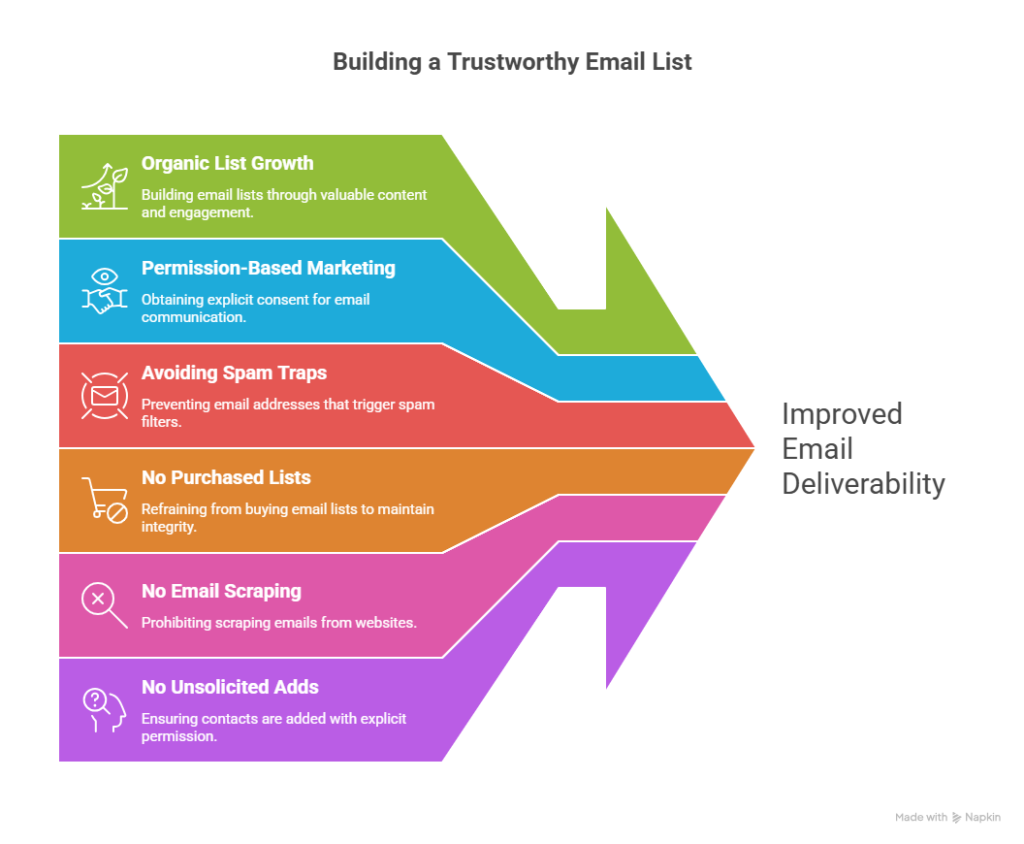
6. Avoid Spam Traps and Purchased Lists
Spam traps are email addresses used to identify spammers. Hitting them can severely damage your reputation.
Never:
- Buy email lists
- Scrape emails from websites
- Add contacts without consent
Instead, grow your list organically through:
- Lead magnets
- Webinars
- Content downloads
- Newsletter signups
Permission-based marketing is essential for long-term deliverability success.
7. Encourage Subscriber Engagement
Engagement plays a key role in inbox placement.
To increase interaction:
- Craft compelling subject lines
- Personalize content
- Send at optimal times
- Include clear calls-to-action
- Ask subscribers to whitelist your email
The more your subscribers engage, the more mailbox providers trust your sender profile.
8. Maintain Proper Authentication Protocols
While list hygiene focuses on subscribers, technical authentication also impacts deliverability.
Ensure you have:
- SPF records configured
- DKIM authentication enabled
- DMARC policies implemented
Authentication verifies your identity and prevents spoofing, improving inbox trust.
Common Mistakes to Avoid
When learning How to Improve Email Deliverability with List Hygiene, avoid these common errors:
- Ignoring soft bounces
- Keeping inactive users indefinitely
- Sending too frequently
- Failing to monitor spam complaints
- Not providing an easy unsubscribe option
A frustrated subscriber is more likely to mark your email as spam rather than unsubscribe.
The Long-Term Impact of List Hygiene
Consistent list hygiene leads to:
- Higher inbox placement rates
- Improved open and click-through rates
- Stronger sender reputation
- Better customer relationships
- Increased revenue from email marketing
Instead of focusing solely on list size, prioritize list quality. A smaller, engaged audience will always outperform a large, inactive one.
Final Thoughts
Understanding How to Improve Email Deliverability with List Hygiene is essential for sustainable email marketing success. By removing invalid contacts, re-engaging or eliminating inactive users, using double opt-in, and maintaining consistent list cleaning practices, you can protect your sender reputation and maximize campaign performance.
Email deliverability is not about sending more—it’s about sending smarter.
Hashtags
#EmailMarketing
#EmailDeliverability
#ListHygiene
#DigitalMarketing
#MarketingStrategy

![Qué es LipoFit y Para Qué Sirve: [Efectos Secundarios] Todo lo que Necesitas Saber](https://s3.ap-south-1.amazonaws.com/smart-article.com/uploads/2026/02/20120825/710Em0HziL._AC_UL495_SR435495_-150x150.jpg)