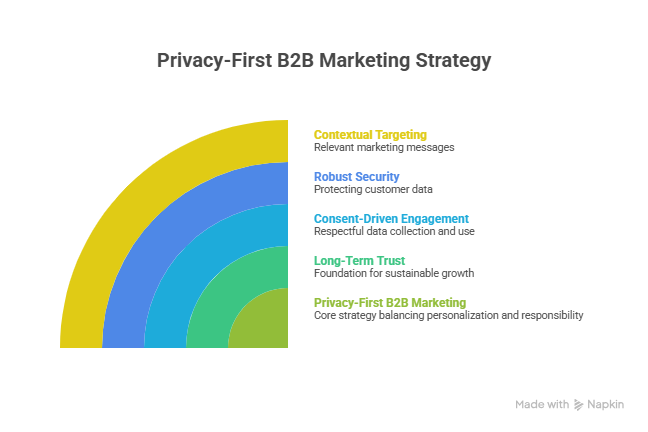

In today’s data-driven landscape, trust has become the foundation of successful B2B relationships. As regulations tighten and buyers grow more cautious about how their information is used, businesses must rethink traditional marketing tactics. Understanding How to Implement a Privacy-First B2B Marketing Strategy is no longer optional; it is essential for sustainable growth and long-term credibility.
Below is a practical guide combining actionable pointers with clear explanations.
1. Start with a Data Audit
Before building a privacy-first framework, evaluate your current data practices.
Key steps include:
- Identifying what customer data you collect
- Reviewing where and how it is stored
- Assessing who has access to it
- Eliminating redundant or outdated information
- Ensuring compliance with relevant regulations
A thorough audit reduces risk, improves efficiency, and sets the foundation for responsible marketing operations.
2. Prioritize First-Party Data
Third-party cookies are fading, and privacy regulations are reshaping digital advertising. First-party data is now the most reliable and ethical asset for B2B marketers.
Focus on collecting:
- Website interaction data
- Email engagement metrics
- Webinar registrations
- Content downloads
- Customer feedback
Offer genuine value in exchange for information. High-quality whitepapers, industry reports, and exclusive events encourage prospects to willingly share their data.
3. Build Transparent Consent Processes
Transparency builds trust. Consent should be clear, specific, and easy to understand.
Best practices:
- Use clear opt-in forms
- Avoid pre-checked consent boxes
- Provide simple unsubscribe options
- Allow users to manage communication preferences
- Clearly explain how their data will be used
When prospects feel in control, they are more likely to engage meaningfully with your brand.
4. Strengthen Data Security Measures
Privacy-first marketing extends beyond consent. It requires strong data protection practices.
Ensure:
- Data encryption protocols
- Role-based access controls
- Secure cloud storage
- Regular compliance audits
- Employee training on data handling
Collaborating with IT and compliance teams ensures marketing initiatives align with organizational security standards.
5. Align Sales and Marketing Teams
Privacy standards must be consistent across the entire customer journey. Sales outreach should respect the same data policies as marketing campaigns.
To ensure alignment:
- Maintain shared CRM guidelines
- Track consent within customer records
- Avoid unauthorized cold outreach
- Document communication preferences
Unified standards reinforce credibility and prevent compliance gaps.
6. Shift to Contextual and Intent-Based Targeting
Instead of relying heavily on invasive tracking methods, embrace contextual and intent-based marketing.
Examples include:
- Publishing role-specific thought leadership content
- Targeting ads on relevant industry platforms
- Leveraging search intent insights
- Hosting niche webinars for defined audience segments
Contextual targeting delivers relevance while respecting privacy boundaries.
7. Focus on Quality Over Quantity
A privacy-first B2B marketing strategy may reduce the size of your contact database, but it improves lead quality.
Measure performance using:
- Qualified lead conversion rates
- Engagement from opt-in audiences
- Customer lifetime value
- Retention and loyalty metrics
Smaller, engaged audiences often produce stronger long-term results.
8. Make Privacy a Brand Advantage
Privacy should not be treated as a compliance burden. It can become a competitive differentiator.
Communicate your commitment by:
- Publishing clear privacy policies
- Sharing security certifications
- Sending periodic preference reminders
- Highlighting responsible data practices in marketing materials
Positioning your company as ethical and transparent strengthens trust and loyalty.
9. Continuously Review and Improve
Privacy regulations and technology evolve rapidly. A privacy-first strategy requires ongoing evaluation.
Regularly:
- Review compliance updates
- Update consent management systems
- Monitor data usage practices
- Gather customer feedback
Continuous improvement ensures your strategy remains effective and compliant.
Conclusion
Learning How to Implement a Privacy-First B2B Marketing Strategy means balancing personalization with responsibility. By prioritizing first-party data, strengthening security, ensuring transparent consent, and aligning internal teams, businesses can build sustainable growth rooted in trust.
In an environment where buyers are increasingly cautious, privacy-first marketing is not just about protecting data—it is about protecting relationships.
Hashtags:
#B2BMarketing #PrivacyFirst #DataProtection #DigitalMarketing #TrustBasedMarketing