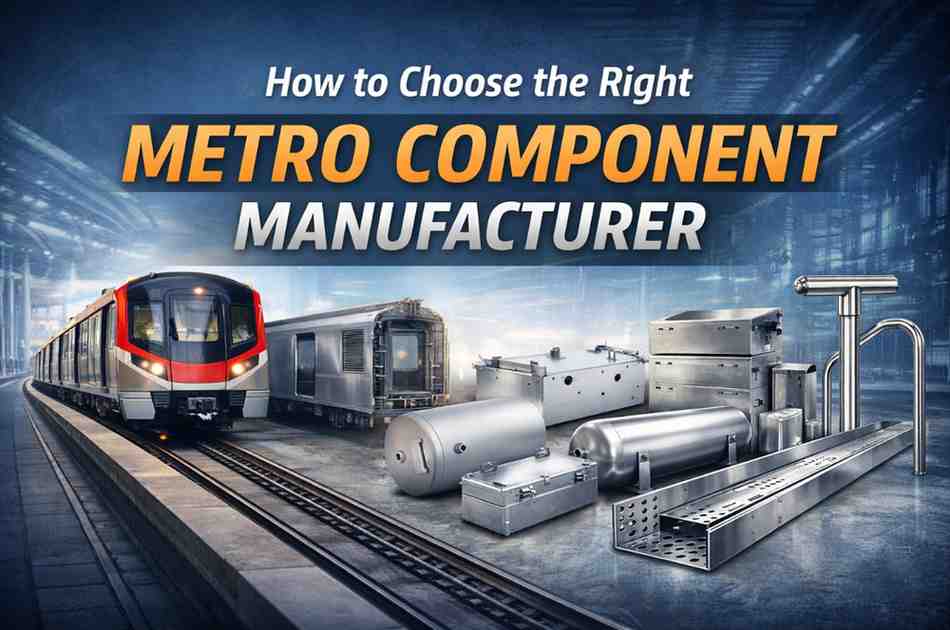

Metro rail systems operate within a highly regulated, safety-critical environment where precision, durability and compliance are essential. Every component integrated into a metro coach — from structural shells to interior fittings — directly influences operational reliability, passenger safety and lifecycle cost.
Selecting the right metro component manufacturer is therefore a strategic decision. It impacts certification approvals, project timelines, long-term maintenance requirements and overall system performance. A structured evaluation approach helps minimise risk and ensures alignment with technical, regulatory and commercial objectives.
This guide outlines the key criteria to consider when choosing a metro component manufacturing partner.
Define Your Metro Project Requirements Clearly
A successful supplier selection process begins with a clear understanding of project requirements.
Metro systems typically require a range of components, including:
- Structural elements such as side walls, roof panels, underframes and car body shells
- Enclosures such as battery boxes, air reservoirs and valve housings
- Interior fittings including handrails, grab poles, cable ducts and seating frames
Each category demands specific performance standards related to load-bearing capacity, corrosion resistance, fatigue strength, welding quality and dimensional precision.
Project teams should define:
- Stainless steel grade specifications (200, 300, 400 series or duplex)
- Expected production volumes
- Phased delivery schedules
- Applicable railway certifications
- Customisation or prototyping requirements
Clarity at this stage reduces ambiguity and ensures suppliers can respond with accurate technical and commercial proposals.
Evaluate Certifications and Regulatory Compliance
Compliance with recognised railway standards is fundamental in metro component manufacturing.
Manufacturers should demonstrate alignment with certifications such as:
- IRIS (International Railway Industry Standard)
- EN15085 welding certification
- ISO 9001 quality management systems
- ISO 14001 environmental standards
- ISO 45001 occupational health and safety standards
IRIS certification indicates that quality management processes are tailored to railway industry requirements. EN15085 ensures that welding operations meet stringent railway safety standards.
Working with certified manufacturers strengthens documentation control, traceability, audit readiness and regulatory compliance — all essential in metro projects.
Assess Manufacturing Infrastructure and Technical Capabilities
Advanced infrastructure is a key indicator of manufacturing reliability and precision.
A capable metro component manufacturer should operate:
- Robotic welding systems for consistent weld quality
- Fiber laser cutting equipment for high-precision fabrication
- CNC bending and forming machinery
- Heavy-duty press brakes
- Dedicated stainless steel processing facilities
Equally important is material expertise. Metro components must maintain structural integrity under vibration, dynamic loads and environmental exposure. Manufacturers should demonstrate experience working with various stainless steel grades and understand their mechanical and corrosion-resistant properties.
Production capacity must also align with project demands. Large-scale metro contracts require sustained output without compromising quality or delivery schedules.
Review Quality Assurance and Testing Systems
Robust quality assurance systems are essential in metro rail manufacturing.
A qualified manufacturer should conduct:
- Tensile and hardness testing
- Corrosion resistance evaluation
- Weld inspection and non-destructive testing (NDT)
- Dimensional accuracy verification
- Surface finish inspections
Traceability systems should enable each component to be linked back to its raw material source and manufacturing process. Comprehensive documentation supports regulatory approvals and project audits.
Strong quality control systems reduce the likelihood of defects, improve consistency and enhance long-term reliability.
Examine Industry Experience and Track Record
Experience in metro and rolling stock projects significantly reduces execution risk.
An established manufacturer should demonstrate:
- Previous engagement with metro rail corporations
- Collaboration with rolling stock OEMs
- Familiarity with international transit standards
- Proven capability in delivering high-volume contracts
Experience contributes to better understanding of approval processes, inspection requirements and integration challenges associated with metro coach manufacturing.
Project references and case studies provide insight into operational capability and reliability.
Evaluate Supply Chain Strength and Delivery Reliability
Timely delivery is critical in metro projects. Delays in component supply can affect coach assembly schedules and overall project milestones.
When evaluating manufacturers, consider:
- Stability of raw material sourcing
- Inventory management systems
- Lead time consistency
- Production planning processes
- Contingency strategies for supply disruptions
Manufacturers with integrated operations and controlled sourcing channels are better positioned to maintain continuity during market fluctuations or logistical challenges.
A stable supply chain contributes to predictable project execution.
Consider Engineering Support and Lifecycle Partnership
Metro projects often require collaborative engineering beyond standard fabrication.
Manufacturers offering value-added engineering support can provide:
- R&D assistance
- Prototype development
- Design optimisation
- Value engineering recommendations
- Technical consultation during integration
Such collaboration can improve product performance, reduce material usage and enhance manufacturability.
A long-term partnership approach also supports future upgrades, expansion phases and product improvements across the lifecycle of the metro system.
Compare Cost Against Long-Term Value
Cost evaluation should focus on total lifecycle value rather than initial pricing alone.
Important considerations include:
- Durability under operational stress
- Maintenance frequency
- Downtime risk
- Replacement cycles
- Compliance-related costs
Components manufactured with lower-quality processes may result in higher long-term maintenance expenses or operational disruptions.
High-quality stainless steel metro components typically offer superior corrosion resistance, structural integrity and longevity. Evaluating total cost of ownership ensures better financial and operational outcomes.
Why Choose Jindal Mobility for Steel Components for Metro
Jindal Mobility specialises in stainless steel components engineered for metro transit systems.
The organisation focuses on manufacturing structural shells, enclosures and interior fittings that meet stringent railway standards. Its operations are aligned with recognised certifications and supported by advanced fabrication infrastructure.
Key strengths include:
- Expertise across multiple stainless steel grades
- Integrated manufacturing processes
- In-house testing and inspection systems
- Experience supporting metro and rolling stock projects
- Scalable production capacity
By combining certified processes with engineering precision and quality control, Jindal Mobility supports metro projects from concept validation to mass production.
Final Checklist Before Supplier Selection
Before finalising a supply agreement, it is advisable to conduct a structured evaluation process:
- Verify certifications and compliance documentation
- Conduct a facility audit
- Review infrastructure and technical capability
- Assess quality assurance systems
- Evaluate project references
- Approve prototype samples or pilot production
A disciplined approach ensures alignment with technical specifications, regulatory standards and project timelines.
Conclusion
Selecting the right metro component manufacturer is a strategic decision that directly affects safety, compliance, durability and lifecycle cost.
An effective evaluation framework should consider certifications, infrastructure, quality systems, experience, supply chain reliability and long-term partnership potential. Emphasising total value rather than upfront cost helps ensure operational stability and reduced maintenance risk.
In metro rail systems, where reliability and safety are paramount, partnering with a technically capable and compliant stainless steel component manufacturer contributes significantly to the long-term success of urban transit infrastructure.