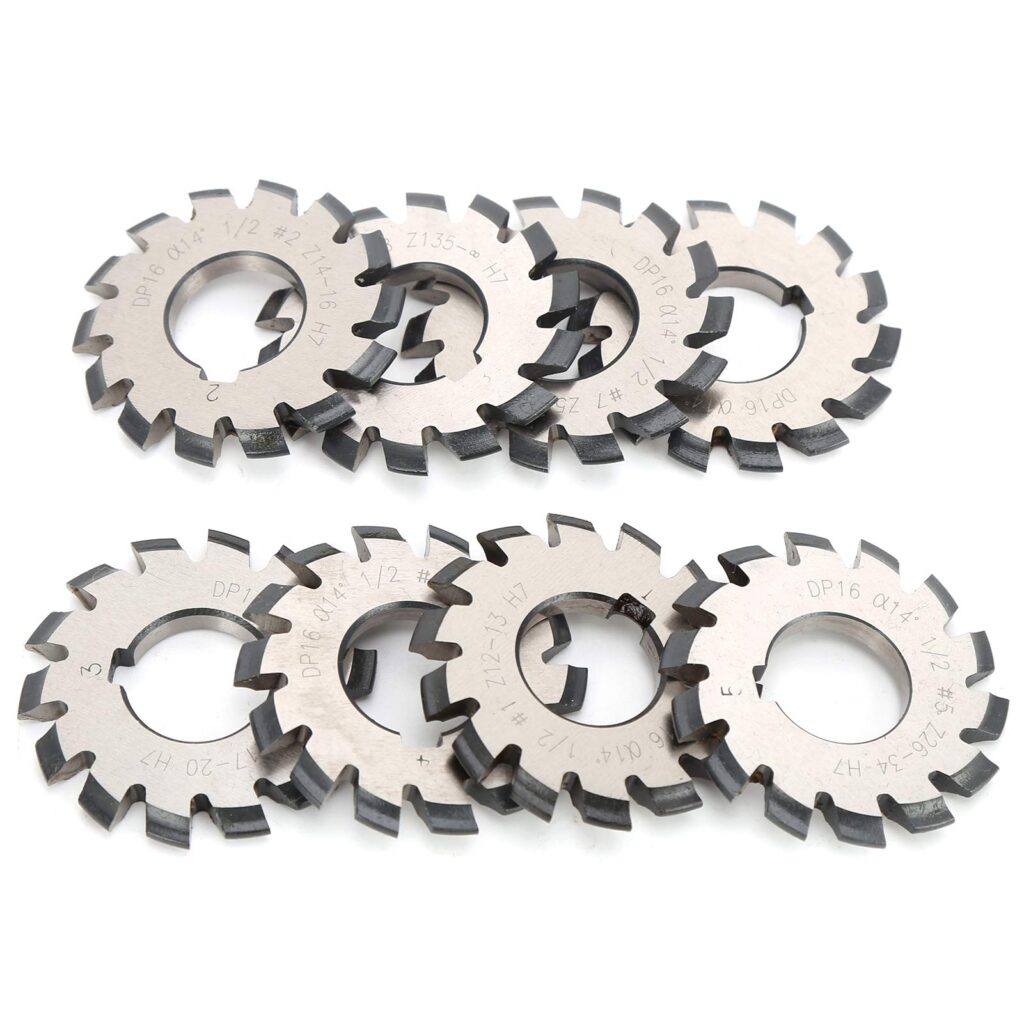

Industrial production has evolved rapidly over the past few decades, driven by advancements in technology, automation, and precision engineering. At the heart of many mechanical systems lies a critical component—gears. From automotive transmissions to heavy machinery and power generation systems, gears enable efficient motion and torque transfer. As industries demand higher performance, tighter tolerances, and faster production cycles, the tools used to manufacture these gears have also undergone significant transformation. Among these tools, modern gear cutters are playing a key role in reshaping industrial production.
With improved materials, advanced coatings, and precision engineering, today’s cutting tools are not only enhancing gear quality but also revolutionizing the way manufacturers approach productivity, efficiency, and cost management.
The Shift Toward Precision-Driven Manufacturing
Modern industries operate in an environment where precision is critical. Even minor deviations in gear geometry can lead to operational inefficiencies, increased wear, and mechanical failures. As a result, manufacturers are focusing more on accuracy and repeatability in gear production.
Modern gear cutters are designed to meet these high standards. With precise tooth profiles and optimized cutting geometry, they ensure that every gear produced meets strict dimensional requirements. This shift toward precision-driven manufacturing has improved the reliability and performance of mechanical systems across various industries.
Advanced Materials for Better Performance
One of the major transformations in gear cutting technology is the use of advanced tool materials. Traditional high-speed steel tools are now complemented by carbide and other high-performance materials that offer greater hardness and wear resistance.
These modern materials allow cutting tools to operate at higher speeds while maintaining their cutting edges for longer periods. As a result, manufacturers can increase production rates without compromising accuracy.
In high-volume production environments, durable gear cutters reduce the frequency of tool replacement, which minimizes downtime and ensures smooth manufacturing operations.
The Role of Coatings in Modern Tooling
Tool coatings have significantly improved the performance of cutting tools in recent years. Advanced coatings such as titanium-based and aluminum-based compounds enhance the durability of cutting edges by reducing friction and heat generation.
These coatings allow modern gear cutters to perform efficiently even under demanding machining conditions. Reduced friction leads to smoother cutting, improved surface finish, and less wear on the tool.
By maintaining edge sharpness for longer durations, coated tools help manufacturers achieve consistent gear quality across large production batches.
Increased Productivity Through High-Speed Machining
Productivity is a key focus in industrial production. Manufacturers are constantly looking for ways to produce more components in less time without compromising quality.
Modern gear cutters are designed to support high-speed machining processes. Their improved geometry and material strength allow machines to operate at higher cutting speeds and feed rates. This significantly reduces cycle times and increases overall production output.
Faster machining not only improves efficiency but also helps manufacturers meet tight production deadlines in competitive markets.
Consistency in Mass Production
Industries such as automotive manufacturing require the production of thousands of identical components with consistent quality. Maintaining uniformity across large production volumes can be challenging without reliable tooling.
Modern gear cutters are engineered to deliver consistent performance over extended periods. Their ability to maintain precise cutting profiles ensures that every gear produced meets the same quality standards.
This consistency reduces variations in production and helps manufacturers maintain high levels of quality control.
Improved Surface Finish and Gear Performance
Surface finish is an important factor in gear performance. Rough surfaces increase friction between gear teeth, leading to noise, vibration, and wear during operation.
Modern cutting tools are designed to produce smoother surfaces, reducing the need for additional finishing processes. Improved surface finish enhances lubrication between gear teeth and contributes to longer gear life.
By improving both accuracy and surface quality, modern gear cutters help manufacturers produce gears that perform efficiently under demanding conditions.
Supporting Automation and CNC Technology
Automation and CNC machining have become standard practices in modern manufacturing. These technologies require cutting tools that can perform reliably under controlled and high-speed conditions.
Modern gear cutters are designed to integrate seamlessly with CNC machines and automated production systems. Their precise geometry and durable construction allow them to deliver stable performance in automated environments.
This compatibility with advanced machinery enables manufacturers to achieve higher productivity while maintaining consistent quality standards.
Reducing Operational Costs
Cost efficiency is a major concern for manufacturers. While high-quality tools may require a higher initial investment, they often provide significant long-term savings.
Modern gear cutters reduce operational costs in several ways:
Longer tool life reduces replacement frequency
Improved accuracy lowers rejection rates
Faster machining increases production output
Reduced downtime improves machine utilization
These benefits help manufacturers optimize their production processes and improve overall profitability.
Adapting to Evolving Industry Demands
As industries continue to evolve, the demand for high-performance gears is increasing. Electric vehicles, renewable energy systems, and advanced machinery require gears that can operate under high loads and speeds.
Modern gear cutters are designed to meet these evolving requirements. Their advanced features allow manufacturers to produce gears with greater precision, strength, and durability.
By adopting modern tooling solutions, manufacturers can stay competitive and meet the changing demands of global markets.
Conclusion
Industrial production is undergoing a transformation driven by precision, efficiency, and technological innovation. Cutting tools play a crucial role in this transformation, especially in gear manufacturing, where accuracy is essential.
Modern gear cutters have significantly improved the way gears are produced. With advanced materials, optimized designs, and improved durability, they enable manufacturers to achieve higher productivity, better accuracy, and consistent quality.
As manufacturing continues to advance, the importance of high-performance cutting tools will only grow. Investing in modern tooling solutions is not just a step toward improved production—it is a strategic move toward long-term success in the evolving industrial landscape.